
Tasmania Luxury Itinerary 2026: 7 Days
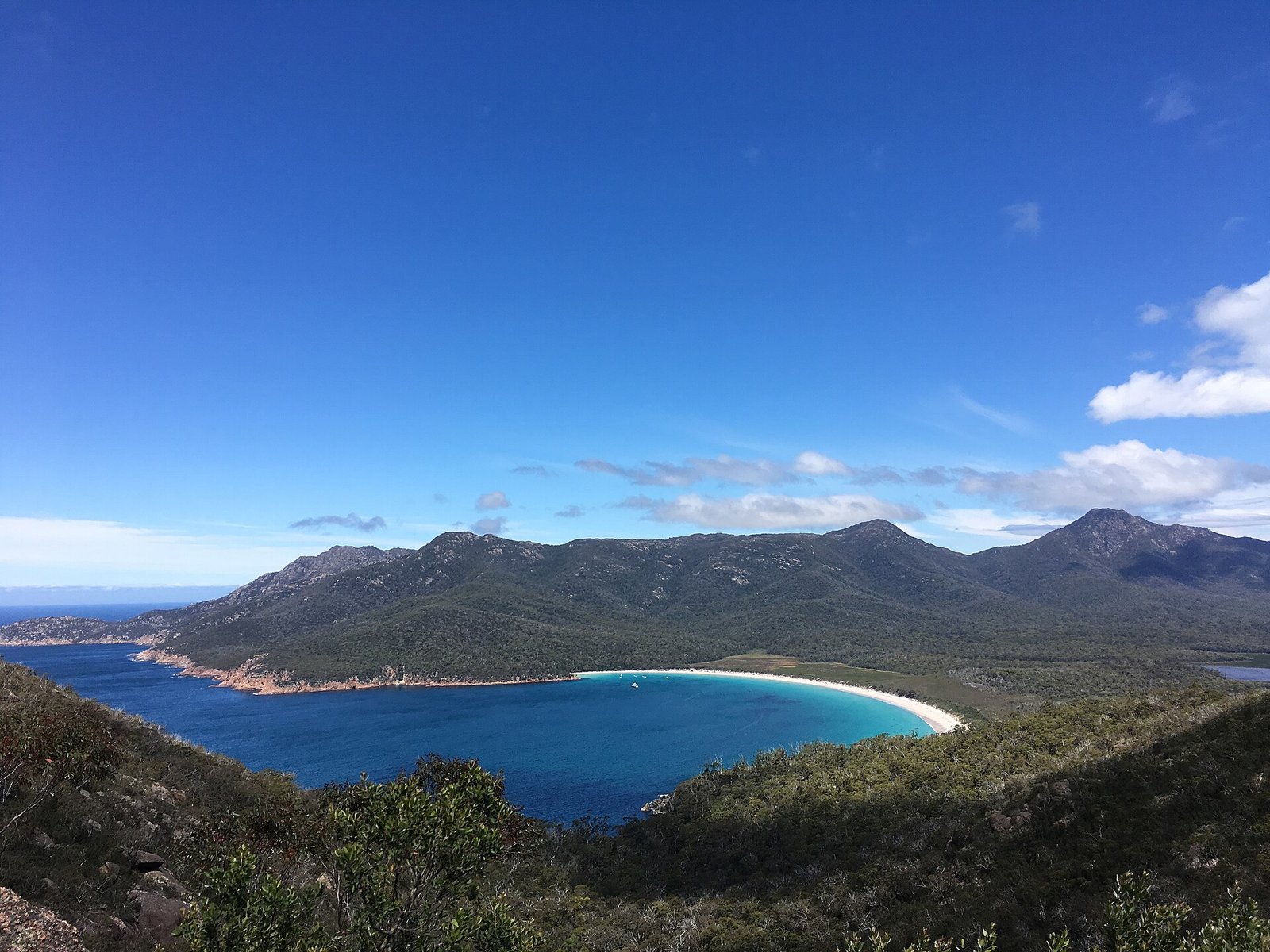
Wineglass Bay, Freycinet National Park. Photo: Wikimedia Commons (CC BY-SA 4.0).
Tasmania is an island state of wild coastlines, alpine national parks, excellent food and a handful of genuinely world-class lodges, all within a few hours’ drive of each other. This guide focuses on a seven-day Tasmania road trip specifically for couples and travellers who want comfortable, high-end stays and realistic daily drives, rather than trying to see the whole island in a week.
Research-based itinerary · Drive times, park rules and attraction details checked against official Tasmanian sources in September 2026. Drive times are approximate and assume no long stops.
The route in brief
Fly into Hobart and out of Launceston (or the reverse) to avoid backtracking. Spend two nights in Hobart for MONA, Salamanca and Bruny Island; two nights at Freycinet for Wineglass Bay; one night in Launceston and the Tamar Valley; and two nights at Cradle Mountain. Buy a Tasmania national parks pass before you go, and avoid driving after dusk, when wildlife is most active on the roads.
Day-by-day overview
The table summarises where you sleep and how long you drive each day. Keeping most driving days under three hours leaves time for walks, long lunches and spontaneous stops.
| Day | Base | Main experiences | Approx. driving |
|---|---|---|---|
| 1 | Hobart | Arrive, Salamanca waterfront, dinner | Airport transfer only |
| 2 | Hobart | MONA by ferry, kunanyi/Mount Wellington at sunset | Under 1 hour |
| 3 | Freycinet | Richmond village en route, Coles Bay | ~2.5–3 hours |
| 4 | Freycinet | Wineglass Bay lookout, oyster tasting, sunset | Minimal |
| 5 | Launceston | Bay of Fires detour or direct drive, Cataract Gorge | ~2.5–4 hours |
| 6 | Cradle Mountain | Tamar Valley wineries, drive to Cradle Mountain | ~2 hours plus winery stops |
| 7 | Cradle Mountain | Dove Lake circuit, wildlife at dusk | Minimal |
| 8 | Departure | Return to Launceston or Devonport | ~1.5–2 hours |
This is technically seven nights. If you only have six, drop the second Cradle Mountain night and fly out of Launceston on Day 7 after an early Dove Lake walk.
The pace is deliberately relaxed. Tasmania’s roads are often narrow and winding, and distances on a map look shorter than they drive. Travellers who try to add the west coast, the Tasman Peninsula and the far south into a single week usually spend most of their holiday in the car. If you are keen to see Port Arthur, the most important convict site in the state, the easiest way is to add a night on the Tasman Peninsula between Hobart and Freycinet, turning this into an eight- or nine-night trip.
Days 1–2: Hobart, MONA and the mountain
Hobart is compact, walkable and one of Australia’s great small food cities. Base yourself on the waterfront, where historic sandstone warehouses have been turned into hotels such as The Henry Jones Art Hotel and MACq 01, or choose a heritage stay such as Hadley’s Orient Hotel in the centre. If you arrive on a Friday, plan Day 2 around Saturday’s Salamanca Market.
Give most of Day 2 to MONA, the Museum of Old and New Art. Take the museum ferry from Brooke Street Pier upriver to Berriedale; the trip itself is part of the experience. In the late afternoon, drive up kunanyi/Mount Wellington, which rises to more than 1,200 metres directly behind the city, for sunset views. Dress warmly: the summit can be cold and windy even in summer.
Optional swap: replace MONA with a full-day food tour to Bruny Island, reached by a short car ferry from Kettering. Oysters, cheese, whisky and the narrow isthmus known as The Neck make it one of Tasmania’s most popular day trips.
Hobart’s dining scene is a highlight in its own right. Book dinner reservations ahead for the better-known restaurants, particularly on weekends and in summer, and look for menus built around Tasmanian produce: ocean trout, scallops, oysters, lamb, cheese and cool-climate wine. Evening walks along the waterfront between Salamanca Place and Constitution Dock are an easy way to end the day, and whisky lovers will find several distillery cellar doors and bars within reach of the city.
Days 3–4: Freycinet and Wineglass Bay
Drive northeast via the historic village of Richmond, with its convict-built bridge, to the Freycinet Peninsula. The pink granite peaks of the Hazards rise above Coles Bay, and the national park protects some of the most photographed coastline in Australia.
Freycinet is where Tasmania’s best-known luxury lodge sits. Saffire Freycinet, on the shore facing the Hazards, is a small, all-inclusive lodge with a spa and guided experiences; it is often booked months ahead. Freycinet Lodge, inside the national park, offers cabins and pavilions at a lower price point. On Day 4, walk to the Wineglass Bay lookout — allow roughly one to one and a half hours return — or continue down to the beach itself for a longer, quieter outing. Finish with fresh oysters at a local farm and sunset over the Hazards.
If the weather turns on your Freycinet day, which does happen on the east coast, swap the long walk for a boat cruise into Wineglass Bay when conditions allow, or a guided kayak on the calmer waters of Coles Bay. Lodges on the peninsula can usually suggest alternatives, and a slow afternoon with a view of the Hazards is no hardship. Keep the Wineglass Bay walk for the first clear morning, when the light on the granite is at its best and the lookout is quieter.
Days 5–6: Launceston, Bay of Fires and the Tamar Valley
From Freycinet, you have a choice. The direct inland route to Launceston takes about two and a half hours. If the weather is good, take the longer coastal route north via St Helens and detour to the Bay of Fires, where white sand and turquoise water are set against granite boulders coated in orange lichen. It adds a few hours but is one of the island’s most striking landscapes.
In Launceston, stroll or take the chairlift across Cataract Gorge, a river canyon a short walk from the city centre. On Day 6, follow the Tamar Valley wine route north of the city, where cool-climate sparkling wine and pinot noir are the specialities, before driving west to Cradle Mountain in the afternoon. Designate a driver or book a private wine tour for the morning.
Launceston has a good range of boutique hotels, many in converted historic buildings near the city centre and the waterfront, so a single night here is easy to arrange. The city is also a strong food stop, with several respected restaurants and easy access to farm gates and producers in the surrounding countryside. If you prefer to stay among the vineyards, a number of Tamar Valley estates offer accommodation, which lets you enjoy a tasting without worrying about the drive.
Days 7–8: Cradle Mountain
Cradle Mountain–Lake St Clair National Park is the alpine heart of Tasmania. Stay at or near the park entrance — Cradle Mountain Lodge is the classic choice, with cabins scattered through the forest and a spa — so you can walk early and late when the light and wildlife are best. Private vehicle access to Dove Lake is restricted at busy times, so use the park shuttle from the visitor centre.
The Dove Lake circuit, roughly 6 km and two to three hours at an easy pace, circles the lake beneath the jagged peak of Cradle Mountain. Stronger walkers can add Marions Lookout for a higher view. At dusk, look for wombats grazing near the lodge and park roads. On Day 8, drive to Launceston or Devonport for your flight, or add a night at Pumphouse Point on Lake St Clair if you are returning south to Hobart.
Weather at Cradle Mountain can shift from sunshine to sleet in a few hours, even in summer, and low cloud sometimes hides the peak for a day at a time. That is the main reason this itinerary allows two nights here: it doubles your chances of a clear view of the mountain over Dove Lake. Bring warm layers, a waterproof jacket and sturdy shoes, and stay on marked tracks.
Check the Parks and Wildlife Service Tasmania website for track conditions, shuttle times and parks pass options before you travel.
When to go, costs and practical tips
Summer (December to February) brings the longest days and warmest weather, and is peak season for lodges. Autumn (March to May) is often calm and settled, and in late April the deciduous beech, or fagus, turns gold around Cradle Mountain. Winter brings snow to the highlands and cosy lodge stays, while spring sees wildflowers and newborn wildlife. Tasmania’s weather changes quickly in every season, so pack layers and a waterproof jacket. The official Discover Tasmania site lists seasonal events.
A one-way car rental between Hobart and Launceston usually carries a fee, but it saves a full day of driving. Book lodges first in summer, as the best properties have few rooms. Plan to be off the road by dusk: wallabies, pademelons and wombats are common on rural roads at night. Mobile coverage can be patchy in national parks, so download offline maps before you set out.
If you are building a longer Australia–New Zealand trip, Tasmania combines well with a few nights on Lord Howe Island or a hop across the Tasman to Queenstown and New Zealand’s luxury lodges. For warm-water beach time afterwards, see our guide to the Whitsundays.
Frequently Asked Questions
Is seven days enough for Tasmania?
Seven days is enough for the classic loop of Hobart, Freycinet, Launceston and Cradle Mountain at a comfortable pace. The wild west coast and the far south need extra days.
Should I fly into Hobart or Launceston?
Either works. Flying into one and out of the other avoids backtracking. Hobart has more flight options, so many travellers start there and finish in Launceston.
Do I need a national parks pass in Tasmania?
Yes. A pass is required to enter Tasmania’s national parks, including Freycinet and Cradle Mountain. A holiday pass covering multiple parks is usually the best value for a road trip.
What is the best luxury lodge in Tasmania?
Saffire Freycinet is the best-known all-inclusive lodge, while Cradle Mountain Lodge and Pumphouse Point are popular for alpine stays. The right choice depends on your route and budget.
Is it safe to drive in Tasmania at night?
Roads are generally good, but wildlife is very active after dusk, especially in rural areas. Plan your driving for daylight hours whenever possible.