Weh Island, Indonesia: Diving and Travel Guide 2026
This guide focuses on Weh Island specifically for divers and travelers looking for a quieter alternative to Bali or the Gili Islands, where whale sharks, strong currents and healthy reef walls draw a smaller, more dedicated crowd. Sitting off the very northern tip of Sumatra, Weh is close enough to reach in a day from Banda Aceh yet far enough from the standard Indonesia circuit that most visitors are there specifically to dive.
Where Weh Island Is and How to Get There
Weh Island sits just north of mainland Sumatra, reached from the city of Banda Aceh by a roughly 45-minute fast ferry or a two-hour car ferry from the port at Ulee Lheue. The island’s main town, Sabang, has basic services, a market and a harbor, while most dive resorts and guesthouses cluster further around Iboih and Gapang on the island’s northwest coast. Flights connect Banda Aceh to Jakarta and other major Indonesian hubs, making the full journey from Jakarta to a dive center on Weh realistically a one-day trip if ferry and flight connections line up. Once on the island, most resorts in Gapang and Iboih will arrange a short pickup from the Sabang ferry terminal, since the roads between town and the dive strip wind through hilly, forested terrain that is easier covered by resort transport or a rented scooter than on foot.
Because Weh is administratively part of Aceh province, which follows stricter local customs than much of Indonesia, modest dress is expected in public areas away from the beach and dive resorts, and alcohol is not generally available on the island.
Diving and Snorkeling Highlights
Weh’s reputation rests on the quality of its reef walls and the strength of its currents, which bring in pelagic life that calmer sites elsewhere in Indonesia rarely see. Sites like Sophie Rickmers, a wreck dive near Pulau Rubiah, and the current-swept walls around Rubiah’s channel are known for grey reef sharks, large schools of barracuda and, seasonally, whale sharks. Visibility is generally strong year-round, and the water stays warm enough for a 3mm wetsuit for most of the year.
Snorkeling straight off the beach at Gapang and around Pulau Rubiah is good enough that non-divers in a group will not feel left out, with shallow coral gardens close to shore and calmer conditions than the dive sites further out. Dive operators on the island are small and mostly resort-run rather than large independent dive centers, so group sizes tend to stay small, typically four to eight divers per boat, which also means dive guides can be more flexible about adjusting a dive plan around what the group actually wants to see that day.
Beyond Diving: Things to Do on Land
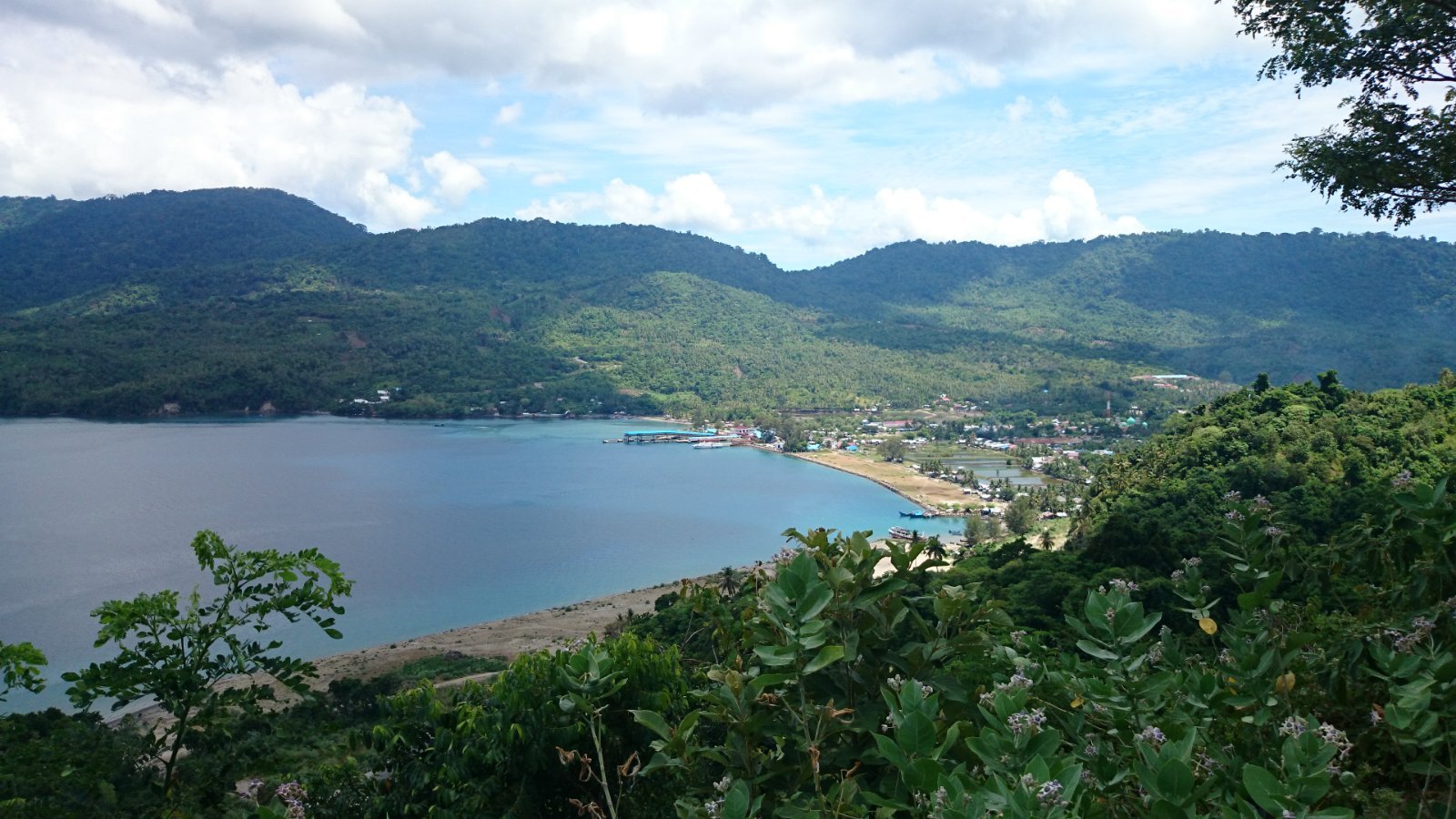
Weh’s interior is mostly forested hills, and a short hike or scooter ride inland brings you to freshwater pools and small waterfalls that make a good break between dive days. Sumur Tiga and Pantai Anoi Itam are two beaches on the island’s quieter eastern side worth a scooter trip if you want a change of scene from the dive-resort strip at Iboih and Gapang. Sabang town itself has Indonesia’s westernmost monument marking Kilometer 0, a small but popular photo stop for visitors who want a tangible marker of how far they have traveled. The drive out to the monument winds along the coast with several pull-off viewpoints, and the small museum and souvenir stalls nearby make it an easy half-day combined with one of the eastern beaches rather than a standalone trip.
Local food on Weh leans heavily on fresh seafood, grilled fish and Acehnese dishes with stronger spice than typical Indonesian coastal cooking, and most dive resorts serve meals as part of the package rather than expecting guests to find separate restaurants. A handful of simple warungs in Sabang and near Iboih serve meals outside resort hours if you want variety during a longer stay, and fresh tropical fruit from roadside stalls is a cheap, easy snack between dives.
Weh Island Dive Sites Compared
| Site | Best for | Experience level |
|---|---|---|
| Sophie Rickmers wreck | Wreck exploration, pelagic sightings | Intermediate to advanced |
| Rubiah channel | Sharks, barracuda, strong current | Advanced |
| Gapang house reef | Easy shore diving, night dives | Beginner to intermediate |
| Pulau Rubiah snorkel reef | Shallow coral, non-divers | Any level, including snorkelers |
| Arus Balee | Macro life and reef fish | Intermediate |
Sample Itinerary for a Diving Trip
A typical first-time visit to Weh runs four to six days, enough for eight to twelve dives plus a day or two on land. Day one is usually travel: fly into Banda Aceh, cross by ferry to Sabang, and transfer to a resort in Gapang or Iboih in the afternoon, often with time for a check dive or an afternoon snorkel at the house reef before dinner. The middle days alternate between two-tank morning dives at current sites like the Rubiah channel or Sophie Rickmers wreck and a lighter afternoon, since the currents that make Weh’s diving distinctive are also physically tiring across a full day of back-to-back dives.
Build in at least one full land day partway through the trip. Renting a scooter for the day to visit Sumur Tiga beach, the Kilometer 0 monument and one of the inland waterfalls breaks up the diving schedule and gives non-diving travel companions something to look forward to as well. Night dives off the Gapang house reef are worth doing at least once, since the reef’s resident octopus, mantis shrimp and other nocturnal life differ noticeably from what divers see during the day.
Budget for the trip is driven mostly by the dive package rather than accommodation itself, since most resorts price rooms as part of a bundled dive package rather than separately. Factor in the Banda Aceh flight and ferry transfer as a meaningful share of total trip cost too, since Weh is further off the main Indonesia tourist circuit than islands like Bali or Lombok, and transport costs reflect that distance.
Best Time to Visit and Water Conditions
The driest and calmest months are generally January through April and again in the shoulder period around September, when visibility tends to peak and the surface stays calm enough for comfortable boat rides out to the current-heavy sites. The wetter season from October through December can bring rain squalls and choppier surface conditions, though diving itself often continues since visibility underwater is less affected than the surface chop suggests. Water temperature stays warm across the year, so a lightweight wetsuit is enough for most divers rather than full thermal protection.
Where to Stay
Most visitors base themselves at a dive resort in Gapang or Iboih, where package rates typically bundle basic bungalow accommodation with dive trips, since independent diving without a resort affiliation is less common on Weh than in more developed dive destinations. Sabang town has a wider range of simple guesthouses and is a reasonable base if you plan to split time between diving and exploring the rest of the island by scooter.
For another Indonesian diving base with a similarly strong current and pelagic draw, see our Raja Ampat travel guide, and for a broader look at whale shark season across the region, our Southeast Asia whale shark guide covers several other seasonal hotspots.
Book dive packages a few weeks ahead if you are traveling during the January to April peak window, since the handful of established dive resorts on Gapang and Iboih have limited rooms and fill up well before walk-in availability would suggest. Bringing your own dive computer and basic spares is worth considering, since equipment rental options are more limited here than at bigger dive hubs like Bali or Raja Ampat. It is also worth carrying some cash in Indonesian rupiah, since ATM access on Weh is limited to Sabang town and card payments are not universally accepted at smaller resorts and warungs.
Frequently Asked Questions
Do I need advanced certification to dive Weh Island?
Not for every site. Gapang’s house reef and the Rubiah snorkeling reef suit beginners, but current-swept sites like the Rubiah channel are better suited to divers with advanced open water certification and some current experience.
Is alcohol available on Weh Island?
Generally no. Weh is part of Aceh province, which applies stricter local customs than most of Indonesia, and alcohol is not widely sold or served.
How do I get to Weh Island from Jakarta?
Fly into Banda Aceh, then take the fast ferry, about 45 minutes, or the slower car ferry, about two hours, from Ulee Lheue port to Sabang.
Can non-divers enjoy a trip to Weh Island?
Yes. Snorkeling around Pulau Rubiah is good for non-divers, and the island’s waterfalls, quiet eastern beaches and Kilometer 0 monument give non-diving travel companions plenty to do.
What is the best month to dive Weh Island?
January through April and the shoulder period around September generally offer the calmest surface conditions and best visibility, though diving continues through most of the year.
Weh Island rewards travelers who come specifically for diving rather than expecting a broader resort scene, and that narrower focus is exactly why its reefs and currents have stayed in better shape than more heavily visited dive destinations nearby. The extra effort of reaching Aceh province is the main reason Weh has stayed quieter than Bali’s dive sites, and most repeat visitors say that trade-off is worth it once they are in the water. Browse more of our destination guides for other quieter Indonesian islands worth the extra travel time.
Sources: Wikipedia: Weh Island, Wonderful Indonesia: Weh Island, Wikivoyage: Sabang.