Bangkok’s Best Floating and Night Markets
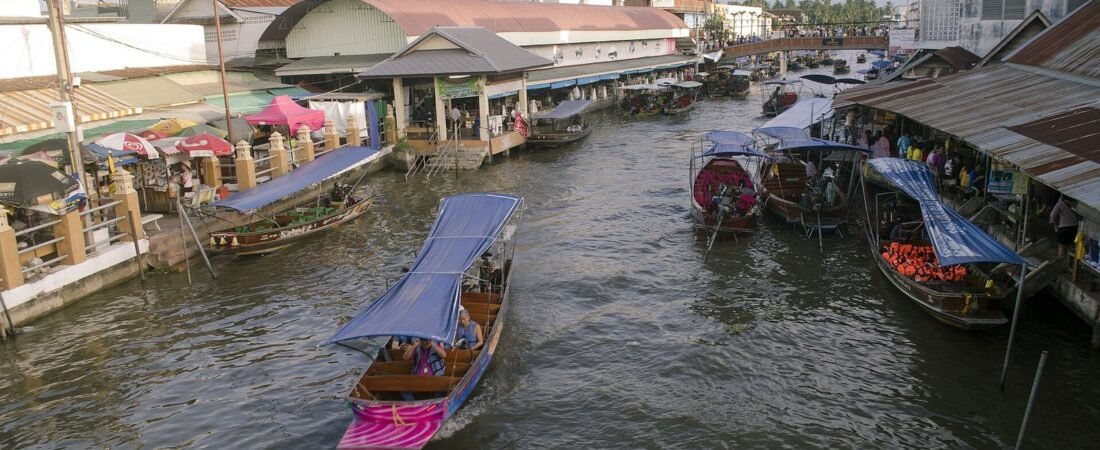
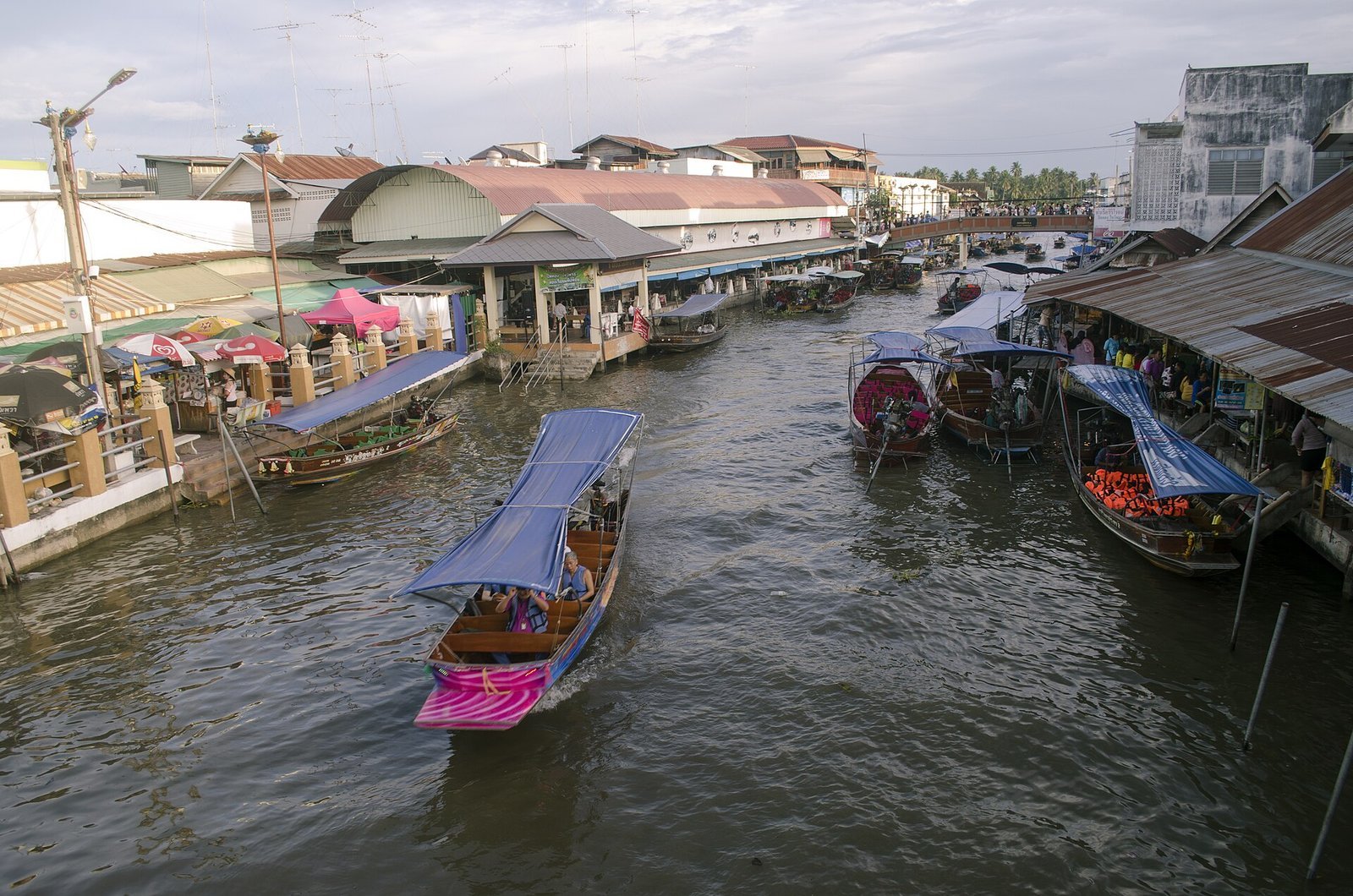
Illustrative floating market scenery. Not a photograph of a specific market stall or vendor.
Bangkok’s markets range from a two-hour round trip out of the city to a Skytrain stop a few minutes from your hotel, and mixing those two categories up is the most common first-timer mistake. This guide focuses specifically on choosing between Bangkok’s floating markets and its night markets for a first visit, rather than listing every market in the region regardless of distance or realistic time cost for a traveler with limited days in the city. It covers which ones are genuinely worth the travel time, practical timing and bargaining details, and where to stay for easy access to each type.
Research-based guide · Checked October 2026. Market hours and tour operators change, and some markets close or relocate stalls with little notice; confirm current opening days and transport options before you go, especially if a specific market is the main reason for your trip.
Start by Picking the Right Market for Your Time
If you only have one morning or evening free, a night market reachable by Skytrain or boat is almost always the better use of your time than a floating market that requires a half-day round trip out of the city. Save the classic countryside floating markets for a day when you have no other plans, ideally as a dedicated half-day or full-day excursion rather than squeezed between other sightseeing, since traffic on the way back into the city can add unpredictable time to the return leg. If you are traveling with a group that has different interests, it is worth splitting a day rather than forcing everyone through both a floating market and a night market on the same packed schedule.
Compare Bangkok’s Best-Known Markets
| Market | Type | Distance from central Bangkok |
|---|---|---|
| Damnoen Saduak | Classic floating market, boats and produce | About 100 km; roughly 1.5 to 2 hours each way |
| Amphawa | Weekend floating market, evening food focus | About 80 km; roughly 1.5 hours each way |
| Taling Chan | Small floating market, boat-cooked food | Within Bangkok; about 30 to 40 minutes by car |
| Chatuchak Weekend Market | Huge general market, weekends only | Within Bangkok; direct by Skytrain or subway |
| Train Night Market (Rot Fai) | Night market, vintage goods and street food | Within Bangkok; reachable by taxi or ride-hail app |
Floating Markets Worth the Day Trip
Damnoen Saduak is the most famous floating market and the one most tour operators default to, with narrow canals crowded with wooden boats selling produce, noodles and souvenirs; background on the market is summarized on Wikipedia’s Damnoen Saduak entry. Go as early as you can, since tour buses arrive mid-morning and the atmosphere changes noticeably once they do, shifting from a working market feel to a more crowded, tourist-paced one by late morning.
A hired longtail boat ride through the narrower canals, beyond the main vendor stretch, tends to feel less commercial than staying on the busiest central section, and local boat operators can usually arrange this on the spot for an additional fee. Agree on the price and the route before boarding, since rates are not always posted and can vary between operators at the same pier.
Amphawa runs mainly as a weekend evening market, with riverside food stalls and boats cooking right beside the diners rather than selling only produce; see Wikipedia’s Amphawa district entry for background. Many visitors pair it with a short firefly-watching boat tour after dark, which local operators run from the same piers, though conditions and availability vary by season and by weather, so treat it as a pleasant possibility rather than a guaranteed part of the evening.
If you cannot spare a half day for either, Taling Chan is a smaller floating market within Bangkok itself, open mainly on weekends, that gives a taste of the format without the long drive; see Wikipedia’s Taling Chan entry. It is noticeably smaller and less polished than Damnoen Saduak, which some travelers prefer precisely because it feels more local and less built for tour groups, with vendors who are used to Bangkok residents as much as visitors.
Night Markets You Can Reach by Public Transport
Chatuchak Weekend Market is less a single market than an entire neighborhood of stalls, selling everything from clothing to antiques to plants, and it is directly accessible by Skytrain or subway rather than requiring a car; see Wikipedia’s Chatuchak Weekend Market entry. It only operates on weekends, so plan your itinerary around that if it is a priority, and set aside at least half a day if you want to see more than a small fraction of it, since the market is large enough that even locals use a rough mental map to avoid getting lost.
The Train Night Market (Rot Fai) focuses on vintage goods, retro decor and a dense street food section, and tends to draw a younger, more local crowd than the daytime tourist markets, with a flea-market feel that rewards slow browsing rather than a quick walk-through, plus a scattering of vintage cars and motorbikes parked between the stalls that double as informal photo backdrops. Both are easy evening additions to a day built around other sightseeing, unlike the floating markets outside the city, and both are large enough that a single visit rarely covers everything, so decide in advance whether food, shopping or just the atmosphere is your priority.
Practical Tips: Timing, Bargaining and Getting There
- For Damnoen Saduak, arrive by 7 or 8 a.m. to see the market before tour groups arrive and before the midday heat sets in; an early start also means cooler walking conditions along the canal paths.
- Light, polite bargaining is normal at most markets, but prices at food stalls are usually fixed; save negotiating for souvenirs and goods, not meals, and expect a smaller discount than you might get elsewhere in the region.
- Bring small-denomination cash; many stalls, especially on boats or in crowded lanes, cannot easily process cards or make large-bill change, and ATMs can be scarce once you are outside central Bangkok.
- Check opening days carefully, since several of these markets, including Chatuchak and Amphawa, do not operate every day of the week, and showing up on the wrong day is a common disappointment for first-time visitors.
- Wear comfortable, closed shoes and sun protection for the floating markets, where paths can be uneven, wet and shade-free for long stretches, and bring a change of footwear if you plan to continue sightseeing afterward.
- Agree on a return time and meeting point with your group before splitting up at a large market like Chatuchak, since the stalls are dense enough to lose track of each other quickly, and mobile signal inside the densest sections can be weaker than expected.
Where to Stay for Easy Market Access
If Chatuchak and the Train Night Market are priorities, a hotel near the Skytrain or subway line makes both easy same-day additions to your itinerary without needing a car or long taxi ride at night. Riverside hotels suit travelers planning a Damnoen Saduak or Amphawa day trip by boat, since several tour operators depart directly from riverside piers, and a riverside base also tends to put you closer to the expressways used for the drive out to either floating market; see our Bangkok riverside hotel guide. For a broader comparison of areas and room types, including rooftop bar access for an evening after a long market day, see our Bangkok luxury hotels guide.
Frequently Asked Questions
Which Bangkok floating market is best for a first visit?
Damnoen Saduak is the most established and easiest to book through a tour operator, though arriving early is important to see it before tour buses crowd the canals and change the pace of the experience from a working market to a more touristic one.
Can I visit a floating market without a full-day tour?
Taling Chan Floating Market sits within Bangkok itself and can be visited in a half day by car or ride-hail app, making it a realistic option if you cannot spare a full day for Damnoen Saduak or Amphawa, though the atmosphere is smaller and less elaborate than either.
Is Chatuchak Weekend Market open every day?
No. Chatuchak operates mainly on Saturdays and Sundays, with a smaller midweek plant and wholesale section; plan your visit around the weekend schedule if shopping is a priority, since the midweek experience is far more limited than the full weekend market.
Do I need to bargain at Bangkok’s markets?
Light bargaining is normal for souvenirs and general goods, but food stall prices are typically fixed. Approach it politely and be willing to walk away if a price does not work for you, rather than pushing hard on a small amount of money.
What should I wear to a floating market?
Comfortable, closed shoes and sun protection are worth prioritizing, since paths can be uneven and shade is limited for long stretches, especially at outdoor canal-side markets, and a light rain layer is worth carrying outside the dry season.
None of these markets require a guided tour to visit, though a tour can simplify transport logistics for Damnoen Saduak and Amphawa if you would rather not arrange a driver yourself. For broader Bangkok planning, see our Bangkok weather guide, since the rainy season affects outdoor canal markets more than indoor shopping, or compare the city against a popular add-on in our Chiang Mai vs Bangkok guide if you are planning a longer Thailand itinerary. Confirm current market hours and tour schedules before you go, since both can shift around public holidays and seasonal events.