Komodo National Park has some of the world's richest marine biodiversity — manta rays, sharks, pygmy seahorses, and Komodo dragons above water. Here's where to stay for the ultimate liveaboard and land-based diving experience.
Why Komodo Is the World's Best Dive Destination in 2026
Komodo National Park sits at the intersection of the Indian Ocean and Pacific Ocean current systems — a collision of cold, nutrient-rich southern waters with warm equatorial seas that creates extraordinary marine biodiversity. The result: 1,000+ fish species, 260+ coral species, and megafauna encounters (manta rays, hammerhead sharks, whale sharks, sea turtles) that are simply unavailable anywhere else in Southeast Asia.
Above water, the Komodo dragon — the world's largest living lizard — adds a prehistoric wildlife encounter that no other dive destination can match. The volcanic landscape of Flores and the island scenery of the Komodo archipelago is among the most dramatic in Indonesia.
In 2026, Komodo National Park is at a management crossroads. Daily visitor limits and premium pricing for park entry (introduced in 2022–2023) have reduced the most overcrowded snorkelling spots to manageable levels. For diving, the underwater environment is in excellent condition and the liveaboard fleet has expanded with premium vessels.
Komodo Diving: What to Expect
The Marine Life
Manta rays: Komodo has one of the world's most reliable year-round manta ray populations. Manta Point (Karang Makassar) and Cauldron are the headline sites. Both oceanic and reef mantas are present year-round; peak feeding aggregations run June–October.
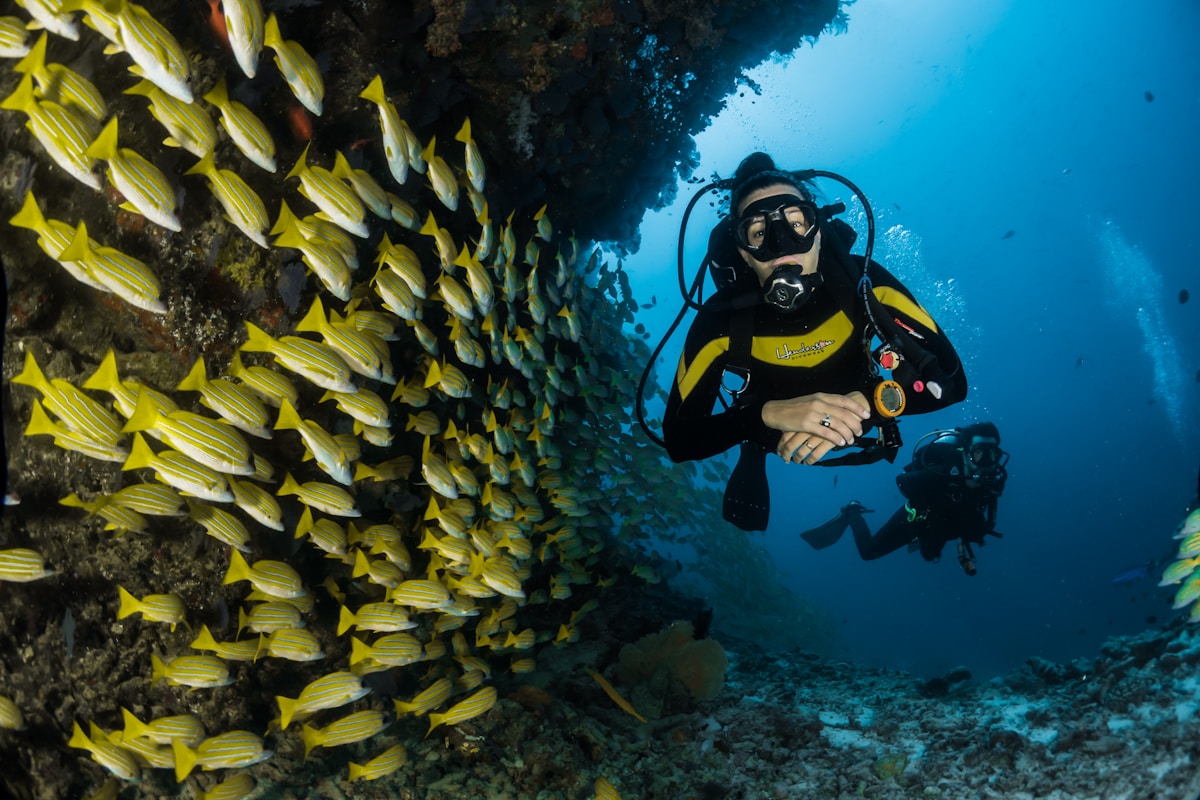
Sharks: Komodo is a globally important shark sanctuary. Whitetip reef sharks sleep on the bottom in caves and overhangs; grey reef sharks patrol the channel walls; hammerhead aggregations occur at deeper sites (30m+). Occasional whale shark sightings occur at bait ball sites, particularly June–November.
Pygmy seahorses: Komodo is the original discovery location for the pygmy seahorse — at 2–2.5cm, the smallest seahorse species. Gorgonian sea fans at 15–30m carry multiple individuals; they're visible with macro photography.
Nudibranchs: Komodo has over 200 nudibranch species — among the highest concentrations anywhere. The cold thermocline water (sometimes dropping to 19°C at depth) supports unusual cold-water species alongside tropical species.
For dive certification and safety standards: PADI's Indonesia dive guide | Coral Triangle Initiative
Best Dive Resorts & Liveaboards in Komodo 2026
Liveaboards (Recommended for Serious Divers)
1. Aqua Blu — Most Luxurious Liveaboard in Indonesia
The standout: Aqua Blu is the most luxurious liveaboard in the Indonesian archipelago — a converted Dutch passenger vessel reimagined as a 15-cabin dive yacht with suites, fine dining, and personalised dive guiding. The vessel operates 7-night itineraries covering Komodo's full range of dive sites, from the manta cleaning stations to the deep channel walls.
Highlights:
- 15 cabins including Master and Suite categories — the largest berths of any Indonesian liveaboard
- Dive deck: two-compressor dive system; dedicated camera rinse tanks; private camera tables
- Fine dining: the highest quality meals of any Indonesian liveaboard — freshly caught local seafood nightly
- Dive team: dedicated marine biologists and professional underwater photographers on each trip
- Kayaks, stand-up paddle boards, and drone photography sessions included
Price: From $550/night per person (7-night minimum) · Suite: from $750/night per person
2. Seven Seas — Best Mid-Range Liveaboard
The standout: Seven Seas is a 12-cabin phinisi vessel — the traditional Indonesian wooden sailing boat design — built to a higher specification than most phinisi liveaboards. The combination of traditional design and modern comfort (ensuite bathrooms, AC cabins, professional dive deck) makes it the best value liveaboard for divers who want quality without Aqua Blu pricing.
Highlights:
- Traditional phinisi design: the most authentic Indonesian sailing experience combined with serious diving
- 4 dives per day: most itineraries include a night dive
- Sundeck: the forward sundeck with bean bag loungers is the finest social space of any Komodo liveaboard at this price
- Flexible itineraries: 3, 5, and 7-night options available
Price: From $280/night per person · Best cabin: Master Suite from $380/night per person
Land-Based Resorts
3. Plataran Komodo Resort — Best Land-Based Luxury
The standout: Plataran Komodo is Indonesia's finest land-based dive resort in the Komodo region — a 30-villa property on Waecicu Beach, Flores, with its own PADI dive centre, speedboat fleet for Komodo island access, and the most elevated resort design of any property within range of the national park.
Highlights:
- Private beach: Waecicu Beach is one of the most beautiful and least visited beaches accessible from Labuan Bajo
- Dive centre: PADI 5-Star facility; 3 custom dive boats; nitrox available; 4 dives per day possible
- Komodo dragon tours: daily guided park visits to Rinca and Komodo islands (20–35 minutes by speedboat)
- Design: traditional Flores timber architecture with Indonesian textile art throughout
- Infinity pool: the only resort pool with direct ocean views in the Labuan Bajo area
Price: From $320/night · Best villa: Pool Villa from $580/night
4. Sudamala Resort Labuan Bajo — Best Boutique in Town
The standout: Sudamala is the finest boutique hotel within Labuan Bajo town — a 28-villa property on a quiet hillside above the harbour, with the best sunset views of the Komodo island chain from any land-based property. The rooftop restaurant is the finest dining in Labuan Bajo.
Highlights:
- Harbour sunset views: the most dramatic vista from any hotel in the Flores archipelago
- Diving: own boat and PADI dive centre; the most convenient dive access from any Labuan Bajo hotel
- Rooftop restaurant: the best restaurant in Labuan Bajo — grilled seafood and local Flores cuisine
- Location: 10-minute walk from Labuan Bajo's best restaurants, night market, and diving services
Price: From $180/night · Best villa: Panoramic Pool Suite from $380/night
Getting to Komodo
By air: Komodo Airport (LBJ) in Labuan Bajo — direct flights from Bali (Denpasar, 1h, multiple daily on Garuda, Lion Air, TransNusa). Some connections from Jakarta and Surabaya. Most travellers route through Bali.
From Bali: The standard approach is fly Denpasar–Labuan Bajo (1h). The return journey can be made by boat to Lombok (2 days via the famous Komodo–Lombok boat trip) or return to Bali by air.
Liveaboard embarkation: Most liveaboards depart from Labuan Bajo harbour. Some offer Bali–Komodo itineraries (4 days minimum) that bypass the need to fly to Labuan Bajo separately.
For current park information and entry regulations: Komodo National Park Authority (BTNK) | Indonesia Ministry of Tourism
Best Time to Dive Komodo
April–November: The primary diving season — dry season, calmer seas, excellent visibility (20–40m). Manta aggregations peak June–October.
December–March: Wet season on the Flores coast — some sites become difficult due to sea conditions. The northern sites (Pink Beach, Tatawa Besar) are often accessible when south-facing sites are rough. Fewer boats in the water — good for those who dislike crowded sites.
Manta rays: Year-round; peak June–October at Manta Point (Karang Makassar)
Whale sharks: June–November; particularly at bait ball sites near the fish aggregation grounds
FAQ: Komodo Diving
Is Komodo good for beginner divers?
Some sites are excellent for beginners — Pink Beach, Crystal Rock at entry depths, and the shallower sections of Batu Bolong. However, Komodo has strong currents that can make many sites unsuitable for beginners or those without current diving experience. An Open Water certification is insufficient for many of the headline sites; Advanced or equivalent experience is recommended.
How many days do you need in Komodo?
For diving: 5–7 days minimum to cover the major sites. Liveaboard is the most efficient option. Land-based diving typically covers 2–4 sites per day but travel time to the best sites (30–60 minutes by speedboat) reduces dive time.
For Komodo dragons only (non-diving): 2 days is sufficient — one day on Komodo island, one on Rinca. Labuan Bajo makes an excellent 1–2 night stop.
Explore our Raja Ampat luxury diving guide, Bali dive guide, and Indonesia island hopping guide for more Indonesia inspiration.
Filed under: