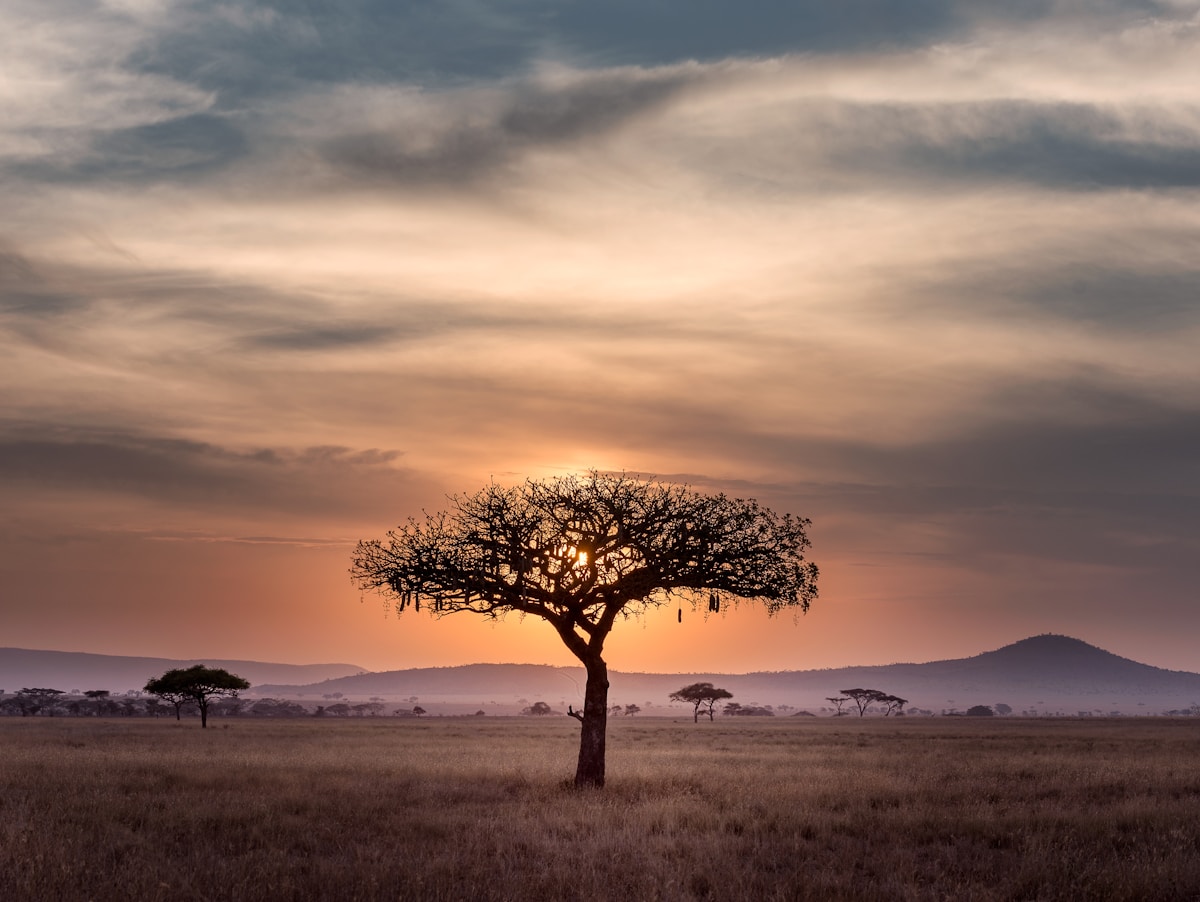
Namibia is Africa's most extraordinary desert destination: the world's oldest desert, the highest sand dunes, a coast littered with shipwrecks, and desert-adapted elephants. Hoanib Skeleton Coast, Wolwedans, and Little Kulala define the pinnacle.
Namibia is the least-visited country in sub-Saharan Africa relative to its extraordinary natural wealth — a country of 825,000 km² (larger than France and Germany combined) with only 2.6 million people, producing a wilderness density that makes Kenya's Masai Mara feel crowded. The Namib Desert (the world's oldest desert at 55 million years — "the Namib" in Nama language means "vast place") extends 2,000km along the Atlantic coast, producing the highest sand dunes on Earth (Sossusvlei's Big Daddy dune reaches 325m), a fog-desert ecosystem of extraordinary endemism (the Welwitschia plant lives 1,500 years; the fog beetle harvests drinking water from Atlantic mist on its shell), and the Skeleton Coast (300km of Atlantic coastline littered with shipwrecks, seal colonies, brown hyenas, and desert-adapted lion populations that hunt Cape fur seals). The luxury lodge scene — anchored by &Beyond, Wilderness Safaris, and Natural Selection — is among the most innovative in Africa.
Why Namibia for Luxury Travel?
Namibia's photographic light — the quality of illumination in the Namib Desert at dawn and dusk, when the dune faces alternate between deep shadow and burning orange, is regarded by landscape photographers as among the finest in the world — draws serious photographers from every continent. The wildlife is unlike anywhere else in Africa: desert-adapted elephants (smaller than savanna elephants, with flatter feet for sand travel, found in the Hoanib and Hoarusib riverbeds — the most remarkable individual animals in Africa); black rhinos in Damaraland (one of the few free-roaming black rhino populations in Africa, monitored by Save the Rhino International); brown hyenas, Cape foxes, oryx, and springbok adapted to survive without drinking water (obtaining all moisture from their food). Namibia's political stability (the most peaceful country in sub-Saharan Africa by multiple indices) and the English-language tourism infrastructure (inherited from South African administration until 1990) make it the most logistically straightforward Africa safari outside South Africa.
The 5 Best Luxury Lodges in Namibia 2026
1. Hoanib Skeleton Coast Camp — Natural Selection
Location: Hoanib River, Skeleton Coast | Price: From €1,200/night (all-inclusive)
The most remote and extraordinary luxury camp in Namibia and one of the world's finest eco-lodges — Hoanib Skeleton Coast Camp's 6 tents on the ephemeral Hoanib River (a desert river that flows only a few days per year but whose underground water sustains the desert-adapted elephant population year-round) offer the only luxurious access to both the Skeleton Coast National Park and the desert-adapted elephant herds. The camp's activities — desert-adapted elephant tracking (the herd spends approximately 3 months of the year in the Hoanib riverbed, accessible from the camp), Skeleton Coast fly-in (guests fly 30 minutes to the coast for seals, shipwrecks, and desert lion tracking), and the Hartmann's Mountain Zebra and Giraffe of the Hoanib floodplains — constitute the most extraordinary wildlife programme in Namibia. Natural Selection operates a fly-in-only camp accessible exclusively by light aircraft from Windhoek (2.5 hours).
Best for: The most extraordinary Namibia wildlife experience (desert-adapted elephants + Skeleton Coast + desert lions in one camp); the most remote luxury camp in Namibia (fly-in only); guests for whom Namibia's most iconic wildlife is the priority; conservation-focused travellers (Natural Selection's community and conservation model); photographers (the Hoanib riverbed light is extraordinary)
2. Wolwedans Dunes Lodge — NamibRand Nature Reserve
Location: NamibRand Nature Reserve, near Sossusvlei | Price: From €700/night (all-inclusive)
The finest lodge in the NamibRand Nature Reserve and the most complete Namib Desert experience — Wolwedans Dunes Lodge's 9 elevated chalets on wooden decks face the red sand dunes and plains of the NamibRand (the largest private nature reserve in southern Africa at 202,000 hectares — completely unfenced, bordering Namib-Naukluft National Park and adjacent to Sossusvlei). The NamibRand's Dark Sky Reserve (the first in Africa, the largest in the southern hemisphere) produces the finest star density of any lodge in Namibia — the Milky Way is visible as a solid band rather than a diffuse haze. Activities: guided dune walks (learning the fog-beetle and Namib chameleon adaptations), hot air balloon over the dunes at dawn (the finest balloon experience in Africa — the dune colour from altitude is extraordinary), horseback riding across the plains. Wolwedans is independently Namibian-owned.
Best for: Dark sky stargazing (the largest Dark Sky Reserve in the southern hemisphere — better than any Sahara camp); the hot air balloon over Namib dunes (the finest in Africa); the NamibRand Nature Reserve's private access (no public day visitors); guests who want Sossusvlei nearby without the national park's crowds; sustainable travel (all Wolwedans profits fund the NamibRand Nature Reserve)
3. Little Kulala — Wilderness Safaris
Location: Kulala Wilderness Reserve, Sossusvlei | Price: From €900/night (all-inclusive)
The finest lodge for Sossusvlei access and the most complete dune experience — Little Kulala's 11 "kulala" suites (elevated, with a rooftop "star bed" for open-air sleeping and private plunge pools) in the Kulala Wilderness Reserve provide the earliest access to Sossusvlei and Deadvlei: the concession's private gate allows guests to enter Sossusvlei 45 minutes before the national park's public gates open, meaning the Deadvlei white clay pan (with its 900-year-old dead camel thorn trees) and the Big Daddy and Dune 45 summits are experienced in total silence before tour vehicles arrive. Wilderness Safaris applies its full sustainability standard. The rooftop star bed — sleeping on an open platform above the desert with the Namib night sky overhead — is the defining Little Kulala experience.
Best for: Guests who want Sossusvlei (the world's most photographed desert landscape) without the crowds (45-minute head start before public gate opening); the rooftop star bed; Deadvlei at dawn with no other visitors; the most complete Sossusvlei circuit (Big Daddy, Dune 45, Deadvlei, Hidden Vlei) from a single property
4. Damaraland Camp — Wilderness Safaris
Location: Huab Conservancy, Damaraland | Price: From €600/night (all-inclusive)
The finest lodge in Damaraland and the best black rhino tracking base in Namibia — Damaraland Camp's 10 tents in the Huab Conservancy (a communal conservancy managed jointly by the Wilderness Safaris foundation and the local Damara community — 100% of community-management fees fund the conservancy's anti-poaching operations) provide the most reliable black rhino tracking in Namibia. The Huab Conservancy's rhino population (monitored by Save the Rhino International — approximately 20 individuals, free-roaming across 450,000 hectares) is tracked daily by the camp's dedicated rhino monitor; sightings are achieved on approximately 70% of dedicated rhino tracking days. Desert-adapted elephants also frequent the Huab River; the rock engravings of Twyfelfontein (UNESCO — the largest concentration of rock art in Africa, 2,500+ petroglyphs dating 6,000 years) are 45 minutes from the camp. Wilderness Safaris manages the property on behalf of the Damara community.
Best for: Black rhino tracking (the most reliable in Namibia — 70% success rate); the communal conservancy model (100% of fees to Damara anti-poaching); Twyfelfontein rock art UNESCO access; desert-adapted elephants in the Huab River; guests combining Damaraland with Hoanib (fly between camps in 45 minutes by light aircraft)
5. Sossus Dune Lodge — NamibRand
Location: Sesriem, Namib-Naukluft National Park | Price: From €300/night
The only accommodation inside the Namib-Naukluft National Park and the essential base for the earliest possible Sossusvlei access — Sossus Dune Lodge's 25 chalets on the park boundary (inside the park, providing gate access at 5am — 1 hour before the public gates open at 6am — and free access to Sossusvlei throughout the day without paying the daily park entry fee) deliver the best logistical position for Sossusvlei at the most affordable luxury price in the region. NWR (Namibia Wildlife Resorts) manages the lodge as a government concession. For guests whose primary goal is the dawn Sossusvlei/Deadvlei experience without paying the premium rates of Little Kulala, Sossus Dune Lodge provides access advantage at half the price.
Best for: Guests whose priority is the earliest Sossusvlei gate access (5am — the earliest possible, before even Little Kulala's private gate); the most affordable lodge with insider Sossusvlei access; self-driving travellers who want the national park location; guests who want park accommodation over private concession luxury
Namibia Safari Experience Guide
| Experience | Location | Notes |
|---|---|---|
| Deadvlei at Dawn | Sossusvlei | White clay pan; 900-year dead trees; enter 5–6am before tour groups |
| Desert-Adapted Elephant Tracking | Hoanib/Hoarusib rivers | Only accessible with specialist guide; Hoanib Camp is the best base |
| Skeleton Coast Fly-In | Skeleton Coast NP | Seal colonies (80,000+); shipwrecks; desert lion from the air |
| Hot Air Balloon, Namib | NamibRand/Sossusvlei | Finest dune balloon in Africa; Wolwedans or Sossusvlei operators |
| Twyfelfontein Rock Art | Damaraland (UNESCO) | 2,500+ petroglyphs; 6,000 years old; largest concentration in Africa |
| Etosha Pan Game Drive | Etosha National Park | Floodlit waterholes at night; white-encrusted pan landscape |
Namibia Must-Experiences
- Deadvlei at Sunrise: The white clay pan of Deadvlei — surrounded by the world's highest red sand dunes, its floor white from ancient evaporated mineral salts, supporting the skeletal remains of 900-year-old dead camel thorn trees whose wood has not rotted in the dry desert air — is the most photographed landscape in Africa after the Serengeti. The light from 6:15–7:15am (when the dune faces catch the first sun while the pan floor remains in shadow) produces the colour contrast that makes Deadvlei photographs immediately recognisable. Arrive at the Deadvlei entrance before 7am — the 1km walk from the car park begins in shadow at dawn and arrives in full light as the dunes warm.
- Desert-Adapted Elephant Encounter: Encountering a desert-adapted elephant — physically smaller than savanna elephants, with broader, flatter feet for sand-walking, capable of travelling 70km daily without water — in the Hoanib River is the most remarkable individual wildlife encounter in Africa. These animals have adapted over 10 generations to survive in the world's oldest desert; watching a 50-strong herd travel silently across an orange dune field with the Skeleton Coast mountains behind is a scene available only in Namibia's far northwest.
- Skeleton Coast Shipwreck Walk: The Skeleton Coast's "Dune of Death" — the 55km stretch of Atlantic coast from the Ugab River mouth to the Kunene River (the Namibia-Angola border) — is accessible only by fly-in from Hoanib Camp or by permit from the Skeleton Coast National Park. The shipwrecks (Eduard Bohlen, Dunedin Star, and others — some now surrounded by sand dunes 100m from the water after the dunes advanced over the 20th century) and the Cape fur seal colony (80,000+ individuals at Cape Cross) constitute the most surreal coastal landscape on Earth.
- Etosha Waterhole Night Drive: The Etosha National Park's floodlit waterholes (several camp waterholes are lit at night and freely accessible from the camp fence, no vehicle required) provide the most convenient wildlife-watching experience in Africa — sitting on a bench above the waterhole from 9pm to midnight watching elephant, rhino, giraffe, lion, leopard, and hyena come to drink in sequence, with no vehicle, no guide, and no schedule. The Okaukuejo camp waterhole is the most reliable; the Halali camp waterhole is the quietest. Book Etosha camps through NWR.
Getting to Namibia
Hosea Kutako International Airport (WDH): Windhoek, Namibia's capital. Air Namibia (the national carrier, restructured 2021) and South African Airways (via Johannesburg) are the primary carriers. Direct flights from: Frankfurt (10h, Condor/Lufthansa seasonal), London (12h via Johannesburg, British Airways/South African Airways), Johannesburg (2h30m — the primary connection hub). Self-drive vs. fly-in: The Namibia self-drive circuit (Windhoek → Sossusvlei → Swakopmund → Damaraland → Etosha → Windhoek, 2,000km, 10–14 days) is the most popular approach for independent travellers; fly-in circuits (Sossusvlei → Damaraland → Hoanib/Skeleton Coast, 5–7 days) are more expensive but access terrain unreachable by road.
Best Time to Visit Namibia
| Season | Months | Notes |
|---|---|---|
| Dry Season (Best) | May–Oct | Wildlife concentrated at waterholes; clear skies; 15–25°C; Sossusvlei accessible |
| Green Season | Nov–Apr | Summer rains; lush landscapes; Etosha less productive; some roads impassable |
| Desert flowers | Aug–Sep | After sporadic winter rain; Namaqualand daisy carpets |
| Whale & dolphin season | Jun–Nov | Benguela Current brings marine life to the Skeleton Coast |
*More Africa safari luxury guides:* Best luxury tented camps Serengeti 2026 | Best luxury gorilla lodges Rwanda 2026 | Best luxury safari lodges Kenya 2026
Filed under: