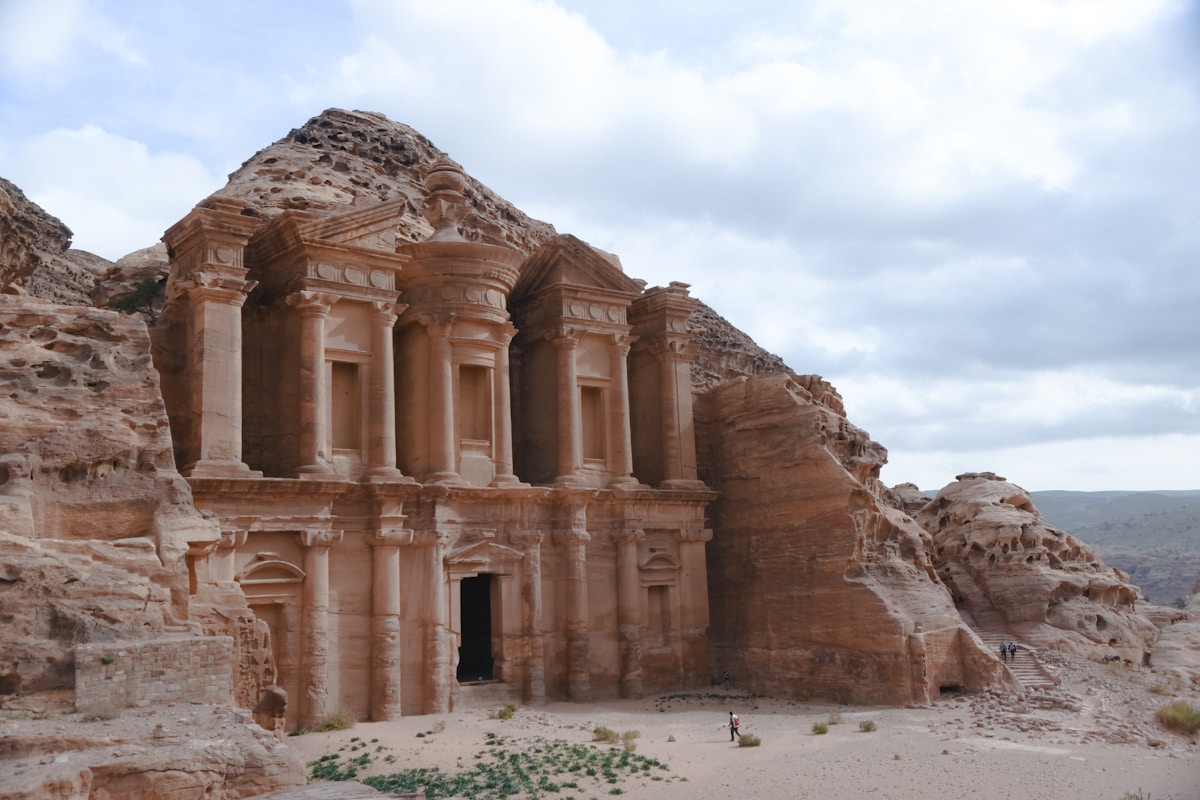
Jordan concentrates the Middle East's greatest ancient wonders: Petra, Wadi Rum, the Dead Sea, and Wadi Mujib. Six Senses Shaharut, Memories Aicha Pacha, and Feynan Ecolodge define the new desert luxury. The guide.
Jordan is the Middle East's most rewarding travel destination — a country that manages to contain Petra (one of the Seven Wonders of the World), Wadi Rum (the largest and most dramatic wadi desert in Arabia, used as the location for *Lawrence of Arabia*, *The Martian*, and *Dune*), the Dead Sea (the lowest point on Earth at 430m below sea level), and the ancient city of Jerash (the best-preserved Roman city outside Italy) within a country small enough to drive across in four hours. The warmth of Jordanian hospitality — a genuine cultural value rooted in Bedouin tradition, expressed through Arabic coffee (cardamom-spiced), date ceremonies, and mansaf (lamb in fermented yogurt sauce, the national dish) — is matched by the luxury hotel infrastructure that has evolved alongside Jordan's importance as a political moderate in a volatile region.
Why Jordan for Luxury Travel?
Jordan's political stability — the Hashemite Kingdom has maintained peace with Israel (since 1994), Egypt, and the West while serving as a refuge for regional crises (4 million Syrian and Palestinian refugees) — makes it the safest travel destination in the Arab world for Western travellers. The UNESCO portfolio is extraordinary: Petra (the Nabataean city carved from rose-red sandstone, functioning from the 4th century BCE — the Treasury, the Monastery, the Royal Tombs, and the Siq entrance gorge constitute one of the world's great architectural and landscape experiences), Wadi Rum (inscribed as a cultural landscape UNESCO site in 2011 for its Nabataean inscriptions, Neolithic rock art, and extraordinary desert geography), and the baptism site of Jesus at Bethany-Beyond-the-Jordan (the only place where this event can be historically confirmed by three Gospels simultaneously). The Dead Sea therapeutic tourism — floating in 34% salinity water, applying Dead Sea black mud, and the extreme UV reduction at -430m altitude (20% more UV filtered than sea level) — has produced the world's most medically documented resort environment.
The 5 Best Luxury Hotels in Jordan 2026
1. Six Senses Shaharut
Location: Shaharut, Negev/Jordanian border area | Price: From €700/night
The finest desert luxury hotel in the Middle East — Six Senses Shaharut (technically in Israel's Negev, the closest luxury hotel to Wadi Rum) perches at 1,000m on the rim of the Makhtesh Ramon crater (the world's largest erosion crater, 40km long × 8km wide × 400m deep — not a meteor crater but a geological erosion feature unique on Earth). 60 villas in desert stone embedded in the crater rim landscape; the Six Senses Spa (desert wellness: halotherapy salt rooms, crater-view yoga, Bedouin healing treatments); the restaurant using Negev desert agriculture (cherry tomatoes, herbs, goat cheese from kibbutz farms). Six Senses applies its wellness-first philosophy in the most dramatic desert setting of any Six Senses property worldwide. The Makhtesh Ramon night sky — among the darkest in the Middle East — produces extraordinary stargazing from room terraces.
Best for: Desert wellness seekers; the most dramatic hotel setting in the Middle East (1,000m crater rim); Six Senses wellness devotees; stargazing; guests combining Negev, Wadi Rum, and Petra on a Jordan-Israel circuit
2. Memories Aicha Pacha — Petra
Location: Wadi Musa, Petra | Price: From €350/night
The finest hotel in Petra and the closest luxury property to the Siq entrance — Memories Aicha Pacha's 20 suites in rose-cut Nabataean sandstone architecture deliver dramatic views of the Petra archaeological zone from room terraces. The only hotel in Petra that provides a genuine view of the rose-red cliffs from bedrooms — meaning guests can watch the Petra landscape change colour through sunrise and sunset from their own terrace. The restaurant serves traditional Jordanian cuisine (mansaf, maqluba, musakhan). Memories Aicha Pacha is independently owned. The Petra by Night experience (Monday, Wednesday, Friday — the Siq and Treasury illuminated by 1,500 candles) is accessible within 5 minutes walking from the property.
Best for: Petra archaeology immersion; the only hotel with true Petra cliff views from bedrooms; Petra by Night proximity; guests who want to enter Petra at dawn before tour groups (5-minute walk to Siq); independent boutique atmosphere
3. Wadi Rum Night Luxury Camp
Location: Wadi Rum Protected Area | Price: From €280/night
The finest glamping experience in the world and the definitive Wadi Rum accommodation — Wadi Rum Night Luxury Camp's 20 transparent-roof bubble tents and luxury Bedouin tents within the Wadi Rum Protected Area allow guests to sleep under the Milky Way in total desert silence, wake to the rose-and-amber sandstone landscape at sunrise, and participate in Bedouin cultural experiences (fire cooking, traditional music, camel trekking). Wadi Rum Night Luxury Camp is Bedouin-owned and operated — the economic model directly supports the Zalabia Bedouin community who have inhabited Wadi Rum since the Nabataean period. The bubble tents (transparent acrylic dome, climate-controlled, king bed, private bathroom) deliver an unobstructed Wadi Rum night sky that consistently ranks among the world's finest stargazing destinations.
Best for: The world's finest stargazing from bed (transparent bubble tent); Bedouin cultural authenticity; the most dramatic desert landscape in Arabia; guests combining Wadi Rum overnight with Petra day trip; photography
4. Kempinski Hotel Ishtar Dead Sea
Location: Dead Sea, Jordan Valley | Price: From €250/night
The most complete luxury resort on the Jordanian Dead Sea shore — Kempinski Ishtar's 345 rooms, suites, and villas in Babylonian-inspired architecture (the Ishtar Gate of Babylon reproduced in the hotel entrance) deliver direct Dead Sea beach access, five pools (including the Dead Sea-view infinity pool at the lowest-elevation infinity pool in the world at -430m), and the Serenity Spa (Dead Sea mineral treatments: black mud wraps, salt scrubs, and flotation therapy). Kempinski Hotels applies full brand standards. The Dead Sea beach is managed with fresh-water showers (mandatory after Dead Sea immersion — the salinity rapidly damages skin without rinsing) and lounge infrastructure. Petra is 2.5 hours south; Jerash and Amman are 1 hour north.
Best for: Dead Sea therapeutic experience (the most medically documented resort environment on Earth); Kempinski loyalty members; families (the most complete children's facilities on the Dead Sea); guests combining Dead Sea, Amman, and Jerash; the lowest-elevation infinity pool in the world
5. Feynan Ecolodge
Location: Wadi Feynan, Dana Biosphere Reserve | Price: From €120/night
The most extraordinary ecolodge in the Middle East and one of the world's great sustainable hotels — Feynan operates entirely without electricity (solar-powered lighting only; candles at night; no Wi-Fi), within the Dana Biosphere Reserve (Jordan's largest nature reserve, 320km², covering four distinct climate zones from desert to Mediterranean). 26 rooms in ancient mud-brick architecture; meals use entirely local Bedouin and farming community ingredients; night hikes to observe 20,000-year-old Neolithic copper mines are led by Feynan Bedouin guides. EcoHotels — Feynan is owned and operated by the Royal Society for the Conservation of Nature; all revenue supports Dana Reserve conservation. National Geographic named Feynan one of the world's 25 best ecolodges.
Best for: Sustainable travel with authentic impact (RSCN-owned, conservation-funded); the most complete nature immersion in Jordan; guests who want the Bedouin experience without luxury camp prices; copper mine archaeology tours; complete digital detox
Jordan Experience Guide
| Experience | Location | Notes |
|---|---|---|
| Petra Treasury (Al-Khazneh) | Wadi Musa | Enter Siq at 6am before tour groups; 1.2km gorge to Treasury |
| Petra Monastery (Ad-Deir) | Petra (2hr hike) | 850 steps above the city; larger than the Treasury; sunset views |
| Wadi Rum Jeep Safari | Wadi Rum | Full-day with Bedouin guide; sunset dunes; rock inscriptions |
| Dead Sea Float | Dead Sea (Jordan side) | Sunrise float; Kempinski or Movenpick beach access |
| Jerash Roman City | North Jordan | Best-preserved Roman city outside Italy; 2hrs from Amman |
| Wadi Mujib Siq Trail | Dead Sea level | River canyon; swimming; 4km waterfall hike |
Jordan Must-Experiences
- Petra Siq at Dawn: The 1.2-kilometre Siq — a natural cleft in the sandstone mountains, 200m high and sometimes only 2m wide — leads to the Treasury (Al-Khazneh). Enter at 6am opening (before tour groups arrive at 9am) and walk in almost total silence through the most dramatically scaled natural corridor in the world, to emerge suddenly at the Treasury's 43m-high rose-carved facade. The experience of the Treasury at 6:15am with only 10 people present versus 11am with 2,000 is transformatively different. Jordan Tourism Board provides Petra opening hours.
- Wadi Rum Sunrise Jeep Safari: The pre-dawn Jeep departure from Rum Village to watch sunrise strike the Wadi Rum sandstone formations (Jebel Umm Ishrin, Lawrence's Spring, the Mushroom Rock) — the landscape turning from dark grey to amber to burning orange in 20 minutes — is among the most spectacular natural light phenomena available anywhere in the world. Every Bedouin camp operator offers this; the quality depends on the guide's knowledge of optimal sunrise positions.
- Dead Sea Sunrise Float: The Dead Sea's extreme salinity (34% vs. ocean's 3.5%) means humans are physically incapable of sinking — the buoyancy is involuntary and slightly alarming until accepted. Float on your back at sunrise when the water is mirror-calm and the sky turns pink over the Judean Hills. The Jordan side has better-preserved shoreline than the Israeli side, which has receded 40m due to water diversion from the Jordan River.
- Jerash: Roman Decapolis City: The ruins of the Decapolis city of Gerasa (now Jerash) — colonnade-lined Cardo Maximus, two theatres, three nymphaea, the oval forum (unique in Roman architecture), and the hippodrome (where Jordan's tourism authority stages Roman chariot races at 11am and 1pm daily) — constitute the finest standing Roman city visible outside Rome and Pompeii. Jerash Tourism — allow 3 hours minimum.
Getting to Jordan
Queen Alia International Airport (AMM): Amman, Jordan's capital. Royal Jordanian is the national carrier with non-stop connections from: London Heathrow (4h45m), New York JFK (12h, one-stop via AMM), Paris CDG (4h30m), Frankfurt (4h), Dubai (2h30m), Bangkok (7h). Direct non-stop flights from London, Paris, Frankfurt, Amsterdam, and all Middle East hubs. The Jordan Pass (available at visitjordan.com) includes visa on arrival AND entry to Petra, Jerash, Wadi Rum, and 40+ other sites — essential for any tourist visiting more than two sites and the best-value tourism pass in the Middle East.
Best Time to Visit Jordan
| Season | Months | Notes |
|---|---|---|
| Spring (Best) | Mar–May | 20–28°C; wildflowers in Dana; Petra uncrowded; ideal hiking |
| Autumn | Sep–Nov | 22–30°C; second-best season; fewer tourists than spring |
| Winter | Dec–Feb | 10–18°C; Petra uncrowded; can snow at Petra and Wadi Rum (magical); Dead Sea warm (22°C) |
| Summer | Jun–Aug | 35–42°C; extreme heat in Wadi Rum and Dead Sea; avoid midday; Petra at 6am only |
*More Middle East luxury guides:* Best luxury hotels Muscat Oman 2026 | Best luxury hotels Dubai 2026 | Best luxury riads Marrakech 2026
Filed under: