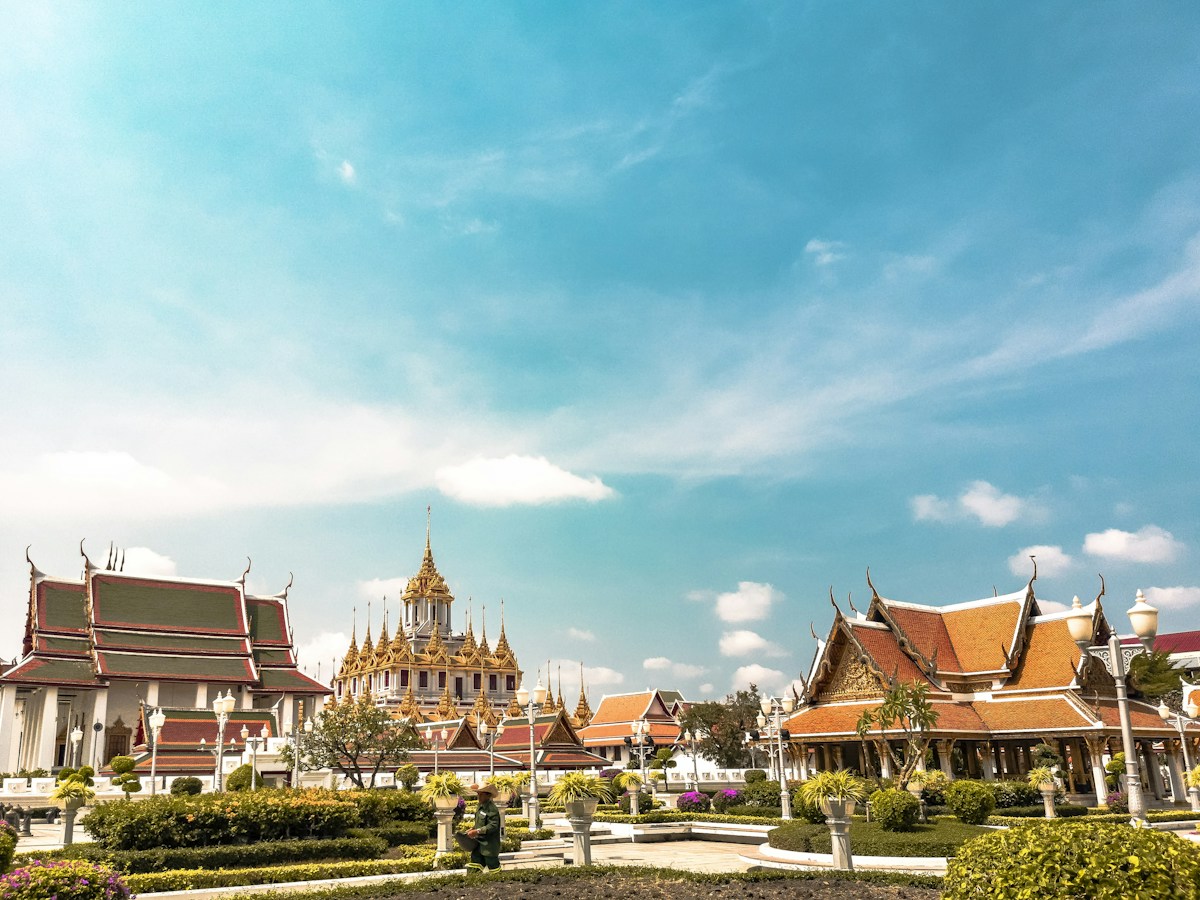
Luang Prabang is Southeast Asia's most perfectly preserved historic town — a UNESCO World Heritage city where monks collect alms at dawn on streets lined with French colonial temples. Here are the best luxury hotels for 2026.
Luang Prabang received UNESCO World Heritage status in 1995 — one of only a handful of entire towns recognised for both architectural and cultural significance. The former royal capital of Laos sits on a peninsula at the confluence of the Mekong and Nam Khan rivers, surrounded by mountains. The temple-to-population ratio is among the highest in the world; the pace of life moves to a Buddhist rhythm that even experienced Southeast Asia travellers find genuinely different.
For luxury travellers, Luang Prabang offers a combination that is increasingly rare in the region: extraordinary cultural heritage, growing hotel quality, extraordinary natural surroundings, and a visitor density that remains far below comparable destinations — all within a 2-hour flight of Bangkok.
Why Luang Prabang?
UNESCO-protected townscape: The entire historic peninsula — French colonial architecture, golden-spired temples (wats), royal palace, traditional wooden shophouses — is a living UNESCO World Heritage site. Unlike Hội An's old town (which is increasingly commercial), Luang Prabang's heritage zone is authentically inhabited by monks, artisans, and traditional families.
The alms-giving ceremony (Tak Bat): Every dawn at approximately 5:30–6am, saffron-robed monks from the city's 30+ monasteries walk in procession through the streets collecting alms (rice and food) from devout Buddhist laypeople. It is one of the most visually and spiritually powerful daily rituals in Asia. Observe with genuine respect and silence — this is a religious ceremony, not a performance.
Kuang Si Falls: A 30-kilometre drive from town — a multi-tiered cascade of turquoise-blue water through a limestone karst landscape. The upper pools are swimmable; the lower falls are photographed as one of Southeast Asia's finest natural water features.
Mekong River access: Luang Prabang sits at the junction of the Mekong and Nam Khan — slow boat trips (upstream to Pak Ou Buddha Caves, downstream toward Thailand), sunset river cruises, and the early morning mist over the Mekong are defining experiences.
Top Luxury Hotels in Luang Prabang
1. Amantaka
Aman's Luang Prabang property — a colonial French hospital converted to a 24-suite resort within the UNESCO heritage zone, a short walk from the main temple street. The architecture is extraordinary: French colonial buildings surrounding a central pool courtyard, with the city's rooflines visible above the compound walls.
Room highlights: Suites in the original hospital wings (high ceilings, original wooden shutters, contemporary interiors); pool suites with direct garden access.
Standout: The Amantaka's position within the heritage zone means that the dawn alms-giving procession passes the hotel's gate at 5:45am — guests can observe the ceremony from the hotel compound without joining the often-disruptive tourist crowd on the main street.
Rate range: USD 700–2,500/night
2. Rosewood Luang Prabang
Rosewood's Laos property — a tented villa camp 4km outside the historic centre, on a hillside above a seasonal waterfall. The 23 tented villas are elevated on platforms in the forest; some have private outdoor baths facing the trees. The separation from the town centre is the property's defining compromise — more seclusion, less UNESCO-heritage immersion.
Standout: The property's waterfall (seasonal, best October–February) creates a genuinely jungle-resort atmosphere. The spa program, built around traditional Lao healing traditions (herbal steam, traditional massage, traditional medicine plant garden), is the finest in Luang Prabang.
Rate range: USD 500–1,800/night
3. Belmond La Résidence Phou Vao
A hillside resort 1km from the town centre — 34 rooms in a series of pavilions on a hill overlooking the Mekong and the surrounding mountains. The infinity pool faces east toward the sunrise over the mountains; the morning view (mist rising from the river, the temple spires visible through the trees) is Luang Prabang's finest hotel panorama.
Standout: La Résidence Phou Vao's rooftop pool position delivers the most consistently photographed luxury hotel view in Luang Prabang. The Belmond brand's culinary focus (the restaurant team sources from a network of local Lao producers) makes dinner here genuinely worth staying for.
Rate range: USD 250–700/night
4. The Luang Say Residence
A boutique colonial property directly on the Nam Khan River — 11 rooms in a restored French colonial building surrounded by tropical gardens. The smallest of the luxury options, but the most atmospherically rooted in the UNESCO heritage zone.
Standout: The riverside garden (breakfast is served here) faces the Nam Khan confluence with the Mekong — the morning light on the river junction, with fishermen's boats crossing and the Phou Si hill visible in the background, is a composition that many guests photograph daily throughout their stay.
Rate range: USD 150–350/night
Key Experiences in Luang Prabang
Dawn Alms Ceremony (Tak Bat)
Position yourself quietly on the main street (Sakkarine Road) at 5:15am — before the ceremony begins and before the tourist photographers arrive. Stand quietly, do not use flash photography, do not approach the monks, and do not give food offerings unless you know the correct protocol. The ceremony takes approximately 30 minutes; the procession of orange-robed monks against the golden temple facades in the early light is genuinely moving.
Kuang Si Falls
30km from the town (45 minutes by tuk-tuk or private car). Arrive at the park opening time (8am) — the cascade and turquoise pools are most photogenic in morning light before the midday crowd. The Tat Kuang Si Bear Rescue Centre (Asiatic black bears rescued from the illegal wildlife trade) is at the park entrance.
For Kuang Si park information: Nam Ou National Park
Pak Ou Buddha Caves
2 hours upstream on the Mekong by slow boat — a limestone cave complex containing thousands of Buddha images accumulated over centuries. The journey is as important as the destination; the slow boat through the narrow Mekong valley provides some of Southeast Asia's most atmospheric river scenery.
Night Market
Luang Prabang's night market (Sisavangvong Road, 5pm–10pm daily) is one of Southeast Asia's best craft markets — hand-woven Lao textiles (silk and cotton), silverwork, traditional lacquerware, and Hmong embroidery at prices significantly below Bangkok or Hanoi equivalents. The quality is genuine; most pieces are produced in the surrounding villages.
Lao Cooking Class
The Tamarind restaurant (Luang Prabang's most acclaimed Lao cuisine table) offers morning cooking classes — market visit at the morning market, followed by a half-day class covering traditional Lao recipes (larb, sticky rice preparation, jeow bong chilli paste). The most highly regarded culinary experience in Laos.
For Tamarind cooking class booking: Tamarind Restaurant Luang Prabang
Getting to Luang Prabang
By air: Luang Prabang International Airport (LPQ) — direct from Bangkok (2h, Bangkok Airways and Lao Airlines), Chiang Mai (1h, Bangkok Airways), Hanoi (1h, Lao Airlines), Vientiane (45m). Direct from Singapore (3h30m, Lao Airlines/SilkAir seasonal). International capacity is limited — book early for peak season.
By slow boat from Thailand: From Chiang Rai (Thailand), cross to Huay Xai/Bokeo (Laos) by bridge or ferry, then take the 2-day Mekong slow boat to Luang Prabang — one of Southeast Asia's most famous overland journeys. The slow boat (traditional wooden vessel, 6–8 hours per day) passes through remote river valley scenery inaccessible by road. Arrive 5:30pm daily; luxury option (Luang Say Cruise, 2-day program) available at premium pricing.
Laos e-Visa: Available at Laos e-Visa Portal — USD 50, 30-day tourist visa, processed within 3 business days.
When to Visit
October–April (cool and dry): Luang Prabang's best season — temperatures 20–28°C, clear skies, the Mekong at manageable levels. November–February is peak; the cooling temperatures make the town maximally walkable. The Bun Pha Wet and Bun Pi Mai (Lao New Year, April) festivals are remarkable cultural events.
May–September (wet season): Heavy rain, the Mekong rises significantly (the waterfall access road can flood), and the surrounding countryside turns vivid green. The town remains operational and atmospheric; the rain is typically afternoon rather than morning. Fewer tourists and lower hotel rates.
Explore our guides to Siem Reap luxury hotels, Vietnam luxury travel, and Eastern & Oriental Express for more Indochina inspiration.
Filed under: