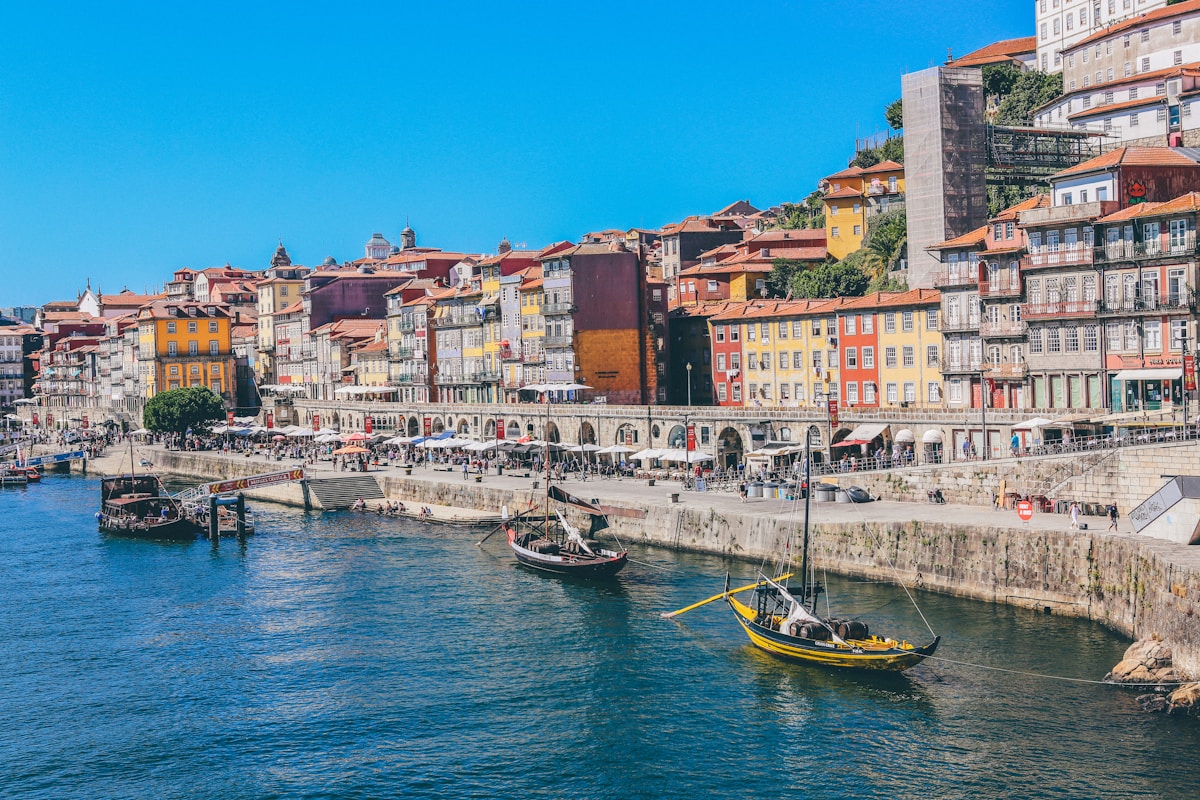
Porto is one of Europe's most authentic and beautiful cities — a UNESCO World Heritage riverside quarter of azulejo tile facades, port wine cellars, and some of Portugal's finest boutique hotels. Here's where to stay in luxury in 2026.
# Best Luxury Hotels in Porto 2026: Wine, Tiles & Atlantic Soul
Porto is what Lisbon was before it became fashionable. The city is older, rougher-edged, more authentically working-class, and — for those who respond to that combination of beauty and grit — more deeply rewarding. The UNESCO-listed Ribeira quarter climbs the north bank of the Douro River in a cascade of granite stairways, azulejo tile facades in every shade of blue, and buildings that have been lived-in continuously since the medieval period. The port wine lodges of Vila Nova de Gaia line the south bank opposite — each one a barrel-vaulted cathedral to the fortified wine that made Portugal's commercial fortune.
Porto has been transformed by the boutique hotel movement of the 2010s. Dozens of convents, palaces, and merchant houses have been converted into some of the most distinctive small hotels in Europe — each one telling the architectural story of a city that has been simultaneously decaying and regenerating for five centuries.
Why Porto for Luxury Travel
The architecture: Porto's historic centre contains one of the finest concentrations of azulejo (tin-glazed ceramic tile) facades in the world — train stations, church interiors, and ordinary house fronts all covered in intricate blue-and-white or polychrome tile programmes. The São Bento railway station's 20,000-tile interior (depicting scenes from Portuguese history) is one of the great decorative art spaces in Europe.
Port wine: The Douro Valley produces the grapes; the lodges of Vila Nova de Gaia age and blend the wine. Graham's, Taylor's, Ramos Pinto, and Quinta do Crasto are among the finest — all offering cellar tours and tastings. The Port Wine Institute (IVDP) provides producer listings and tasting room information.
The food: Porto's food culture is distinct from Lisbon — more traditional, more carnivorous, and more proud of its working-class roots. The francesinha (a toasted sandwich of cured meats in a tomato-beer sauce, blanketed in melted cheese) is the city's signature dish. The Mercado do Bolhão (reopened 2022 after restoration) is the best traditional food market in Portugal.
Best time: May–June and September–October for settled weather (20–25°C), lower prices than peak summer, and the city's major festivals. June brings the Festa de São João — Porto's most exuberant street festival, with fireworks over the Douro, sardines on charcoal, and residents hitting each other with plastic hammers.
Best Luxury Hotels in Porto
Yeatman Hotel, Vila Nova de Gaia — **Editor's Pick**
The finest hotel in Porto — located not in the city itself but on the south bank in Vila Nova de Gaia, the wine lodge quarter, with panoramic views over the Douro River and Porto's historic skyline from every room and the spectacular infinity pool.
The wine programme: Yeatman is a wine hotel in the most complete sense — owned by the Taylor's port wine family (Taylor Fladgate Partnership), with a cellar of 25,000 bottles, a Master of Wine as wine director, and a dining room that pairs Taylor's, Fonseca, and Croft ports with every course. The Wine Spa uses grape-based treatments (grape seed exfoliation, polyphenol wraps) drawn from the estate's Douro Valley production.
Dining: The Yeatman Restaurant holds two Michelin stars — chef Ricardo Costa's tasting menus are structured as wine pairings, each dish conceived around a specific wine rather than the reverse. One of Portugal's finest restaurants.
Rates: €350–750/night. Yeatman Hotel.
Torel Avantgarde, Porto
A design hotel of extraordinary ambition — a converted hilltop palace in the Bonfim neighbourhood with 60 rooms, each themed around a different period of Portuguese artistic history (the Discoveries era, the Baroque, the Romantic, Art Nouveau, and contemporary). The result is a property where no two rooms share an aesthetic, and every space is a conversation about Portuguese visual culture.
The garden: The hillside garden terraces, with views over the Douro Valley and the Atlantic horizon beyond, are among Porto's finest urban outdoor spaces.
Rates: €280–520/night. Torel Avantgarde.
Bairro Alto Hotel Porto (opening 2026)
The Lisbon institution's Porto expansion — bringing the same Portuguese artisan luxury formula to the north. The property occupies a converted 18th-century palace in the Cedofeita neighbourhood, with 55 rooms designed by the same team responsible for the Lisbon flagship.
Rates: TBC, expected €300–600/night from mid-2026.
Pestana Palácio do Freixo, Porto
The most palatial option — a converted 18th-century baroque palace on the Douro riverbank 4 kilometres east of the city centre, surrounded by terraced gardens descending to the river. The Freixo Palace was built in 1742; the Pestana group's conversion preserved the frescoed ceilings, marble staircases, and baroque chapel while adding a full resort infrastructure (two pools, spa, riverside restaurant).
The setting: The river views from the palace gardens — upstream toward the Douro Valley wine country, downstream toward Porto's bridges — are extraordinary. The traditional Rabelo boat (the flat-bottomed vessel that historically transported port wine barrels from the Douro Valley to the lodges) passes regularly below.
Rates: €250–480/night. Pestana Palácio do Freixo.
Porto Essential Experiences
Ribeira District (UNESCO): The medieval waterfront quarter — granite buildings painted in faded ochre, terracotta, and blue, with laundry strung between windows and cats on every step. The riverside promenade at dusk, with the port wine lodges illuminated across the Douro and the Dom Luís I bridge arching overhead, is Porto at its most cinematic.
São Bento Station: Arrive at Porto's main railway station for the azulejo panels alone — 20,000 tiles depicting scenes from Portuguese history cover the grand hall, installed between 1905 and 1916. Free to enter; 10 minutes is sufficient.
Port Wine Tasting, Vila Nova de Gaia: Cross the Dom Luís I bridge to the south bank and walk along the lodge-lined quay. Graham's Six Grapes Tasting Room and Taylor's Quinta de Vargellas are the finest introductions; both offer flights of vintage, tawny, and white ports with knowledgeable staff. Graham's Lodge has the most dramatic views from its terrace.
Livraria Lello: Widely cited as one of the world's most beautiful bookshops — a 1906 neo-gothic interior with a carved wooden staircase, stained glass ceiling, and walls of books. J.K. Rowling lived in Porto in the early 1990s; the bookshop is cited as an influence on the Hogwarts Library. Entry ticket (€5, redeemable against purchases) required. Book a time slot at livrarialello.pt.
Douro Valley Day Trip: The wine country begins 80 kilometres east of Porto — a UNESCO-listed landscape of terraced vineyards on schist slopes above the Douro River. The scenic railway from Porto's Campanhã station to Pinhão (2.5 hours) passes through the finest stretches. Quinta do Crasto and Quinta do Vale Meão offer estate visits and tastings.
Porto Practical Information
Getting there: Francisco Sá Carneiro Airport (OPO) served from London Gatwick, Heathrow, Stansted, Manchester, Edinburgh, Dublin, Amsterdam, Paris, Madrid, and most European hubs. TAP Air Portugal, Ryanair, easyJet, and British Airways operate routes. Flight time from London: 2.5 hours.
Getting around: Porto's centre is compact and best explored on foot. The Metro connects the airport to the city centre in 30 minutes (€2.40). Taxis and Uber available throughout.
Currency: Euro. Cards accepted almost everywhere.
Entry: Portugal is EU Schengen. EU/EEA with national ID. US, UK, Canadian, and Australian nationals enter visa-free for stays under 90 days.
*More Portuguese luxury guides:* Best luxury hotels Lisbon 2026 | Best luxury hotels Algarve 2026 | Best luxury hotels Azores 2026
Filed under: