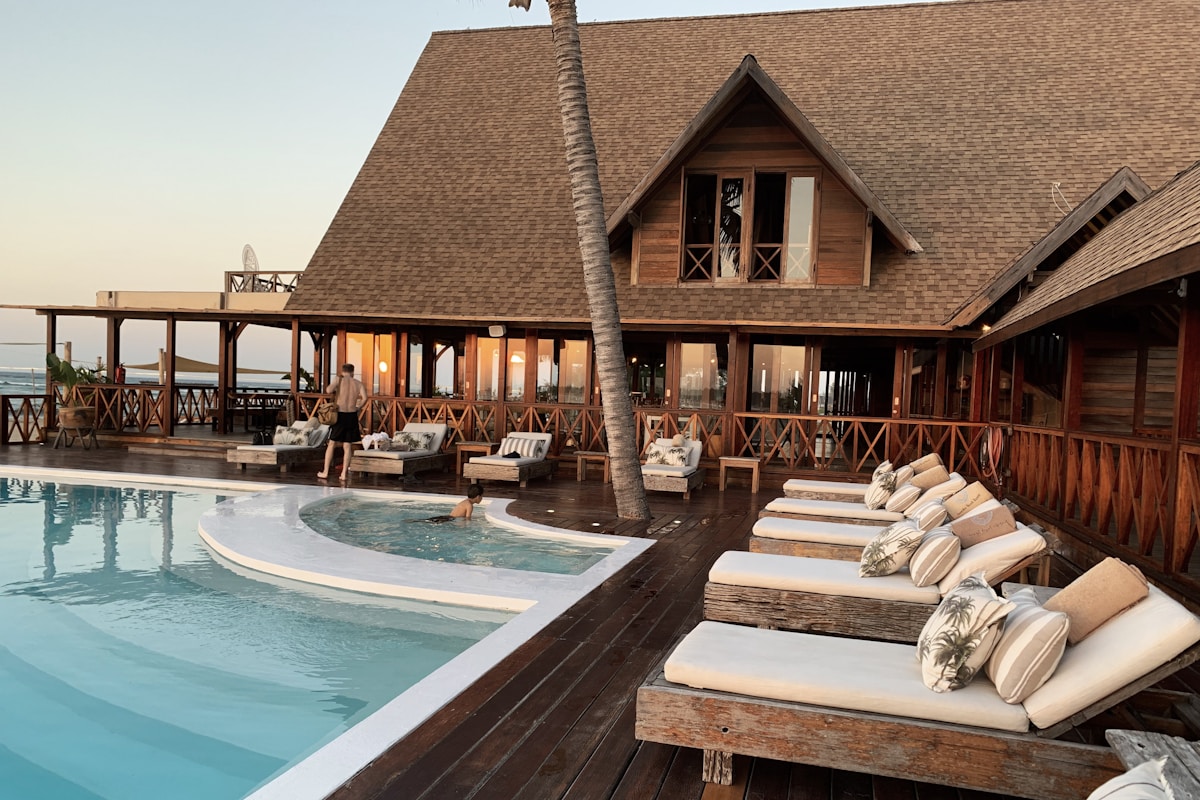
The Mergui Archipelago — 800 islands in Myanmar's Andaman Sea — is one of the last truly remote dive and sailing destinations in Southeast Asia. Ultra-exclusive liveaboards and rare island resorts offer access to pristine reefs and sea-nomad culture found nowhere else.
# Best Luxury Liveaboards & Resorts in Mergui Archipelago, Myanmar 2026
The Mergui Archipelago is one of the final frontiers of luxury travel in Southeast Asia — 800 islands spread across a 400-kilometre chain in Myanmar's southern Tanintharyi Region, where the Andaman Sea meets the Bay of Bengal. For decades, the archipelago was closed to foreign visitors entirely, with access restricted to a handful of fishermen and the Moken sea-nomads (Chao Lay) who have inhabited the islands for centuries, living on wooden boats and in stilt villages above the water.
Controlled foreign access opened in 1997, but the logistics of reaching Mergui — via Kawthaung (Victoria Point) on the Myanmar-Thailand border — combined with Myanmar's broader travel infrastructure challenges have kept visitor numbers extraordinarily low. This remoteness is precisely the point. The reefs here are among the most pristine in the Andaman Sea: no mass diving tourism, minimal pollution, and marine life that has recovered to densities not seen in Thailand or Indonesian dive sites for decades.
The luxury option in Mergui is almost exclusively the liveaboard — floating hotels that anchor in protected bays and offer multi-day itineraries across the archipelago's most spectacular sites. A handful of island resorts have opened in recent years, but liveaboard access remains the dominant and most rewarding approach.
Why Choose Mergui Archipelago?
Truly pristine reefs: Mergui's isolation has preserved coral ecosystems that have largely disappeared from Thailand and Indonesia. Leopard sharks rest in numbers on sandy seabeds. Schools of bumphead parrotfish demolish coral heads at dawn. Whale sharks are regular seasonal visitors. The density and scale of marine life consistently astonishes even experienced divers who have logged hundreds of dives across the Indo-Pacific.
Moken sea-nomads: The Moken (Chao Lay) are one of the last semi-nomadic maritime peoples in the world — living on kabang wooden boats and in temporary stilt villages, practicing free-diving for shellfish and sea cucumbers, and navigating by stars and current knowledge accumulated over generations. Encounters with Moken communities — arranged respectfully through liveaboard operators with established relationships — offer cultural access with no parallel in more developed destinations.
Absolute solitude: In the height of season (November–April), Mergui receives only a few hundred liveaboard visitors at a time across its entire 800-island expanse. Anchoring in a bay that you share with no other vessels is the norm, not the exception.
Combination with Thailand: Mergui liveaboards typically depart from Khao Lak or Phuket in Thailand (via Kawthaung border crossing on the Myanmar side), making the archipelago easily combinable with a Thai luxury resort stay.
Top Luxury Liveaboards in Mergui Archipelago
1. MV Giamani (Giamani Liveaboard)
The benchmark for Mergui luxury liveaboards — Giamani is a 35-metre wooden motor sailer converted to an 8-guest luxury diving vessel with 4 air-conditioned cabins, a sun deck, and a dive deck equipped to professional standards. The vessel's size allows access to shallower bays inaccessible to larger boats.
- Capacity: 8 guests maximum in 4 twin/double cabins
- Dives per day: 3–4, plus optional night dive
- Itinerary: 7–10 night circuits of central and southern Mergui; Black Rock, Western Rocky, Silvertip Bank, Shark Cave (King Cruiser), Moken village visits
- Cuisine: Thai and international; fresh seafood sourced at fishing villages en route
- Best for: Small-group intimacy; couples and advanced divers
2. MV Equator (Equator Liveaboards)
Mergui's most established operator — Equator has been running Mergui circuits since the archipelago opened to foreigners, with an institutional knowledge of tidal patterns, wildlife aggregation points, and Moken community protocols that newer operators lack.
- Capacity: 12 guests across 6 cabins; air-conditioned throughout
- Dives: Up to 4 per day with Nitrox available
- Highlights: Veteran PADI-certified Dive Masters with decade-long Mergui knowledge; best operator for whale shark and leopard shark encounters (Western Rocky)
- Best for: Experienced divers who prioritise marine life over luxury aesthetics
3. MV Cephalopod (Moby Dick Liveaboards)
Photography-focused liveaboard — Cephalopod carries a maximum of 10 guests with underwater photography guides, a dedicated camera rinse station, laptop charging points, and an onboard colour calibration setup. The itinerary is planned around morning and afternoon light rather than pure dive efficiency.
- Specialty: Underwater macro photography; rare species documentation (pygmy seahorses, nudibranchs, ghost pipefish)
- Capacity: 10 guests; 5 cabins with en-suite bathrooms
- Best for: Underwater photographers; dive naturalists
4. MV Andaman Explorer
The most spacious vessel in Mergui — at 40 metres, Andaman Explorer carries 16 guests across 8 cabins with a full-beam sun deck, massage room, and semi-open-air dining area. The scale allows onboard facilities (yoga deck, full kitchen, dedicated dive store) comparable to a small boutique hotel.
- Capacity: 16 guests; largest vessel in regular Mergui service
- Facilities: Onboard spa treatments, yoga mat deck, kayaks and stand-up paddleboards for island exploration
- Best for: Groups; those who want maximum comfort over intimacy
Mergui Island Resorts
While liveaboards dominate, two land-based options exist for those who prefer a fixed base:
Wa Ale Resort
Mergui's only ultra-luxury island resort — Wa Ale occupies a private island in the northern Mergui Archipelago, accessible by speedboat from Kawthaung. 10 beachfront pavilions (half over water) are built from local materials with solar power, rainwater collection, and no plastic single-use items. The resort's reef is protected as a private marine area.
- Setting: Private island, northern Mergui; 10 pavilions
- Activities: Snorkelling from beach (no motor boats near reef), kayaking, birding (endemic species), guided Moken village visits, sailing excursions
- Sustainability: Myanmar's first certified carbon-neutral island resort; plastic-free since 2018
- Access: Kawthaung by Andaman Air from Yangon, then 1.5-hour speedboat
Myanmar Andaman Dive Resort (Pyi Taw Aye Island)
A smaller, more basic operation catering primarily to dive guests — 8 wooden bungalows on a private island, with a PADI dive centre and boat access to 20 nearby sites. Genuinely remote; generator power only, no air conditioning in bungalows.
Mergui Dive Highlights
Black Rock: A seamount rising from 40m to 5m below the surface in the open Andaman Sea — currents concentrate nutrients and, in turn, pelagic species. Schooling batfish, dogtooth tuna, barracuda, and seasonal manta ray aggregations (December–March).
Western Rocky: A cluster of pinnacles in the northern archipelago known for the highest density of leopard sharks in the Andaman Sea — up to 30 animals resting on sand flats at 15–25m in a single dive.
Shark Cave: An extensive cave system at 18–30m with resident whitetip reef sharks, giant groupers, and a resident school of glassfish so dense they form a shimmering wall.
Silvertip Bank: Oceanic seamount notorious for silvertip shark encounters; advanced divers only (40m depth, strong currents).
Getting to Mergui
Via Thailand: Most liveaboards depart from Khao Lak Pier or Phuket and include the Kawthaung border crossing as part of the itinerary. Fly to Phuket (HKT) or Surat Thani (URT) for transfer to Khao Lak.
Via Myanmar directly: Kawthaung (IATA: KAW) has domestic flights from Yangon (YGN) via Andaman Air. Thai nationals and Myanmar e-visa holders can cross the land border at Kawthaung from Ranong (Thailand) by longboat (15 minutes).
Entry requirements: Myanmar e-visa for most nationalities — apply via the Myanmar e-Visa portal. Liveaboard operators typically handle immigration paperwork for Kawthaung entry.
Best season: November–April (northeast monsoon — calm seas, 25–30m visibility). The archipelago is effectively inaccessible May–October due to southwest monsoon weather.
Practical Considerations
- Currency: Myanmar Kyat (MMK); USD accepted at Wa Ale Resort. Liveaboard packages are typically all-inclusive — pay in USD/THB before departure.
- Health: Antimalarials recommended; consult a travel health clinic before departure. Dengue mosquitoes present on islands. WHO Myanmar health page.
- Political context (2024–2026): Myanmar's post-2021 situation has affected tourism infrastructure. Consult your government's travel advisory before booking — UK FCDO and US State Department advisories are updated regularly. Most liveaboard operators maintain operations with appropriate safety protocols.
*More remote dive destination guides:* Best luxury dive resorts Raja Ampat 2026 | Best luxury resorts Andaman Islands India 2026 | Best luxury dive resorts Sipadan 2026
Filed under: