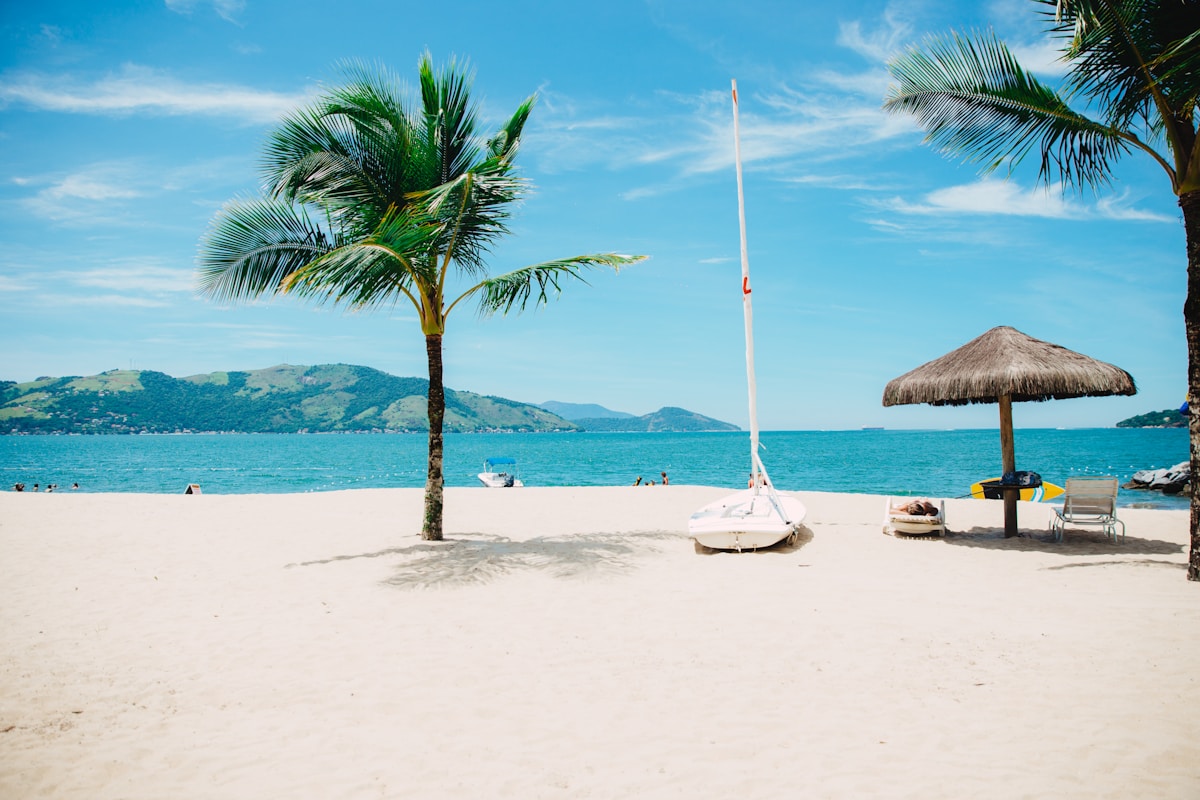
Camiguin — the "Island Born of Fire" — is a tiny volcanic island off northern Mindanao with more volcanoes per square kilometre than any island on earth. Hot springs, a sunken Spanish colonial cemetery visible underwater, waterfalls, and pristine coral reefs make it one of the Philippines' most diverse and undervisited destinations. Our 2026 luxury guide covers the best resorts.
# Best Luxury Resorts in Camiguin Island, Philippines 2026
Camiguin is the Philippines' second-smallest province — a roughly oval island of 237 km² in the Bohol Sea, 80 km off the northern tip of Mindanao. It is also, by one measure, the world's most volcanically concentrated island: seven volcanic cones (four of them historically active) rise from a land area smaller than most Philippine cities. The island's nickname — *Island Born of Fire* — is not metaphorical. Camiguin rose entirely from volcanic activity; its soil is extraordinarily fertile, its hot springs are genuinely thermal, and its highest peak, Mount Hibok-Hibok (1,332m), last erupted in 1953.
The combination of volcanic geology, warm Bohol Sea waters, and relative isolation from mass tourism has produced a destination of extraordinary variety: a sunken Spanish colonial-era cemetery visible by snorkeling at 3 meters depth, a natural-gas bubbling "White Island" sandbar, three major waterfalls, and healthy coral reefs in the surrounding marine protected areas.
Why Choose Camiguin?
- 7 volcanoes on one island — the world's highest volcano-per-km² density; unique geology
- Sunken Cemetery — a 19th-century cemetery submerged by the 1871 volcanic eruption; snorkeled with a cross visible underwater
- White Island — a pure white sandbar appearing from the sea, surrounded by a productive snorkeling reef
- Katibawasan Falls — a 76-metre waterfall into a natural pool in the volcanic interior
- Genuinely uncrowded — Camiguin receives a fraction of the visitors of Bohol or Siargao
Top Luxury Resorts in Camiguin
1. Paras Beach Resort — Yumbing, Mambajao
The flagship luxury property on Camiguin, Paras Beach Resort occupies a beachfront position on the island's north coast near Mambajao (the provincial capital) with 22 rooms and bungalows in a tropical garden. The resort's dive center runs excursions to the Sunken Cemetery, White Island, and the outer reef walls. A freshwater pool fed by the island's thermal springs — naturally warm at 38°C — is the resort's most distinctive feature; swimming in volcanic spring water while looking at the Bohol Sea is an experience unique to Camiguin.
Highlights: 22 rooms, thermal spring pool (38°C), dive center, White Island proximity, Mambajao location
Best for: Couples, divers, travelers wanting unique volcanic geothermal experience
2. Camiguin Action Geckos Dive Resort — Agoho
A boutique dive resort of 16 rooms on the island's north coast, Action Geckos is the most professionally operated dive facility on Camiguin — PADI 5-Star, with a dive team that has operated on the island's reefs for 20+ years. The resort specializes in the Camiguin dive circuit: Sunken Cemetery (snorkel/dive with cross visible at 3m), the coral walls of Old Volcano (encrusted with sea fans and soft coral at 15–30m), and the deep wall at Tangub Bay. Night dives are particularly productive — flathead crocodilefish, ghost pipefish, and frogfish are regular sightings.
Highlights: 16 rooms, PADI 5-Star, 20yr island experience, Sunken Cemetery diving, night dive expertise
Best for: Serious divers, underwater photographers, dive-first travelers
3. Bahay Bakasyunan Sa Camiguin — Yumbing
A 28-room resort in a lush garden above the north coast beach, Bahay Bakasyunan (meaning "vacation house" in Tagalog) is the island's most family-oriented luxury property. The resort maintains a fruit orchard — Camiguin's *lanzones* (langsat fruit) are among the Philippines' finest — and guests can pick fruit directly from the trees each morning. A freshwater river runs through the property; children swim in the natural pool where it widens. The resort arranges all island excursions including the classic 4-hour motorcycle circumnavigation tour with a local guide.
Highlights: 28 rooms, lanzones orchard, river pool, family facilities, island circumnavigation tours
Best for: Families, fruit enthusiasts, eco-conscious travelers
4. Enigmata Treehouse Eco-Retreat — Balingoan
The most unusual accommodation on Camiguin, Enigmata is an artist-built treehouse complex deep in the island's volcanic interior — a collection of 8 hand-crafted wooden platforms, rope bridges, and elevated sleeping spaces among the rainforest canopy. Solar-powered, rainwater collection, composting toilets. The founder is a sculptor and environmental artist; the retreat doubles as an art installation with found-object sculptures integrated into the forest. Not for travelers who need air conditioning, but extraordinary for those who don't.
Highlights: 8 artist-built treehouses, solar power, rainforest canopy, sculpture installations, total seclusion
Best for: Artists, eco-travelers, creative professionals, adventurous couples
5. Tanguile Beach Lodge — Guinsiliban, Southern Camiguin
On the island's quieter south coast — where the Bohol Sea is calm and the views extend to the Mindanao mainland — Tanguile is a 12-room boutique lodge above a black-sand volcanic beach. The southern coast receives fewer visitors than the north; the marine protected area directly in front of the lodge is one of the least-dived reef systems in the Bohol Sea, with remarkable coral health. The lodge's guide arranges sunrise hikes to the rim of Old Volcano crater — a 2-hour steep walk rewarded by extraordinary views of the island and sea.
Highlights: 12 rooms, south coast seclusion, undived MPA reef, Old Volcano crater sunrise hike, black-sand volcanic beach
Best for: Independent travelers, hikers, divers seeking pristine unreached reefs
The Geological Wonders
Sunken Cemetery
In 1871, a volcanic eruption from Mount Vulcan submerged an entire coastal barrio — homes, church, and cemetery — under the sea. Today the cemetery sits at 3–8 meters depth in Camiguin's Bonbon marine protected area. A large cross marks the site above water; below, coral-encrusted headstones and the outlines of the original cemetery wall are visible in clear water. Snorkeling here is extraordinary and appropriately sobering — the headstone inscriptions occasionally still legible through the coral growth.
White Island (*Isla Blanca*)
A temporary sandspit 1.5 km from the north shore — a pure white crescent of volcanic sand with no vegetation, no facilities, no shade. The surrounding reef begins 10 meters from the sandbar edge; snorkeling reveals coral gardens and reef fish at 3–8 meter depth. The island shifts position slightly each year as Bohol Sea currents reshape it. Best at low tide; inaccessible during rough weather. Boat transfer from Yumbing Beach: 15 minutes, PHP 150–200/person return.
Hibok-Hibok Volcano (1,332m)
The island's highest and most recently active volcano — last erupted 1953, currently monitored by PHIVOLCS. The summit trek (8–10 hours return) requires a guide and PHIVOLCS permit. The trail passes through montane forest, sulphuric vent fields, and crater rim. The view from the summit — across all seven of Camiguin's volcanic cones to the Bohol Sea — is among the Philippines' most dramatic mountain panoramas.
Katibawasan Falls
A 76-metre cascade of thermal-influenced water into a natural pool in the island's volcanic interior — the water is noticeably warmer than a standard mountain stream due to the geothermal influence. Swimming in the pool directly beneath the falls is permitted. The access road passes through a bamboo grove and lanzones orchards — the most scenic approach to a falls in the Visayas.
Getting to Camiguin
By air + ferry: Fly to Cagayan de Oro (CGY) or Laguindingan Airport (LGP) from Cebu (25 min) or Manila (1.5 hrs) — check Cebu Pacific Air for schedules. Then: 90-minute bus or van to Balingoan Port, followed by 1-hour ferry to Benoni Port, Camiguin. Ferries run frequently (SuperCat, Lite Ferries).
By direct ferry from Cebu: OceanJet runs a weekly direct Cebu–Camiguin service (check current availability — schedules change seasonally).
Visa: Philippines visa-free for 157 nationalities (30 days, extendable). Check Philippine Bureau of Immigration.
Practical Information
Currency: PHP. ATMs in Mambajao — bring sufficient cash (ATMs occasionally out of service).
Language: Cebuano, Filipino, English.
Best time: March–July (calm Bohol Sea, clear diving visibility). August–February: rougher seas, some ferry cancellations. Lanzones Festival in October — a major cultural event.
Island transport: Habal-habal (motorbike taxi) or motorcycle rental (PHP 400/day) for circumnavigation.
PHIVOLCS: Mount Hibok-Hibok monitoring updates at PHIVOLCS — check volcano status before planning summit trek.
External Resources
- PHIVOLCS — Hibok-Hibok Volcano Monitoring — Current volcano activity status and trekking permits
- Cebu Pacific Air — Cagayan de Oro / Laguindingan flight schedules
- Philippine Bureau of Immigration — Visa and entry requirements
*More Philippines island guides:* Best luxury resorts Siquijor Island 2026 | Best luxury resorts Panglao Island Bohol 2026 | Best luxury resorts Dumaguete & Apo Island 2026
Filed under: