Two island nations. Both iconic. Both extraordinary. But Seychelles and the Maldives deliver fundamentally different luxury experiences — one wild and granitic, one flat and coral. We break down every factor so you can choose the right Indian Ocean escape.
Seychelles vs Maldives: Two Visions of Indian Ocean Paradise
They share an ocean. They share a reputation. They share a clientele of luxury travellers willing to spend significant sums for extraordinary natural environments. But Seychelles and the Maldives are, at their core, entirely different destinations — shaped by different geology, different cultures, different ecosystems, and different philosophies of what a luxury island escape should feel like.
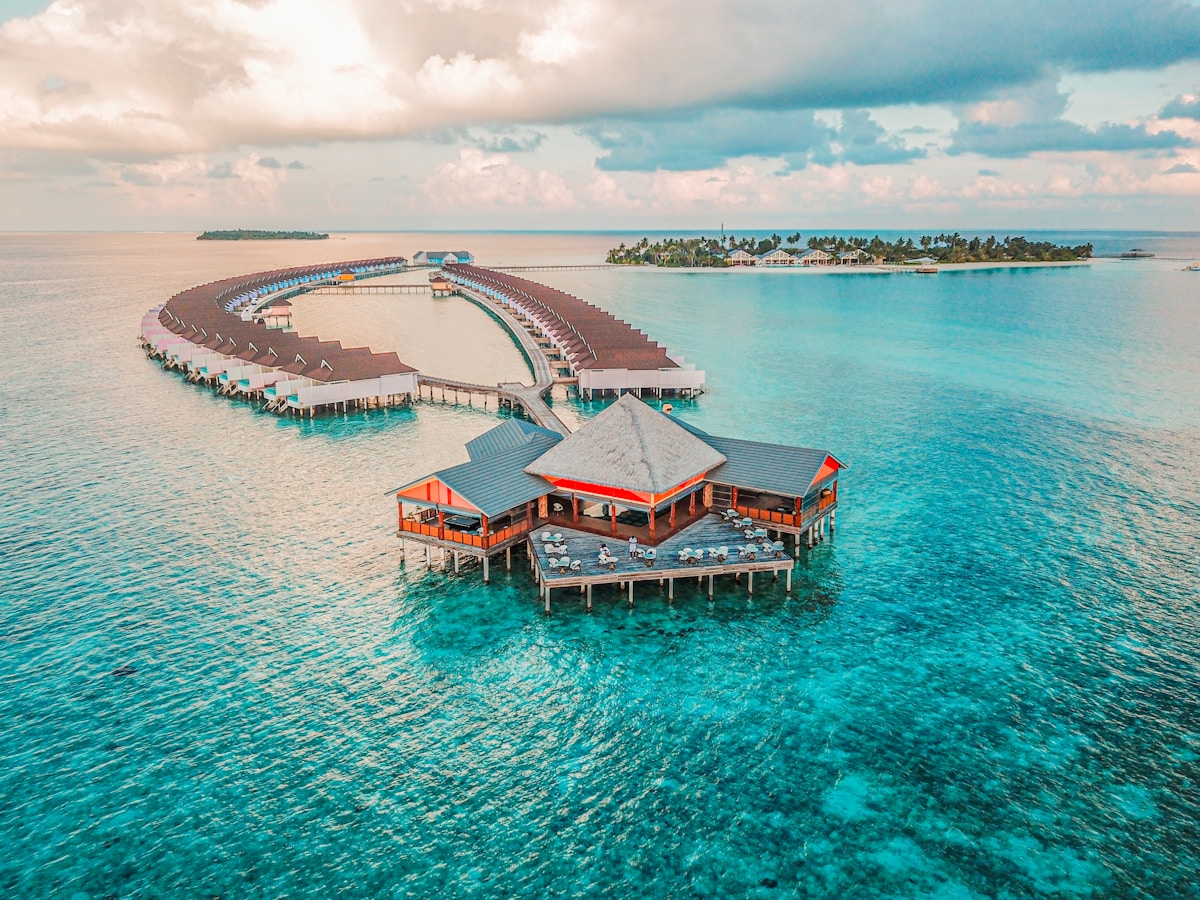
The Maldives is geological precision: 1,200 low-lying coral atolls, each barely above sea level, in water so still and clear it appears rendered. The overwater villa — the defining image of Indian Ocean luxury — belongs to the Maldives.
The Seychelles is geological drama: 115 islands, 42 of them granite, rising from the Indian Ocean in formations that have no parallel on earth. The boulders of La Digue. The jungle-covered peaks of Mahé. The UNESCO-protected forest of Vallée de Mai on Praslin, where the extraordinary double coconut — the coco de mer — grows only here and nowhere else.
Both are extraordinary. Choosing between them is not a question of which is better, but of which is right for you.
At a Glance
| Factor | Seychelles | Maldives |
|---|---|---|
| Location | Indian Ocean, east of Africa | Indian Ocean, south of India |
| Geography | Granite islands + coral islands | Coral atolls only |
| Signature landscape | Granite boulders, jungle, white sand | Flat atolls, turquoise lagoons |
| Overwater villas | Limited (some resorts) | Ubiquitous — the global benchmark |
| Wildlife | Giant tortoises, rare birds, marine life | Marine life (sharks, rays, turtles) |
| Cultural experience | Creole culture, local towns, real life | Resort-island culture only |
| Beaches | World-class (Anse Source d'Argent) | World-class (pristine lagoon sand) |
| Diving | Good–very good | Excellent (pelagic species) |
| Budget/night (luxury) | $500–$3,000+ | $700–$5,000+ |
| Getting there | Long-haul; fewer direct routes | Better-connected via Dubai/Singapore |
| Best season | Apr–May, Oct–Nov | Nov–Apr (dry season) |
The Geology Difference — And Why It Matters
Maldives: Coral Atolls
Every Maldivian island is a coral atoll — the rim of an ancient volcanic crater, now submerged, with coral growth creating a ring of land barely 1–2 metres above sea level. This geometry creates the famous Maldivian lagoon: shallow, calm, impossibly blue water trapped within the atoll ring, with the Indian Ocean beyond.
The flatness is the point. It creates the conditions for overwater villas, for house reefs immediately accessible from your doorstep, for the seamless transition from bedroom to ocean that defines the Maldivian luxury experience.
Seychelles: Ancient Granite
The inner Seychelles islands — Mahé, Praslin, La Digue — are among the world's oldest exposed granite, dating back 750 million years. They rise from the Indian Ocean in formations that seem almost architectural: massive rounded boulders tumbled onto white sand beaches, jungle-covered peaks catching morning cloud, coves hidden between headlands.
This geology creates landscapes with no equivalent: Anse Source d'Argent on La Digue (consistently rated among the world's most beautiful beaches) with its pink granite boulders framing white sand and turquoise shallow water. The Vallée de Mai on Praslin — a UNESCO World Heritage forest of coco de mer palms where black parrots nest and the air smells of vanilla.
The Seychelles is more visually dramatic. The Maldives is more environmentally perfect.
Beaches
Maldives
Maldivian beaches are perfection by design. Powder-white coral sand, impossibly turquoise water, and total calm — the protected lagoon on every island ensures the sea is swimmable, snorkellable, and photogenic at any time of day. The beach is essentially the edge of your overwater villa's jetty. You step off the end and fall into warm, clear water over coral.
The experience is consistent across properties: the variations are in service, architecture, and the specific shade of turquoise in different atolls.
Seychelles
The Seychelles' best beaches are more diverse — and in some cases more spectacular. Anse Source d'Argent on La Digue is in every objective list of the world's most beautiful beaches: the combination of pink-orange granite boulders, fine white sand, and clear shallow water creates a landscape that appears unreal. Anse Lazio on Praslin has been called the world's most beautiful beach more times than it can count. Anse Georgette, accessible only through the Four Seasons Praslin, is arguably even finer.
Unlike the Maldives, Seychelles beaches face the open Indian Ocean on some coasts — which means currents, occasional swell, and swimming conditions that vary by season. The best beaches are on sheltered coasts; the exposed coasts are dramatic but not always swimmable.
Verdict: Maldives for consistent, perfect swimming conditions. Seychelles for the world's most visually dramatic beach landscapes. Anse Source d'Argent is simply incomparable.
Overwater Villas
Maldives
The Maldives invented the overwater bungalow (at Kurumba in 1972) and has spent five decades perfecting it. Every significant global resort brand has at least one Maldivian property. The range runs from charming traditional wooden overwater bungalows at boutique resorts to the architectural ambitions of Soneva Jani (retractable roof over the bedroom), the underwater rooms of The Muraka at Conrad Rangali, and the private island complexity of Waldorf Astoria Ithaafushi.
If sleeping above the ocean — waking to the sound of water lapping beneath you, descending a ladder directly into the warm lagoon — is on your bucket list, the Maldives is the only destination to fulfil it completely.
Seychelles
Some Seychelles resorts offer overwater accommodation — notably North Island (where the villas are built over the lagoon) and a few properties at Sainte Anne Marine Park — but overwater villas are not the Seychelles' signature. The classic Seychelles luxury accommodation is a granite-hill villa or a beachfront suite: spacious, architecturally dramatic, often with a private infinity pool facing the Indian Ocean.
The best Seychelles rooms (the villas at North Island, the beach suites at Six Senses Zil Pasyon, the treehouses at Maia) deliver extraordinary luxury from a different spatial relationship with the sea: above it, looking out at it, rather than floating on it.
Verdict: Maldives wins decisively if overwater accommodation is a priority. Seychelles wins for granite-and-jungle villa experiences that simply don't exist in the Maldives.
Best Luxury Resorts
Maldives Top Picks
- Soneva Jani — retractable-roof overwater villas with private water slides; from $3,200/night
- Gili Lankanfushi — barefoot luxury; the original "no news, no shoes" resort; from $2,100/night
- Four Seasons Voavah — private island; six villa compound on its own atoll; from $8,000/night
- COMO Cocoa Island — dhoni-inspired overwater villas; exceptional wellness; from $900/night
- Waldorf Astoria Ithaafushi — the Maldives' most extravagant private island; from $35,000/night
Seychelles Top Picks
- North Island — the original ultra-luxury private island; 11 villas, entirely exclusive; from $5,000/night
- Six Senses Zil Pasyon — Félicité Island; breathtaking hillside villas over a granite bay; from $2,500/night
- Fregate Island Private — 16 villas on an island of giant tortoises; from $3,000/night
- Four Seasons Seychelles (Mahé) — hillside infinity villas above Petite Anse; from $1,200/night
- Maia Luxury Resort (Mahé) — 30 villas; twice awarded World's Best Boutique Hotel; from $1,500/night
Wildlife & Nature
Maldives
The Maldives' wildlife is underwater. House reef diving and snorkelling produce consistent encounters with reef sharks (white-tip, black-tip), green and hawksbill turtles, octopus, vast schools of reef fish, and in the right seasons — whale sharks (South Ari Atoll, year-round) and manta rays (Hanifaru Bay in Baa Atoll, May–November, where hundreds of mantas gather in the plankton bloom).
Above the waterline, Maldivian islands are largely vegetation-free coral; land wildlife is limited to seabirds.
Seychelles
The Seychelles is exceptional for *terrestrial* wildlife in ways the Maldives cannot match. The giant Aldabra tortoise — the world's largest, with individuals living to 150+ years — roams freely on several islands, including North Island and Fregate Island, where they outnumber human guests. The black parrot (found only in Praslin's Vallée de Mai) is one of the world's rarest birds. Hawksbill turtles nest on multiple beaches. The coco de mer — the world's largest seed, weighing up to 25kg — grows in UNESCO-protected forests on Praslin.
Marine wildlife is also strong: whale shark encounters at Silhouette Island, hammerhead sharks at Outer Islands dive sites, and excellent coral in the outer island groups.
Verdict: Maldives for underwater wildlife at scale. Seychelles for unique terrestrial wildlife — giant tortoises, rare birds, and endemic plants found nowhere else on earth.
Cultural Experience
Maldives
The Maldives is almost entirely resort-culture. Each luxury resort occupies its own island; guests rarely encounter Maldivian society beyond the resort's carefully curated cultural programming. The inhabited islands visible from resort jetties have traditional fishing communities and mosques — day trips are possible but uncommon for most luxury guests.
The experience is deliberately self-contained. That suits many travellers perfectly; others find it isolating.
Seychelles
The inner Seychelles islands (Mahé, Praslin, La Digue) have functioning towns, local markets, Creole restaurants, and a genuine society with 100,000 permanent residents. Victoria on Mahé is the world's smallest capital city — walkable, atmospheric, with a market selling fresh fish, spices, and locally crafted goods.
Creole culture — a fusion of African, French, British, Indian, and Chinese influences accumulated over 250 years of settlement — produces one of the Indian Ocean's most distinctive cuisines: grilled red snapper with coconut chutney, curried jackfruit, ladob (cassava dessert). Eating in a local restaurant in La Digue costs $15–$25; the food rivals resort dining.
Verdict: Seychelles wins clearly for cultural richness, local life, and the ability to step off the resort and into a functioning, interesting society.
Cost Comparison
| Category | Seychelles | Maldives |
|---|---|---|
| Budget accommodation | $120–$250/night (guesthouse) | $200–$400/night |
| Mid-range resort | $400–$800/night | $600–$1,200/night |
| Luxury resort | $1,000–$2,500/night | $1,200–$3,500/night |
| Ultra-luxury | $2,500–$5,000/night | $3,500–$35,000/night |
| Local dining | $15–$30 (available) | $40–$80+ (resort only) |
| Diving (2 tanks) | $80–$130 | $100–$160 |
| Inter-island transfer | $50–$200 (ferry/domestic flight) | $200–$600 (speedboat/seaplane) |
Both destinations are expensive at every tier. The Seychelles offers a slight structural advantage: local dining options exist, domestic transport (ferry to Praslin, ferry to La Digue) is inexpensive relative to Maldivian seaplane transfers, and mid-range guesthouses on La Digue and Praslin provide authentic experiences unavailable in the Maldives.
Verdict: Seychelles offers marginally better value and more budget flexibility through local dining and cheaper inter-island transfers. Maldives is structurally more expensive due to supply isolation on resort islands.
Accessibility
Seychelles
Mahé's Seychelles International Airport (SEZ) receives direct or one-stop flights from London Heathrow, Paris CDG, Dubai, Doha, Nairobi, Johannesburg, Singapore, and Mumbai. European connections tend to be strong; Asian connections less so. Once on Mahé, Air Seychelles operates domestic flights to Praslin (15 minutes), and regular ferries connect Praslin to La Digue (15 minutes).
Maldives
Malé's Velana International Airport (MLE) has excellent connections from Dubai, Doha, Singapore, Colombo, Kuala Lumpur, and multiple European and Chinese cities. Once at Malé, speedboats reach nearby resorts (30–90 minutes) and seaplanes reach more remote atolls (20–45 minutes, daylight hours only, $300–$600 each way).
Verdict: Roughly equal, with different strengths. Maldives has better connections from the Gulf and Southeast Asia; Seychelles has better connections from Europe and Africa. Both require planning around transfers to remote resorts.
Who Should Choose the Seychelles?
- Those for whom landscape drama matters — granite boulders, jungle, dramatic hilltop villas
- Wildlife enthusiasts who want giant tortoises, rare birds, and endemic species alongside the beach
- Cultural travellers who want a functioning local society, Creole cuisine, and genuine towns to explore
- Photography-focused travellers — the Seychelles' landscape variety produces more diverse images
- Travellers from Europe or Africa where routing is easier
- Those who don't require overwater accommodation as a defining feature
Who Should Choose the Maldives?
- Those for whom overwater accommodation is a bucket-list priority — there is no substitute
- Snorkellers and divers who want house reef access immediately from their room
- Honeymooners who want maximum seclusion and resort serenity
- Travellers from Asia and the Gulf where routing is easier
- Those who value environmental perfection over landscape variety
- Couples celebrating milestones who want one definitive, self-contained luxury experience
Can You Do Both?
Yes — and this is one of the world's great luxury travel combinations. A suggested 18-day itinerary:
- Days 1–8: Seychelles — 2 nights Mahé (Four Seasons), 3 nights Praslin (Six Senses or Lemuria), 2 nights La Digue (free and easy at a local guesthouse)
- Days 9–18: Maldives — direct flight Mahé → Malé via regional carrier; 5 nights at a premium overwater villa resort; 4 nights at a second, smaller boutique property
The contrast between the two destinations — Seychelles' geological drama and cultural texture versus the Maldives' watery perfection and sensory quietude — is one of the great Indian Ocean travel experiences.
FAQ
Is the Seychelles or Maldives more expensive?
At the luxury resort tier, costs are comparable — both destinations run $1,000–$3,500/night for quality properties. The Seychelles offers more budget flexibility through local guesthouses and dining options that don't exist in the Maldives' resort-island model. Maldivian inter-island transfers (seaplane: $300–$600 each way) add significant cost compared to Seychelles ferry connections ($10–$30).
Which has better beaches — Seychelles or Maldives?
Both are extraordinary but different. Seychelles produces the world's most visually dramatic beach landscapes — Anse Source d'Argent and Anse Lazio are in every objective "world's best beaches" list. Maldives produces the most consistently perfect swimming conditions — calm lagoon water, white sand, extraordinary clarity. For swimming: Maldives. For photography and scenery: Seychelles.
Is the Seychelles good for diving?
Yes — particularly for pelagic species in the outer island groups (Aldabra, Alphonse, Cosmoledo). The inner islands (Mahé, Praslin, La Digue) have decent reef diving with good coral and reef fish, plus occasional whale sharks at Silhouette Island. The Maldives has an edge for consistent large animal encounters (manta rays, whale sharks) and easier house reef access from resort rooms.
Which is better for a honeymoon?
Both are exceptional honeymoon destinations. The Maldives delivers the quintessential Indian Ocean honeymoon — overwater villa, private beach, resort serenity, total disconnection. The Seychelles offers more variety and surprise — dramatic landscape, cultural exploration, and the ability to hop between islands with distinctly different characters. If the overwater villa moment is the honeymoon priority, the Maldives wins. If you want a more adventurous and varied honeymoon, the Seychelles is the stronger choice.
Can I visit both Seychelles and Maldives in one trip?
Yes — Air Seychelles operates direct flights between Mahé and Malé, making a combined trip logistically straightforward. Allow at least 7–8 days in each destination to do both justice. A 16–20 day trip combining the two is one of the world's finest long-haul luxury travel itineraries.
Compare live resort rates across both destinations through our Maldives region page and Seychelles affiliate partners — real-time pricing, package deals, and the best available rates for the Indian Ocean's two greatest luxury island destinations.
Filed under: