Singapore and Bangkok are Southeast Asia's two premier city break destinations — but they offer radically different experiences. Here's a definitive 2026 comparison for luxury travellers.
Singapore and Bangkok compete for the same international traveller market — both are major airline hubs, both have exceptional luxury hotel portfolios, both have Michelin-starred restaurants, and both serve as gateways to Southeast Asia's islands. But the experience they deliver is fundamentally different, and the right choice depends entirely on what you want from a city break.
At a Glance
| Singapore | Bangkok | |
|---|---|---|
| Character | Ordered, clean, efficient, cosmopolitan | Chaotic, vibrant, culturally dense |
| Food scene | World-class — 3 Michelin stars, hawker centres | World-class — most Michelin stars in SEA |
| Luxury hotels | Exceptional (Marina Bay Sands, Capella, Four Seasons) | Exceptional (Mandarin Oriental, Capella, Peninsula) |
| Cultural depth | Moderate (Gardens by the Bay, museums) | Deep (temples, palaces, traditional markets) |
| Nightlife | Sophisticated but regulated | Extensive, raucous to refined |
| Transport | Exceptional MRT (best in Asia) | Improving (MRT + Grab + boat) |
| Weather | Year-round hot/humid, afternoon rain | Nov–Feb cool/dry (best), Mar–May hot, Jun–Oct wet |
| Cost | Higher (USD 400–2,500/night luxury) | Lower (USD 250–2,000/night luxury) |
| Safety | Among the world's safest cities | Generally safe for tourists |
| Day trips | Bintan (45min ferry), Batam, Johor | Ayutthaya (1.5h), Kanchanaburi (2.5h), Damnoen Saduak |
Singapore: The Curated City Break
What Singapore Does Better
Efficiency: Singapore's infrastructure is simply the most efficient in Asia — possibly the world. Changi Airport to city centre in 30 minutes by MRT; zero tipping culture; near-zero scam risk; food labelling, restaurant hygiene, and transport all to first-world standards. For travellers who want the Asia experience without the logistical friction, Singapore provides the smoothest entry point.
Gardens by the Bay: The Supertree Grove — 18 vertical gardens up to 50m tall, illuminated at night with a light and music show — is one of Asia's most genuinely impressive engineered landscapes. The Cloud Forest (a domed mountain of tropical cloud forest plants, artificially cooled to 23°C) and Flower Dome (Mediterranean climate plant collections) are world-class botanical attractions.
Marina Bay Sands: The most-photographed hotel in Asia — a three-tower resort with an iconic SkyPark rooftop infinity pool at 200m above the city. The hotel's casino, shopping mall (The Shoppes at MBS), and celebrity restaurant collection (Waku Ghin by Tetsuya Wakuda, db Bistro by Daniel Boulud) make it a self-contained luxury destination.
Hawker culture: Singapore's hawker centre food culture — enormous covered food courts where individual stalls serve single dishes perfected over decades — is a UNESCO Intangible Cultural Heritage. Maxwell Food Centre, Lau Pa Sat, and Newton Circus are the most visited; Chomp Chomp and Old Airport Road Food Centre are the most local. The Michelin Guide has awarded Bib Gourmands (excellent food at modest prices) to multiple hawker stalls — a category impossible in most luxury destinations.
Cocktail culture: Singapore's bar scene — Jigger & Pony (ranked Asia's Best Bar), Atlas (art deco gin palace in the Parkview Square tower), Native (indigenous ingredients cocktail bar) — is the most accomplished in Southeast Asia.
Singapore's Limitations
Cost: Singapore is significantly more expensive than Bangkok across all categories — hotel, food, alcohol, taxis. A comparable hotel night costs 30–50% more; restaurant meals for two at comparable quality cost 40–60% more. The hawker centre experience partially offsets this, but luxury travel costs are materially higher.
Cultural density: Singapore has compacted its cultural heritage into museums and heritage zones rather than maintaining it in daily life. The temples, mosques, and shophouses of Chinatown, Little India, and Kampong Glam are interesting but feel preserved rather than living. Bangkok's temple culture and daily Buddhist practice create a cultural depth Singapore cannot replicate.
Bangkok: The Immersive City Break
What Bangkok Does Better
Temple circuit: Bangkok has 400+ Buddhist temples; the main circuit (Grand Palace, Wat Pho, Wat Arun, Wat Saket) contains some of Asia's most impressive religious architecture. The Grand Palace complex alone — 218,400 sqm, original construction 1782 — is one of the world's great architectural ensembles. Wat Pho's Reclining Buddha (46m long, 15m tall, gold leaf covered) and Wat Arun's riverside spires are genuinely extraordinary.
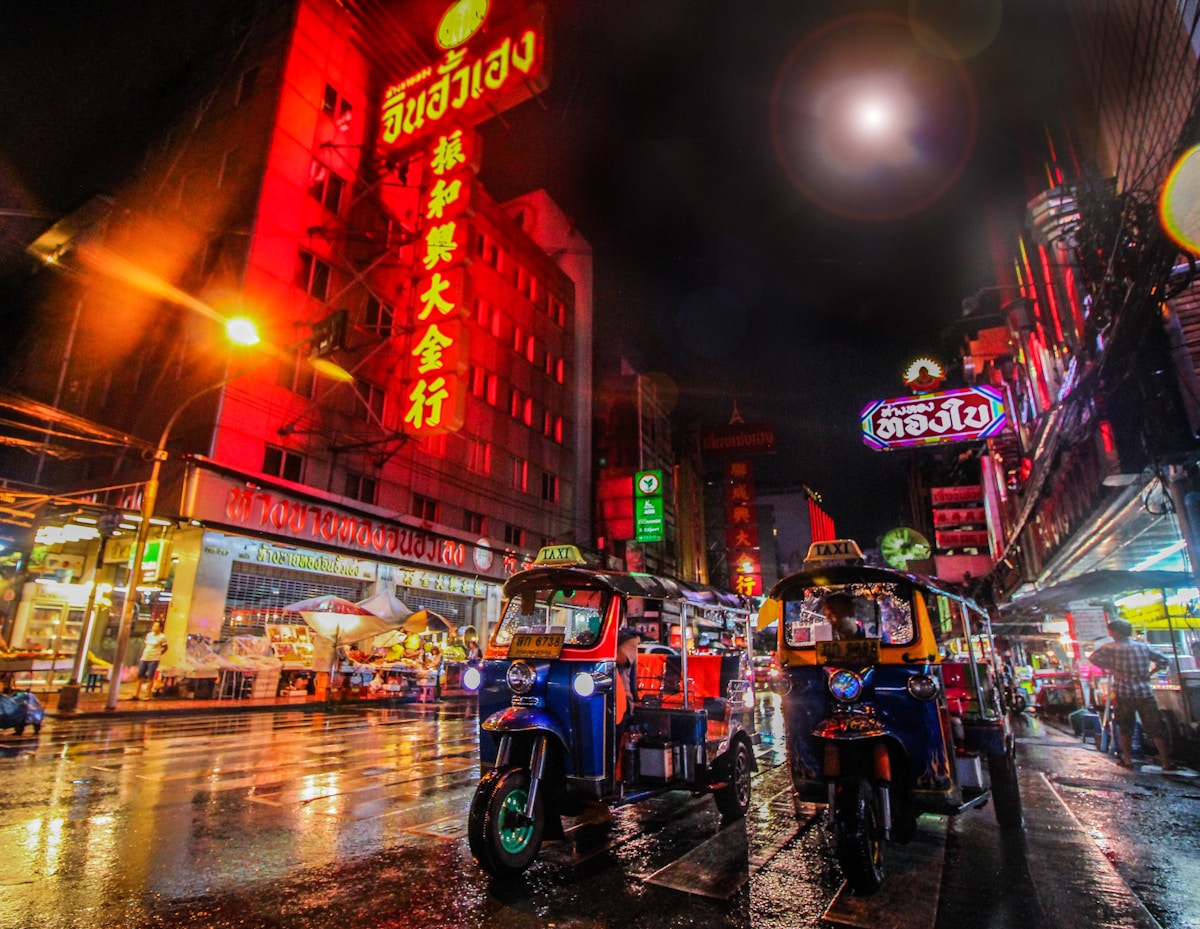
Culinary range: Bangkok has more Michelin-starred restaurants than any other Southeast Asian city, a street food culture centred on Yaowarat (Chinatown) and Or Tor Kor market that rivals Singapore's hawker centres in quality, and a restaurant scene covering Thai regional cuisines (northern, northeastern Isan, southern), international fine dining, and the Thai-Chinese fusion unique to Bangkok. Nahm (David Thompson), Gaggan Anand's post-Gaggan project, Bo.Lan, and Sorn (southern Thai haute cuisine) represent a fine dining cluster as strong as any city in Asia.
Price: Bangkok is 30–50% cheaper than Singapore across all luxury categories — the same luxury hotel experience costs significantly less. The value proposition is particularly strong at the USD 300–600/night tier, where Bangkok's properties consistently outperform Singapore's at equivalent price points.
Chao Phraya experience: Bangkok's riverside is Asia's most atmospheric urban waterway — the Mandarin Oriental, Peninsula, and Capella Bangkok all sit on the river. Arriving at the Mandarin Oriental's private pier by water taxi from the Sathorn Central pier is a distinctly Bangkok experience that no Singapore equivalent replicates.
Markets: Chatuchak Weekend Market (Bangkok) is Asia's largest — 15,000 stalls across 35 sections covering everything from Thai antiques to contemporary fashion to live animals. The Or Tor Kor fresh market is Bangkok's finest produce market — the quality of tropical fruit alone is worth a morning's visit.
Bangkok's Limitations
Traffic: Bangkok's traffic congestion is among the world's worst. The BTS Skytrain covers Sukhumvit and Silom; the MRT covers the historic district; but the gap between the two systems (partially bridged) means journeys involving the river or the Old City often require Grab or taxi in traffic. Journey times that look short on a map can take 45–90 minutes.
Heat: Bangkok is hot year-round (30–36°C); the hot season (March–May) is genuinely challenging for extended outdoor exploration. The cool season (November–February) is the most comfortable, but still 28–32°C.
Head-to-Head on Key Factors
For food obsessives
Bangkok edges it — the range from street food to high-end is wider and deeper. But Singapore wins on hawker quality consistency (hygiene standards, ingredient freshness) and cocktail culture.
For first-time Asia visitors
Singapore wins decisively — the infrastructure, language (English first), safety, and logistical simplicity make it the ideal Asia introduction.
For cultural immersion
Bangkok wins — the temple circuit, the traditional markets, the river culture, and the daily Buddhist practice create an immersive experience Singapore cannot match.
For luxury hotel experience
A draw — both cities have exceptional properties at comparable quality. Singapore's Marina Bay Sands is unrivalled for dramatic architecture; Bangkok's Mandarin Oriental and Capella are unrivalled for river atmosphere.
For value
Bangkok wins by 30–50% across all categories.
For a weekend city break
Singapore wins — the compactness and efficiency make a 3-night visit genuinely rewarding. Bangkok's size and traffic mean 5+ nights are needed to do it justice.
The Ideal Solution: Both
Bangkok → Singapore (or vice versa) is Southeast Asia's most practical two-city combination. Frequent direct flights (1h25m, AirAsia, Scoot, Singapore Airlines, Bangkok Airways) make a 3-night/3-night split itinerary entirely manageable within a 7–8 day trip.
Recommended split for luxury travellers:
- Bangkok first (5 nights): cultural depth, temple circuit, Chao Phraya riverside, Michelin dining
- Singapore second (3 nights): efficiency, Marina Bay, Gardens by the Bay, Changi Airport departure
For Singapore tourism: Singapore Tourism Board
For Bangkok tourism: Tourism Authority of Thailand — Bangkok
Explore our guides to Singapore luxury hotels, Bangkok luxury hotels & rooftop bars, and Eastern & Oriental Express connecting Singapore and Bangkok.
Filed under: