Best Time to Visit New Caledonia (2026)
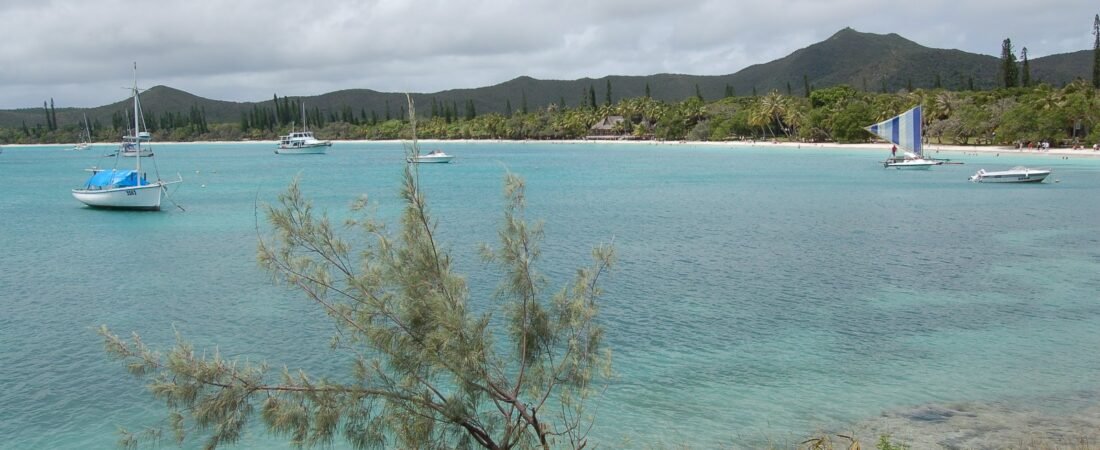
Illustrative lagoon photograph. Not a photograph of a specific New Caledonia location.
This guide focuses on when to visit New Caledonia specifically for travellers weighing lagoon visibility, cyclone risk and crowd levels against each other, rather than a general climate overview.
Research-based guide · Compiled from official tourism and climate sources, September 2026. Conditions vary year to year; confirm current forecasts closer to your travel dates.
Quick Answer
September through November is generally the best balance of dry weather, warm-but-not-extreme temperatures and lower cyclone risk. July and August are cooler and can bring rougher seas for boat transfers to the Isle of Pines. December through March is the cyclone-risk wet season, with the warmest water temperatures but the highest chance of disrupted travel.
This guide is written for beach, lagoon and general sightseeing trips. Divers prioritizing specific visibility windows should also check conditions with a local dive operator, since site-level visibility can vary from the general seasonal pattern described here.
New Caledonia sits far enough south in the Pacific that its seasons run opposite to the Northern Hemisphere: December through February is the Southern Hemisphere summer and the peak of the wet, cyclone-risk period, while June through August is winter and the coolest, driest stretch of the year. This inverted calendar catches some first-time visitors off guard when they assume a tropical destination follows a Northern Hemisphere summer-holiday pattern. It also means New Caledonia’s highest-demand travel period, the Southern Hemisphere summer school holidays around December and January, lines up exactly with its highest cyclone risk — a trade-off worth weighing deliberately rather than booking purely around when children are out of school.
Month-by-Month at a Glance
| Period | Conditions | Who it suits |
|---|---|---|
| June–August (cool dry season) | Cooler air temperatures, low humidity, occasional stronger trade winds | Travellers who prefer mild temperatures over warm swimming water |
| September–November (shoulder) | Warming temperatures, low rainfall, cyclone risk still minimal | Most travellers; widely considered the best all-round window |
| December–March (wet/cyclone season) | Warmest water, higher humidity and rainfall, active cyclone risk | Budget-focused travellers accepting some disruption risk |
| April–May (early dry season) | Cyclone risk tapering off, temperatures still warm | Travellers wanting warm water with declining storm risk |
Understanding Cyclone Season
New Caledonia’s cyclone season officially runs from November through April, in line with the broader South Pacific pattern. Most years see no direct hit on the main island, but tropical lows and near-misses can still bring heavy rain, rough seas and flight delays even without a named cyclone making landfall, and airlines serving Nouméa will sometimes cancel or reroute flights a day or two ahead of an approaching system as a precaution. Météo-France operates New Caledonia’s official cyclone monitoring and issues graded alert levels through local media, radio and its own bulletins, escalating from a pre-alert to a red alert as a system approaches.
What Happens If a Cyclone Approaches During Your Trip
If a cyclone warning is issued while you are already in New Caledonia, resorts generally move guests to secure interior spaces, suspend water activities and outdoor excursions, and wait out the system, which can mean one or more days of a trip spent indoors rather than at the beach. Domestic flights, ferries and Isle of Pines boat services are typically the first services suspended, often a day or more before the storm’s closest approach as a precautionary measure, so a wet-season itinerary with tightly scheduled inter-island connections carries real disruption risk even without a direct hit. Building at least one unscheduled buffer day into a wet-season trip is a simple way to absorb a short weather delay without losing a booked activity or a connecting flight elsewhere.
Météo-France Nouvelle-CalédonieDiving and Lagoon Visibility
Underwater visibility in New Caledonia’s lagoon is generally best during the drier months from May through November, when reduced rainfall means less runoff clouding nearshore water. The lagoon’s UNESCO World Heritage listing reflects its reef diversity rather than a guarantee of year-round visibility, so divers with specific site goals should confirm current conditions with a local operator rather than relying on the general seasonal pattern.
Water temperatures track the same seasonal curve as air temperature, ranging from roughly the low 70s Fahrenheit in the cooler months to the low 80s during the wet season, so a 3mm wetsuit covers most conditions year-round for recreational divers, with a thinner shorty being enough for the warmest months. Snorkeling around shallow reef flats near the Isle of Pines and Amedee Islet is generally comfortable without a wetsuit at any time of year, and rash guards are commonly used instead for sun protection on longer snorkel sessions. Dive operators around Nouméa typically run trips year-round, weather permitting, but some outer-reef sites reachable only by longer boat runs are seasonally weather-dependent and may be dropped from the schedule during rougher winter trade-wind conditions.
School Holidays and Crowd Levels
New Caledonia’s largest visitor markets are Australia, New Zealand and mainland France, so school holiday periods in those countries — particularly the Southern Hemisphere summer around December and January, and the July–August French and Australian winter break — tend to see the highest domestic and regional visitor numbers. Booking resort rooms and Isle of Pines boat transfers well ahead is worth doing for trips that overlap these windows.
Outside those peak windows, particularly in the shoulder months of September, October, April and May, both flights and popular day-trip boats tend to have more availability at short notice, which also generally means more competitive pricing on resort packages.
Temperature and What to Pack
Daytime temperatures range from the low 70s Fahrenheit in the cooler June–August months to the high 80s during the warmer wet season. A light layer for cooler evenings in the dry season is worth packing, along with reef-safe sunscreen and a rain shell for any visit during the wet season, since tropical downpours can be brief but intense.
Trade winds are a near-constant, generally pleasant feature of New Caledonia’s climate that keeps humidity manageable even in warmer months, and they tend to be strongest in the cooler months, which can make small-boat transfers to outer islets choppier even on an otherwise clear day. Travellers prone to seasickness may prefer to schedule Isle of Pines or Amedee day trips for calmer shoulder-season conditions rather than the windiest part of the dry season.
How to Choose Your Window
- Want the safest weather margin and don’t mind slightly cooler water: choose September or October.
- Want the warmest water and can accept some rain risk: choose late April or May, just after cyclone season tapers off.
- Traveling with a fixed connecting flight elsewhere: avoid December–March, when cyclone-related delays are most likely to cascade into missed connections.
- Budget is the main driver: wet-season rates are often lower, but confirm a resort’s cancellation policy for storm-related disruption before booking a non-refundable rate.
- Traveling specifically to dive or snorkel: prioritize May through November for the most reliable underwater visibility, and treat the wet season as a lower-visibility, higher-value-for-money alternative rather than a diving-first choice.
- Bringing young children or older travellers less tolerant of heat and humidity: the cooler June–August window is generally the most comfortable, even though water temperatures are at their lowest during that period. Pack a light jacket for evenings during this window, since temperatures can drop noticeably after sunset compared with the wet season.
Frequently Asked Questions
What is the single best month to visit New Caledonia?
Most travel guidance points to September or October, which combine low rainfall, minimal cyclone risk and comfortably warm daytime temperatures.
Is it safe to visit during cyclone season?
Many visitors travel safely during December–March, but the risk of a disrupted itinerary, from a delayed connecting flight to a cancelled Isle of Pines day trip, is meaningfully higher. Monitor official Meteo France alerts in the weeks before departure and choose travel insurance that explicitly names cyclone and tropical-storm cancellation cover rather than assuming a generic weather clause applies. Resorts generally have established storm procedures and will communicate directly with guests if a system is approaching, but independent travellers renting cars or staying in smaller guesthouses should follow local alerts themselves rather than assuming they will be notified.
When is the water warmest for swimming?
Water temperatures peak during the wet season, roughly December through March, though air humidity and rain are also at their highest during that same period.
Does the Isle of Pines have its own weather pattern?
The Isle of Pines follows the same general seasonal pattern as Grande Terre, but boat transfers from Nouméa can be more affected by wind and swell during the cooler June–August months than the flight-based mainland weather alone would suggest. Operators will typically delay or cancel a crossing rather than run it in unsafe swell, so build a buffer day into any itinerary that depends on a same-day return from the island.
Should I avoid New Caledonia entirely during wet season?
Not necessarily. Many travellers visit safely during the wet season and benefit from lower prices and fewer crowds; the trade-off is a real, non-trivial chance of weather-related disruption that increases toward the December–March peak. Travellers who value certainty over savings should still default to the September–November shoulder window described above.
For a full destination comparison, see New Caledonia vs Vanuatu, or explore other South Pacific seasonal guides like French Polynesia’s month-by-month guide and our Southeast Asia diving season guide. Official tourism information is available from New Caledonia’s official tourism site, and the lagoon’s UNESCO World Heritage listing has further ecological background. Always check current forecasts and cyclone alerts before finalizing travel dates, and build a flexible day or two into any itinerary that connects onward to another Pacific destination.