Rock Islands Southern Lagoon, Palau: A Guide
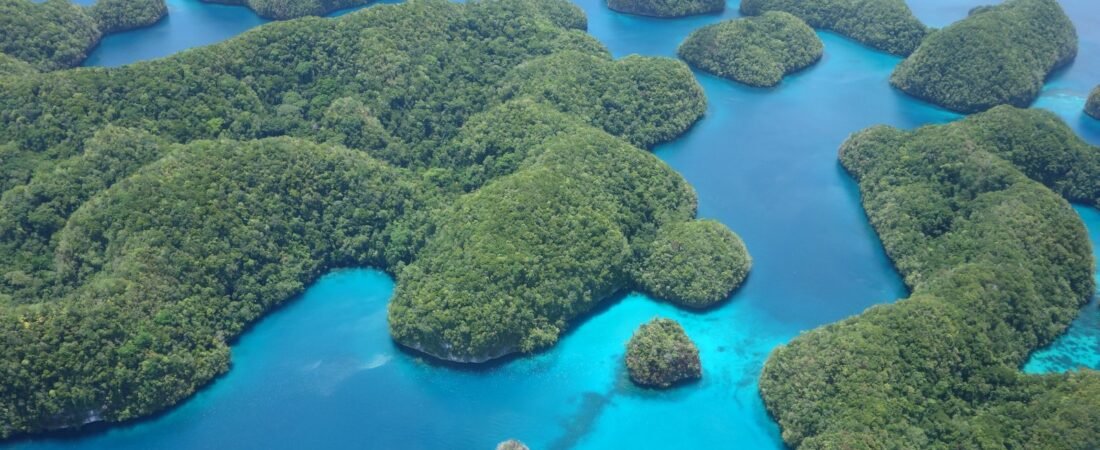
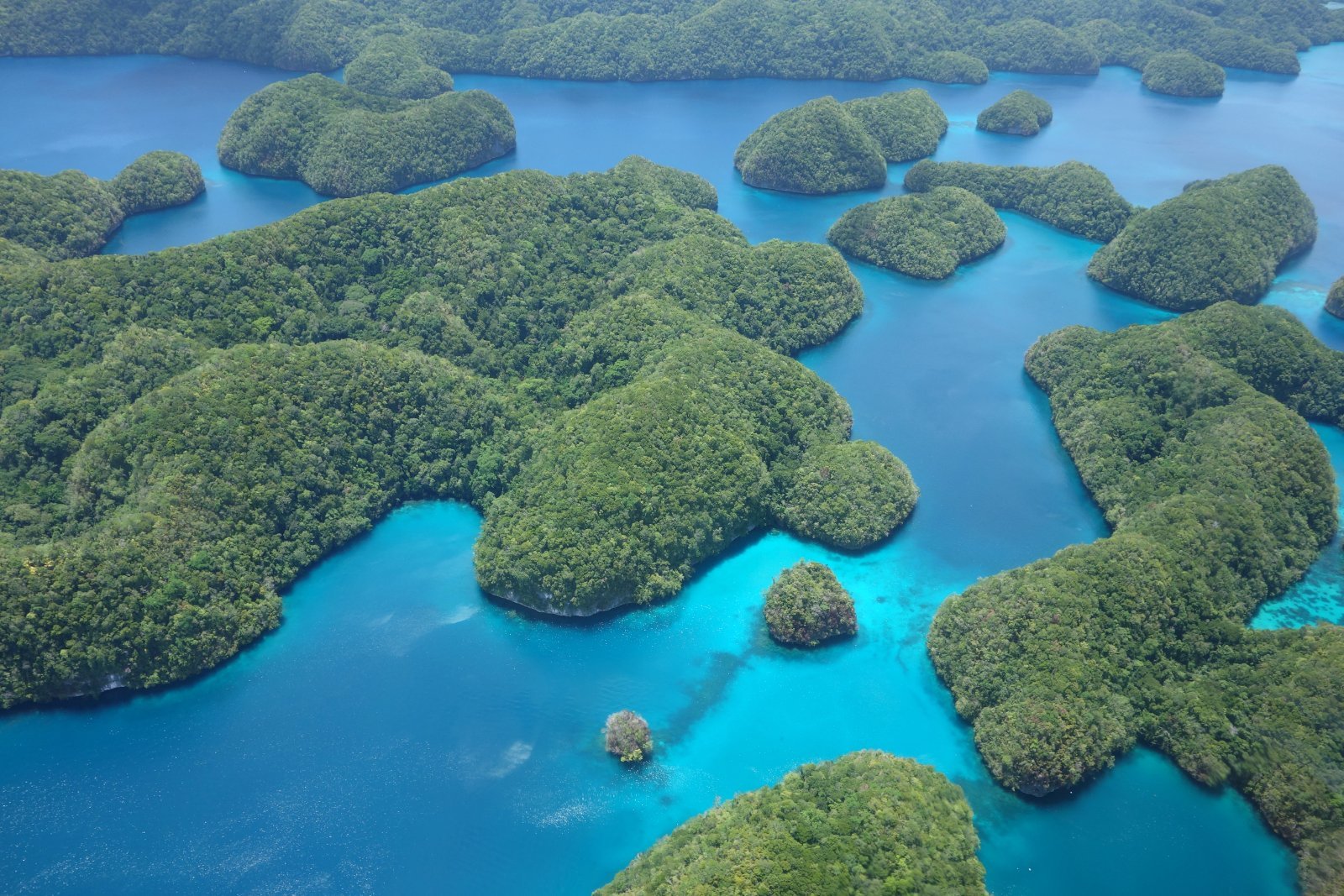
Illustrative aerial photograph of the Rock Islands.
This guide focuses on first-time logistics specifically for visitors planning a day (or several days) exploring Palau’s Rock Islands Southern Lagoon, a UNESCO World Heritage site of several hundred uninhabited limestone islets south of Koror. Because access here runs through a permit system, a national conservation pledge, and a patchwork of protected zones with different rules, it pays to understand the structure before you book a boat tour rather than after.
Research-based guide · General destination information current as of September 2026.
Quick Answer
Every visitor to Palau signs the Palau Pledge on arrival, a conservation commitment stamped into your passport. Most Rock Islands sites also require a separate Rock Islands permit, arranged through your tour operator, and some individual sites — most notably Jellyfish Lake — are periodically closed to visitors when jellyfish populations decline. Confirm current site access with your operator before you fix an itinerary.
Key Sites in the Rock Islands Southern Lagoon
| Site | What you do there | Access notes |
|---|---|---|
| Jellyfish Lake | Snorkel among non-stinging golden jellyfish | Snorkeling only, no scuba; closes periodically when jellyfish numbers drop |
| Milky Way | Swim in white limestone mud said to be good for the skin | Included on many standard boat tours |
| Long Beach | Sandbar stop for photos and a picnic lunch | Only visible at certain tide levels |
| Big Drop-off / German Channel area | Wall and channel diving, manta and shark sightings | Requires a dive-specific permit and appropriate certification |
| Seventy Islands | Viewed from a designated overlook only | Strict nature reserve; landing is not permitted |
The Palau Pledge and Rock Islands Permit
Every visitor entering Palau signs the Palau Pledge, a conservation commitment stamped directly into their passport on arrival, in which travelers promise to act in an ecologically responsible way during their stay. Separately, most Rock Islands sites require a Rock Islands permit, which your tour operator or dive shop typically arranges as part of your booking. Confirm with your operator that this is included, since arriving without the correct permit can mean turning back from a site rather than a simple on-the-spot fee.
Why Jellyfish Lake Sometimes Closes
Jellyfish Lake, known locally as Ongeim’l Tketau, is a marine lake separated from the surrounding lagoon, home to a population of golden jellyfish that has evolved to lose most of its sting since it has few natural predators in the lake. That population has crashed and recovered more than once in recent decades, linked to warming events such as El Niño, leading authorities to close the lake to visitors until numbers recover. Because of this, always confirm the lake’s current open/closed status with a local operator before building a trip around it specifically, rather than assuming it will be accessible.
Choosing a Boat Tour or Private Charter
Most first-time visitors join a shared full-day boat tour departing from Koror, typically combining several of the sites above — Jellyfish Lake or an alternative site if it is closed, the Milky Way, a sandbar stop and some snorkeling. Divers with specific wall or channel sites in mind, or travelers who prefer a slower pace with fewer fellow tourists, often book a private charter instead, which costs more but allows a custom route and schedule. Either way, book through an established local operator rather than an informal arrangement, since permit compliance and safety standards vary.
Getting to Palau and Around Koror
International flights land at Roman Tmetuchl International Airport on Babeldaob, a short drive from Koror, where most hotels, dive shops and tour operators are based. Almost all Rock Islands access departs by boat from Koror’s marinas, so basing yourself there rather than further afield keeps logistics simple. The UNESCO World Heritage listing for the Rock Islands Southern Lagoon gives useful background on why the site was inscribed in 2012, covering both its limestone karst geology and its archaeological village sites. The Wikipedia overview of the Rock Islands adds further geographic detail.
When to Go
- Palau’s climate is warm and humid year-round; the drier season roughly from December to March tends to have calmer seas for boat tours.
- The wetter season from roughly June to October brings more frequent rain showers, though tours still operate; confirm conditions with your operator.
- Visibility for diving and snorkeling is generally good year-round, with only modest seasonal variation compared with monsoon-driven Southeast Asian destinations.
- Book Jellyfish Lake status and permit availability ahead of a trip during any period, since closures can happen with limited notice.
Diving Beyond the Lagoon
Palau’s diving reputation extends well beyond the Rock Islands themselves, with sites like the Big Drop-off and German Channel known for pelagic encounters including manta rays and grey reef sharks. These sites require appropriate certification and, often, a dive-specific permit layered on top of the general Rock Islands permit, so confirm exactly what your dive operator has arranged before you assume a single fee covers everything.
How Palau Compares to Other Pacific Diving and Lagoon Destinations
Palau’s mix of limestone karst scenery, protected marine lakes and pelagic diving is closer in spirit to Raja Ampat’s biodiversity-first approach than to a resort-beach destination, though Palau’s permit and conservation-pledge system is more structured than most. If you are deciding between Pacific dive destinations, see how it compares to our Raja Ampat vs Komodo comparison, or to another remote Pacific option in our Vanuatu guide and New Caledonia vs Vanuatu comparison. For where to stay in Palau itself, see our Palau resort guide.
Packing and Etiquette Notes
Bring reef-safe sunscreen specifically, since some products are restricted or discouraged in Palau’s marine areas because of their impact on coral. A rash guard reduces how much sunscreen you need in the first place. Read the Palau Pledge before you arrive rather than skimming it at immigration, since it sets real expectations — touching coral, standing on reef flats and removing shells or marine life are all treated as serious violations of the conservation ethos the country has built its tourism around.
Planning a Multi-Day Rock Islands Itinerary
A single full-day tour covers the highlights, but many visitors extend their time in the Rock Islands over two or three days, mixing snorkeling days with dedicated dive days at sites like the Big Drop-off or German Channel. Spreading your visit across multiple days also gives you flexibility if weather disrupts one day’s plans, and it reduces the temptation to rush between sites just to fit everything into a single itinerary, and it leaves room to revisit a favorite spot like the Milky Way or a quiet snorkeling channel a second time rather than seeing each site only once. If Jellyfish Lake is open during your visit, consider scheduling it for a calmer, less crowded morning slot rather than the middle of the day when tour boats concentrate their visits.
Where to Base Yourself
Koror remains the practical base for almost every visitor, since it is where dive shops, tour operators, restaurants and the main hotel inventory are concentrated, and it sits closest to the marinas used for Rock Islands access. A small number of remote lodges exist further from Koror for travelers seeking more isolation, but these generally require arranging boat transfers well in advance and can limit your flexibility to change tour plans day to day. For most first-time visitors, staying centrally in Koror and booking day tours or short multi-day charters from there is the simpler approach, particularly on a first visit when you are still learning which sites and activities matter most to you. General visitor information, including current entry requirements, is published by the Palau Visitors Authority.
What a Typical Day Tour Includes
Most shared boat tours depart Koror’s marinas in the mid-morning, include a packed lunch eaten on a beach or sandbar, and return by late afternoon, visiting three to five sites depending on tide, weather and current permit status. Snorkeling gear is usually provided, though bringing your own well-fitted mask is a reasonable precaution if you are particular about fit. Guides typically speak English and give a short briefing on conservation rules at each stop, particularly around Jellyfish Lake and any coral areas, so listen closely rather than treating the briefing as a formality, since enforcement in Palau’s marine protected areas is genuinely active and fines for violations are real.
Frequently Asked Questions
Do you need a permit to visit the Rock Islands?
Yes, most sites require a Rock Islands permit in addition to the Palau Pledge every visitor signs on arrival. Your tour operator typically arranges this as part of booking.
Is Jellyfish Lake always open?
No. The lake has closed periodically in the past when its golden jellyfish population declined, often linked to warming events. Confirm current status before your trip.
Can you scuba dive in Jellyfish Lake?
No. Only snorkeling is permitted, to protect the lake’s stratified water layers and its jellyfish population.
How do you get around the Rock Islands?
Almost all access is by boat, departing from marinas in Koror, either on shared tours or private charters.
When was the Rock Islands Southern Lagoon named a UNESCO site?
It was inscribed as a mixed natural and cultural World Heritage site in 2012.
Confirm current permit requirements, Jellyfish Lake status and tour operator credentials directly before booking, since conservation rules here are actively enforced and can change. Palau has built its entire tourism identity around protecting these waters, and visitors who arrive with that context tend to get more out of the experience than those who treat the pledge and permits as paperwork to clear before the fun starts.