Azores Whale Watching Guide 2026
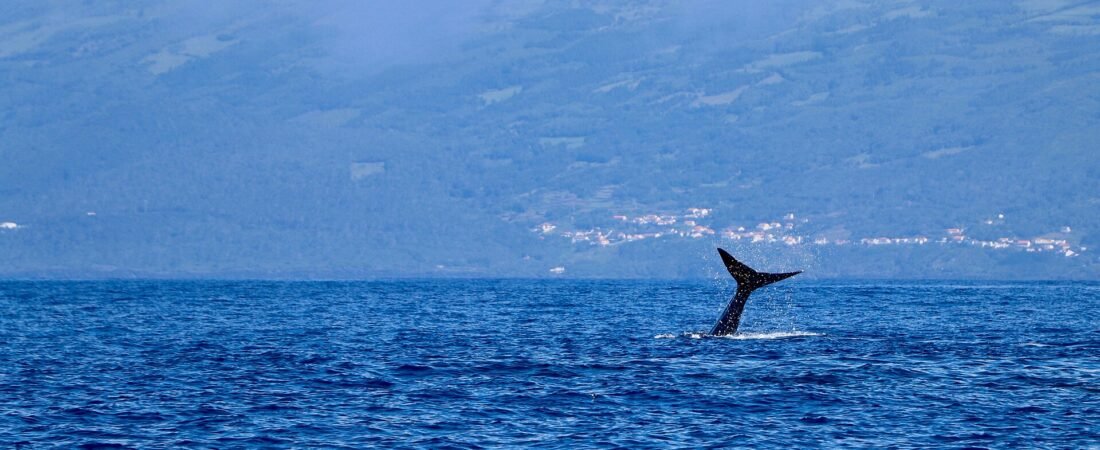
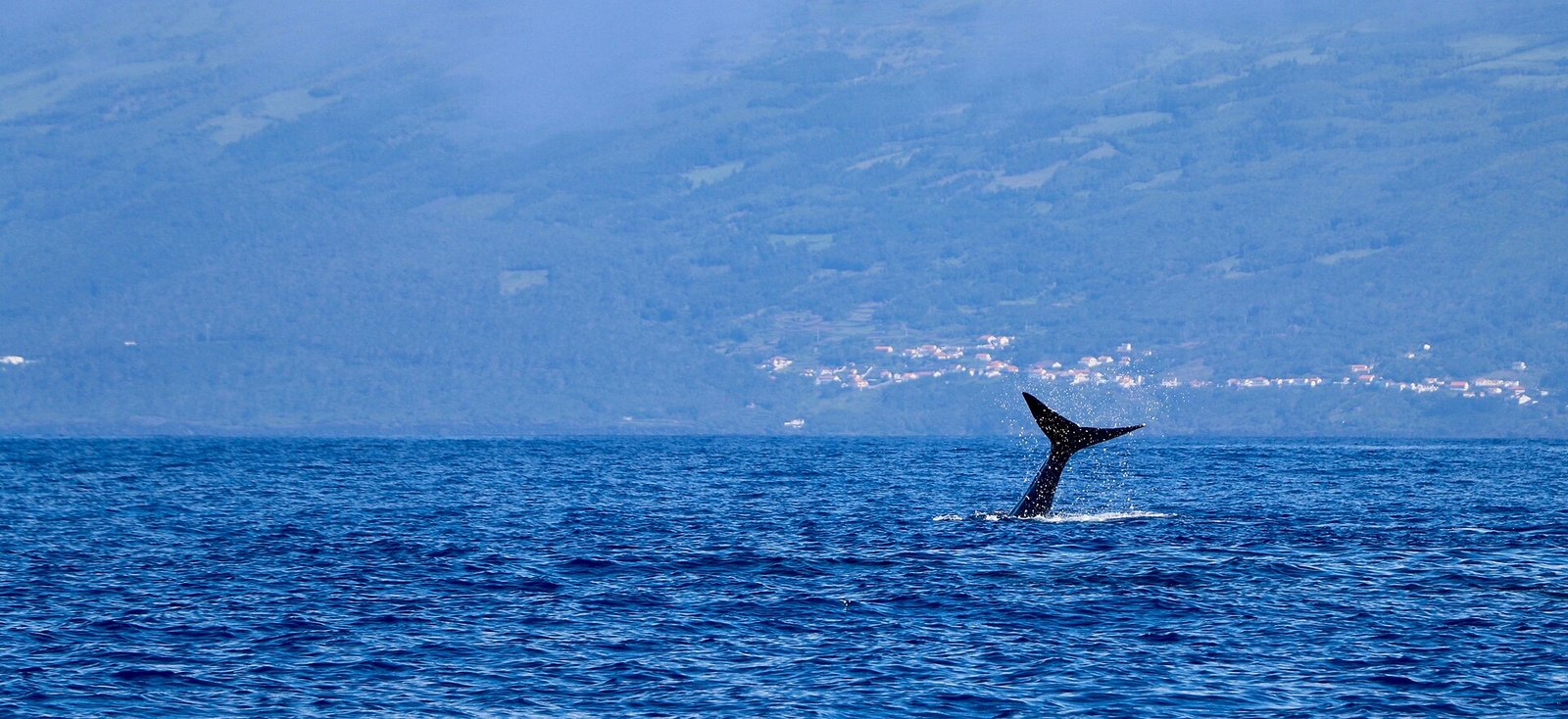
A whale raises its flukes near Pico Island, Azores. Photo via Wikimedia Commons.
The Azores are one of the few places on Earth where you can see sperm whales on almost any day of the year, and where blue whales pass close to shore each spring. This guide focuses on whale watching in the Azores specifically for travellers planning a comfortable, wildlife-focused trip who want to know which island to base on, which months to target and how to choose an operator that treats the animals well.
Destination guide · Updated October 2026. Sightings are never guaranteed; seasons below describe typical patterns.
Quick planning answer
For the widest variety of species, go between April and June, when migrating baleen whales join the resident sperm whales. Base yourself on Pico or Faial for the most whale-focused experience, or on São Miguel for easier flights and more hotel choice. Book at least two trips: conditions and luck vary day to day.
Why the Azores are special for whales
The nine Azorean islands rise from the Mid-Atlantic Ridge, and deep water begins very close to their coastlines. That deep, nutrient-rich water brings squid, which in turn attracts sperm whales, the deep-diving giants that made the islands famous. Over twenty species of whales and dolphins have been recorded in Azorean waters, making the archipelago one of the most diverse cetacean areas in the North Atlantic.
The islands also have an unusual history. Shore-based whaling using open rowing boats continued here until the 1980s. Former whalers’ lookout towers, called vigias, are still used today, but now spotters scan the sea with binoculars and radio skippers to guide whale-watching boats rather than hunters. This land-based spotting is a big reason Azores trips have high encounter rates.
For a deeper look at the history, the Museu dos Baleeiros in Lajes do Pico and the scrimshaw collection above Peter Café Sport in Horta are both worth an hour.
Today, whale watching is one of the most important parts of the regional economy, and many guides are descendants of whaling families. That continuity gives trips a sense of place you rarely find elsewhere: the same lookouts, harbours and channels, now used to protect rather than hunt the animals that shaped island life for generations.
What you can see, month by month
Seasons are patterns, not promises, but they help you plan. Sperm whales are present year-round, with family groups of females and young most often seen. In spring, baleen whales migrate north past the islands and feed on the way, creating the archipelago’s most celebrated window. Summer brings warm water, calm seas and large dolphin pods, sometimes with false killer whales or pilot whales.
Knowing a little behaviour makes every sighting richer. Sperm whales dive for 40 minutes or more to hunt squid at depth, then rest at the surface breathing for several minutes before raising their tail flukes and diving again; the fluke-up is the classic Azores photograph. Their blow angles forward and to the left, which is how lookouts identify them from kilometres away. Blue and fin whales, by contrast, move quickly and surface in shorter sequences, so encounters are briefer but often breathtaking in scale. Common dolphins frequently bow-ride the boat, which is a highlight for children.
Turtles, Cory’s shearwaters and other seabirds add interest on most trips, and in late summer whale sharks or mantas are occasionally reported, particularly around Santa Maria.
| Period | Typical highlights | Sea conditions | Who it suits |
|---|---|---|---|
| January–March | Sperm whales, common and bottlenose dolphins | Often rough; more cancellations | Flexible travellers, low prices |
| April–June | Blue, fin and sei whales plus sperm whales | Improving, variable | Wildlife-focused trips |
| July–September | Sperm whales, large dolphin pods, occasional pilot whales | Calmest and warmest | Families, first-timers |
| October–December | Sperm whales, dolphins | Increasingly unsettled | Budget and off-season trips |
Choosing your island base
São Miguel is the largest island and the main international gateway, with direct flights from mainland Portugal and seasonal routes from elsewhere in Europe and North America. Trips leave from the marina in Ponta Delgada, so you can combine whale watching with hot springs, crater lakes and tea plantations. It has the broadest choice of upscale hotels; see our best luxury hotels in the Azores for options.
Pico is the heart of Azorean whale watching. Lajes do Pico, on the south coast, sits close to deep water favoured by sperm whales, and its history as a whaling village gives trips extra context. Pico also offers the climb of Mount Pico, Portugal’s highest peak, and UNESCO-listed vineyards built in black lava walls.
Faial, a short ferry from Pico, is a yachting hub. Horta’s marina is covered in painted sailors’ murals, and boats here access the same channel and southern waters as Pico operators. Staying on Faial or Pico and taking trips from both sides is a good strategy for a 4–5 night stay.
Terceira and Santa Maria also have operators. Santa Maria is the warmest and driest island and a good bet for late-summer pelagic encounters, though connections are fewer.
A sample five-night plan for a whale-focused trip: fly into Ponta Delgada and spend two nights on São Miguel, taking one whale-watching trip and a day at the Furnas hot springs and Sete Cidades crater lakes. Then fly or take a seasonal ferry to Pico for three nights, with a morning trip from Lajes do Pico, a vineyard visit, and a second boat trip from Horta on Faial. Inter-island flights are short but can be disrupted by weather, so avoid tight connections on your final day.
Boat types, trip lengths and what to expect
Trips usually last three to four hours. Most operators run either rigid-hull inflatable boats (RIBs, often called Zodiacs) or larger catamarans and cabin boats. A RIB is fast, puts you close to water level and gives excellent photography angles, but rides can be bumpy and wet; it may not suit young children, people with back problems or pregnant travellers. A larger boat is steadier, often has a toilet, shade and a guide’s commentary over a speaker, and is the better choice in moderate swell.
- Briefing first: most operators give a talk on species, behaviour and rules before departure.
- Lookout guidance: skippers head toward animals spotted by the vigia rather than searching randomly.
- Approach rules: Azorean regulations limit the number of boats near a group, the time spent with animals and how closely boats approach.
- Swim-with-dolphins trips are permitted under licence in some conditions; swimming with whales is not.
- Refund or rebooking policies for no-sighting trips vary; ask before you pay.
Choosing a responsible operator
The best Azores operators are licensed by the regional government, employ trained marine biologists as guides and contribute sighting data to research. Look for small group sizes, a clear explanation of approach rules in the briefing, and staff who are happy to leave animals that show signs of disturbance. Membership of recognised responsible-tourism schemes is a plus.
Before booking, read recent reviews for comments about how boats behaved near whales rather than just whether whales were seen. The international charity Whale and Dolphin Conservation publishes general guidance on responsible watching, and the regional tourism board at Visit Azores lists licensed activity providers.
If you want to understand the islands’ volcanic landscape alongside the wildlife, the Azores UNESCO Global Geopark site is a useful planning resource.
Prices are moderate by European wildlife-tourism standards. A standard three-hour trip typically costs less than a nice dinner for two, with swim-with-dolphin trips and private charters costing more. Many visitors find that booking two or three trips across different days delivers better value than a single premium excursion, because each outing offers different light, sea conditions and animals. Ask whether the price includes a hydrophone, a waterproof jacket and a printed or digital species guide, and whether the operator offers a reduced rate for a second trip within the same week.
Practical tips for a comfortable trip
Whale watching is weather-dependent, so build flexibility into your itinerary. Schedule your first trip early in your stay so there is time to rebook if seas are rough. Morning departures often have calmer conditions and better light for photography.
- Seasickness: take medication before boarding if you are prone, choose a larger boat, and keep your eyes on the horizon.
- Layers: even in summer it is cool and windy offshore. Bring a windproof jacket; many RIB operators provide waterproofs.
- Camera: a zoom lens of around 100–400 mm is ideal; protect gear from spray.
- Children: check minimum ages; many operators set lower limits for RIBs than for larger boats.
- Combine: pair whale watching with hot springs, crater-lake hikes or wine tasting for rest days.
The Azores pair well with other Atlantic islands. Compare our 5-day Madeira itinerary for a warmer, more developed island, or read which Canary Island is best for luxury if you want guaranteed winter sun. Couples planning a nature-focused honeymoon will also find ideas in our luxury honeymoon destinations guide.
Frequently Asked Questions
What is the best month for whale watching in the Azores?
April and May are often considered the best months because migrating blue, fin and sei whales pass the islands while resident sperm whales are also present. July to September offers calmer seas and large dolphin pods.
Which Azores island is best for whale watching?
Pico, especially Lajes do Pico, is the most whale-focused base, with Faial next door. São Miguel is the easiest to reach and has the most hotels, with frequent trips from Ponta Delgada.
Are whale sightings guaranteed in the Azores?
No sightings are ever guaranteed, but encounter rates are high thanks to land-based lookouts. Many operators offer a free or discounted repeat trip if no whales are seen; confirm the policy before booking.
Can you swim with whales in the Azores?
Swimming with whales is not permitted. Licensed operators can run swim-with-dolphin trips in suitable conditions, following regional rules on approach and time in the water.
Is a RIB or a catamaran better for whale watching?
RIBs are faster and closer to the water but bumpier. Catamarans and larger boats are more stable and comfortable, and are better for children, older travellers and anyone prone to seasickness.
Hero photo: “Whale with flukes near Pico Island, Azores” by Navin75, Wikimedia Commons, CC BY-SA 2.0.