Best Time to Visit Kosrae, Micronesia’s Dive Island
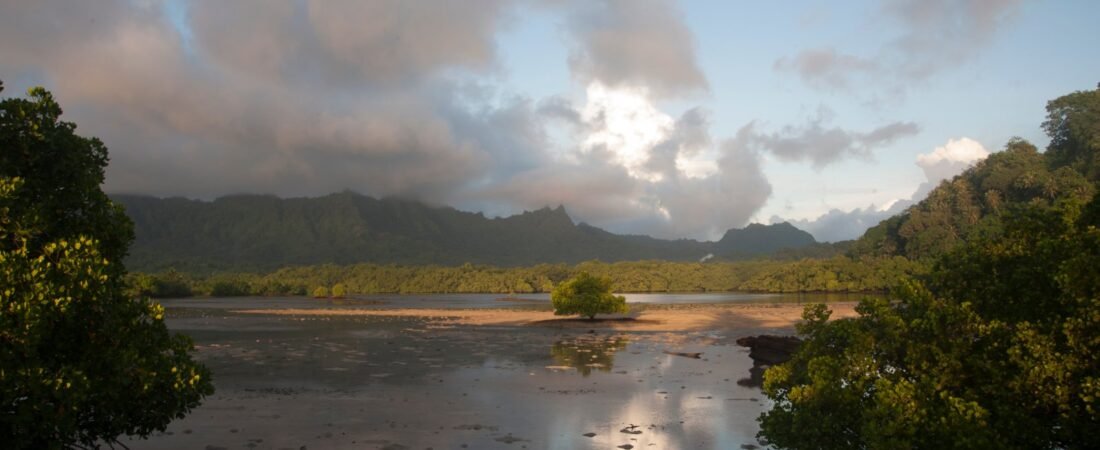
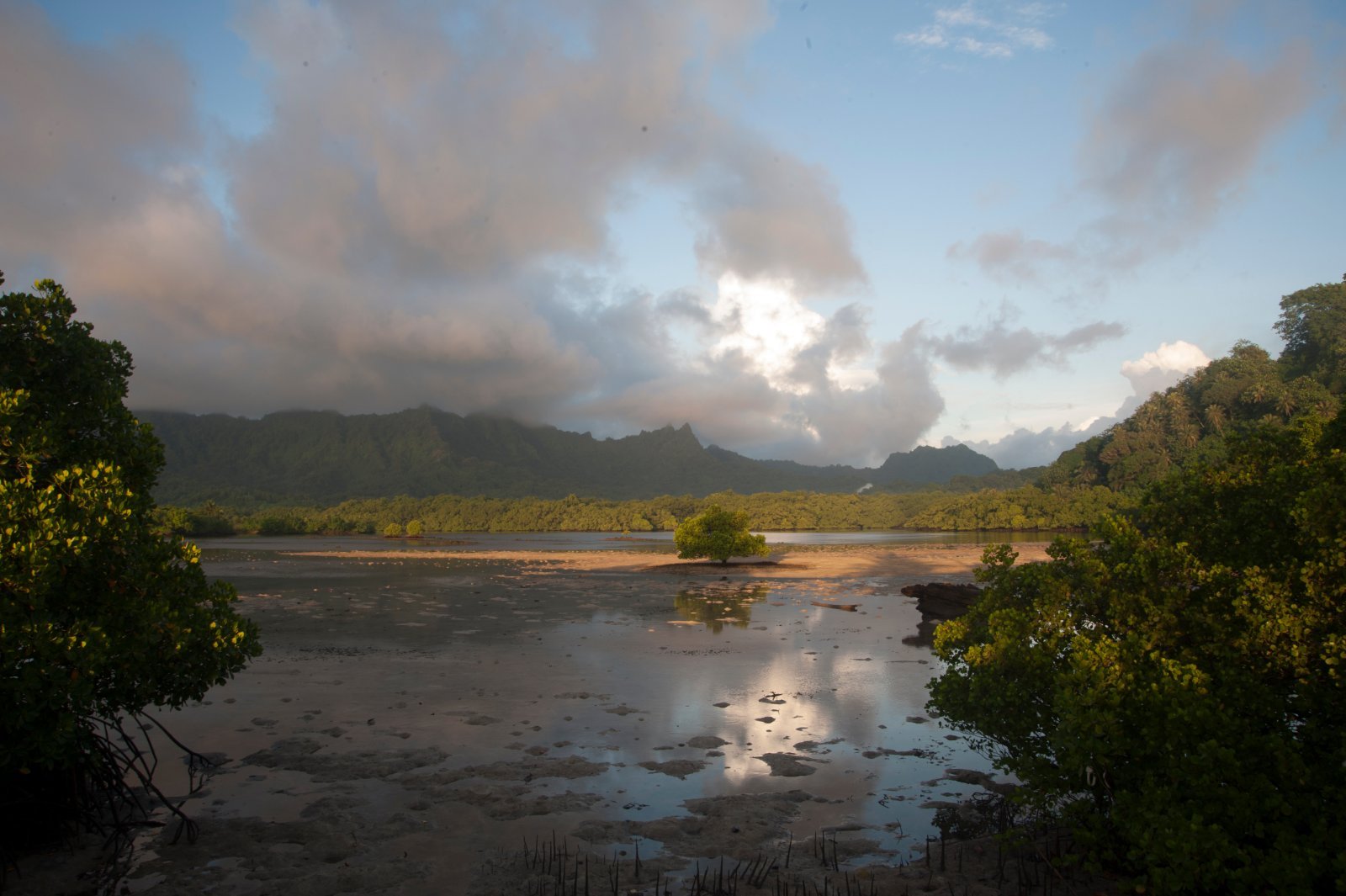
Illustrative island photograph. Not a photograph of the resorts compared below.
This guide focuses on when to go to Kosrae specifically for scuba divers planning a rainforest-meets-reef trip, where visibility, boat access and mangrove conditions shift more with the season than most Pacific itineraries admit. Kosrae is the easternmost and least-visited state of the Federated States of Micronesia, with a steep, jungle-covered interior, mangrove channels you can kayak into town, and a wall-and-channel dive site list that stays uncrowded because almost nobody times a trip around it properly. If you have already dived the busier circuits in Southeast Asia and want reef walls with essentially no other boats on them, timing matters here more than almost anywhere else in the Pacific.
Research-based guide · Official and government sources checked October 2026. This is not a first-hand stay review or a ranking based on guest scores.
Kosrae’s Climate Pattern
Kosrae sits just north of the equator and is wet year-round, averaging well over 180 inches of rain annually with no sharply defined dry season in the way travelers from temperate climates expect. What does shift seasonally is wind direction and strength, which determines which reef passes are diveable on a given week, and the frequency of storm systems tracking through the wider Western Pacific. The NOAA Pacific Region Headquarters publishes the regional tropical cyclone outlook that most Micronesian dive operators quietly check before confirming boat trips, and it is worth a glance a few weeks out from any booking.
What Kosrae’s Dive Sites Actually Offer
Kosrae’s reputation among the small circle of divers who know it rests on steep outer walls dropping into deep water just offshore, soft coral coverage that rivals better-known Pacific sites, and channels where pelagic fish stage on the incoming tide. Named sites like Spa Reef and Blue Hole draw repeat visits from the handful of liveaboard-style guests who pass through, and because so few boats run each week, a dive site that would be crowded in Palau or Raja Ampat is routinely empty here. The tradeoff is logistics: there is no large dive resort infrastructure, boat capacity is small, and a group larger than six or eight people may need to split across two trips or two days.
PADI’s own regional overview of diving in Kosrae is a reasonable starting point for site names and depth ranges before you contact a local operator directly to confirm current boat schedules, since online information for an island this small goes stale quickly.
Beyond the walls, Kosrae’s lagoon holds healthy stands of staghorn and table coral that have largely escaped the bleaching events that hit more trafficked Pacific reefs over the past decade, which local operators attribute partly to low diver volume and partly to the lagoon’s natural flushing from mangrove-filtered runoff. Night dives inside the lagoon turn up octopus, mantis shrimp and the occasional reef shark, and because boat traffic is so light, sites rarely need a reservation system the way busier destinations do; a phone call or email the day before is usually enough to secure a spot.
Travelers arriving from the Southeast Asian dive circuit sometimes underestimate how much cooler and rainier Kosrae feels compared to, say, the Gili Islands or Raja Ampat at the same latitude band; pack a lightweight long-sleeve layer for boat rides, since wind chill on the open water adds up over a multi-tank day even in warm water.
The Best Months for Diving Visibility
Local dive operators generally point to the period from December through April as the most reliable window, when trade winds are steadier and the exposed walls on Kosrae’s north and east sides see calmer surface conditions and better horizontal visibility, often exceeding 100 feet on a good day. July through October brings the highest chance of tropical disturbances in the wider region, which can cancel boat days with little notice even when Kosrae itself is not directly hit by a storm. Shore and channel diving remain possible nearly year-round since much of Kosrae’s best reef sits inside the barrier lagoon, sheltered from open-ocean swell, so a wet-season trip is not a wasted one, just a less ambitious one.
For a broader comparison of how diving seasons work across the region, our guide to the best scuba diving seasons across Southeast Asian islands is a useful companion, and divers who have already done Micronesia’s wreck circuit should read our Chuuk Lagoon wreck-diving trip planner, since Chuuk sits on the same Island Hopper route and shares Kosrae’s rough seasonal pattern almost month for month.
| Period | Diving Conditions | Storm Risk | Notes |
|---|---|---|---|
| December to April | Best visibility, calmer walls | Lowest | Most dive boats run on schedule |
| May to June | Good, transitional | Low to moderate | Fewer crowds, flexible booking |
| July to October | Variable, lagoon still diveable | Highest regionally | Boat days can be cancelled last minute |
| November | Improving | Moderate | Good shoulder-season value |
Hiking and Mangrove Kayaking Timing
Kosrae’s interior hikes, including the trail up Mount Finkol and the walk to the Menke waterfall, are passable year-round but noticeably more pleasant in the drier stretch of December to April, when trail mud is manageable and river crossings are lower. Mangrove kayaking through the channels into Tofol, the state capital, works in almost any weather short of an active storm, and is one of the few activities on the island that does not depend heavily on the season at all; guides generally paddle out at low tide and return on the rising water, so plan around tide tables rather than the forecast.
The Lelu Ruins, a stone-walled royal complex on the small island connected to Kosrae by causeway, make an easy half-day add-on to a dive or kayak day and are walkable in any season, rain included, since the paths are short and mostly shaded.
Festivals and Local Events Worth Timing Around
Kosrae State observes Liberation Day and several church-anchored community events through the year that are worth checking against your dates if you want to see the island at its most social; local guesthouses and the Kosrae Visitors Bureau are the most reliable sources since event calendars are not consistently published online. Outside of these dates, Kosrae is a genuinely quiet island with limited nightlife, which suits the diving-and-hiking travelers this guide is written for rather than anyone looking for an active social scene after dark.
Getting to Kosrae and Flight Timing
Kosrae is served only by United Airlines’ Island Hopper route between Honolulu and Guam, with limited weekly frequency, so your travel dates are effectively set by the flight schedule rather than by ideal diving conditions alone. Many divers compromise by targeting the December-to-April window on the calendar and then booking whichever Hopper flights fall inside it, rather than trying to chase a single perfect week. Build at least one buffer day into the itinerary, since weather delays anywhere along the Hopper’s multi-stop route can cascade into missed connections, and missing one leg can mean a week’s wait for the next flight.
Pack for both a boat and a trailhead: a rain shell, reef-safe sunscreen, dive gear or at minimum your own mask and booties, and the same humid-climate basics covered in our Southeast Asia travel packing list. Divers who also want a liveaboard-style trip rather than shore diving should compare notes with our Indonesia luxury diving liveaboard guide, since Kosrae has no liveaboard operation of its own and all diving is shore- or day-boat-based through one of the island’s two small operators.
Where to Stay and What It Costs
Accommodation on Kosrae is limited to a small number of family-run guesthouses and one or two slightly larger lodges near Tofol and Lelu, none of it branded or luxury in the way a Fiji or Maldives resort would be. That keeps nightly rates modest by Pacific standards, but it also means availability is genuinely finite during the island’s busier dive weeks around February and March, so booking a few months ahead rather than a few weeks ahead is the safer approach. Meals are usually included or arranged through the guesthouse, since independent restaurants are scarce outside Tofol, and most dive operators bundle tanks, weights and boat transport into a daily rate rather than itemizing each piece separately.
Connectivity is limited: expect slow or intermittent internet at most properties, cash-based transactions outside the one or two spots that take cards, and a general pace that rewards travelers who planned their logistics before arriving rather than those hoping to improvise on the ground.
Flight seats on the Hopper route sell out faster in the December-to-April window specifically because it overlaps with the best diving conditions, so book both flights and your Kosrae lodging at the same time rather than assuming one will wait on the other.
Frequently Asked Questions
What is the single best month to dive Kosrae?
February and March consistently get cited by local operators as the most reliable combination of calm seas and good visibility, though conditions can still vary week to week.
Is Kosrae affected by typhoons?
Direct hits are uncommon given Kosrae’s latitude, but the wider Western Pacific typhoon season, roughly July through October, still disrupts the regional flight schedule that Kosrae depends on.
Can I dive Kosrae without a liveaboard?
Yes, Kosrae has no liveaboard operation; all diving is organized as shore dives or day boats from the one or two local dive shops.
How does Kosrae compare to Pohnpei for timing?
Both islands share the same wet, typhoon-adjacent climate pattern and the same Island Hopper flight constraints, so a trip combining both usually targets the same December-to-April window.
Do I need a visa for Kosrae?
Entry rules follow the Federated States of Micronesia nationally; US citizens do not need a visa, and other nationalities should check the CIA World Factbook FSM page before booking.