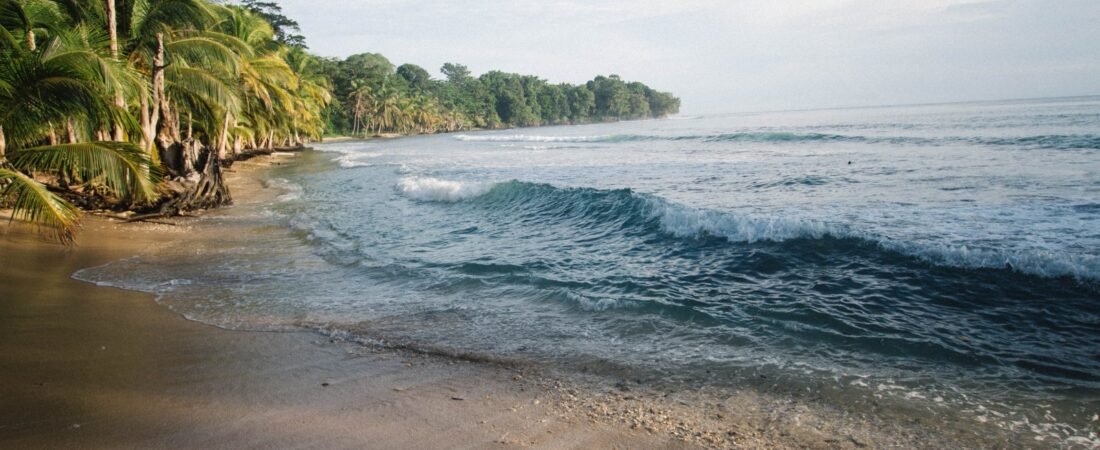

Bocas del Toro, Panama: Travel Guide 2026
Illustrative archipelago photograph. Not a photograph of a specific property named below.
Bocas del Toro is a nine-island archipelago on Panama’s Caribbean coast, reached by a short flight or a long drive from Panama City. This guide focuses on Bocas del Toro specifically for first-time visitors deciding which island in the archipelago to base themselves on, since the archipelago’s geography — a scattered main town, several resort islands and a protected marine park — changes which base makes sense for a given trip.
Research-based guide · Sources checked 8 October 2026. This is not a first-hand stay review or a ranking based on guest scores.
Pick an island before you pick a hotel
Bocas Town, on Isla Colón, has the archipelago’s only airport and the most restaurants and nightlife. Isla Bastimentos holds Red Frog Beach and the quieter, forest-backed lodges. Isla Carenero and Isla Solarte sit a short water-taxi ride from town and suit travellers who want calm water without full isolation. Decide on noise level and boat-transfer tolerance first, then shortlist hotels on that island.
Compare the Main Islands
| Island | Character | Getting around |
|---|---|---|
| Isla Colón (Bocas Town) | Restaurants, bars, the airport, day-tour operators | Walkable town; boats to outer islands |
| Isla Bastimentos | Red Frog Beach, Bastimentos National Marine Park, jungle lodges | Water taxi from Bocas Town, 10–20 minutes |
| Isla Carenero | Quiet, close to town, surf breaks on the east side | 5-minute water taxi from Bocas Town |
| Isla Solarte (Nancy’s Cay) | Low-key, small guesthouses, snorkelling nearby | 10–15 minute water taxi from Bocas Town |
| Cayos Zapatillas | Uninhabited cays inside the marine park; day trips only | Boat tour from Bocas Town, no overnight stays |
Getting to Bocas del Toro
The archipelago’s airport, Isla Colón International (BOC), receives short domestic flights from Panama City’s Albrook/Marcos A. Gelabert airport (PAC), a flight of roughly one hour covering about 300 km. Air Panama operates this route and is the airline to check for current schedules and fares, since frequency changes with the season.
An overland alternative runs via bus or rental car to Almirante on the mainland, followed by a short water taxi across the bay to Bocas Town — a full-day option rather than a shortcut, and one worth considering only if you are already road-tripping through Panama’s Caribbean side.
Read the official Panama tourism board profile of Bocas del ToroInside the archipelago: water taxis, not roads
There is no road network connecting the inhabited islands. Getting from Bocas Town to a hotel on Bastimentos, Carenero or Solarte means a short open-boat water taxi, arranged informally at the town dock or through your hotel. Most crossings run 5 to 20 minutes and operate during daylight hours; confirm your hotel’s last-boat time before planning a late dinner in town.
The marine park and the diving and snorkelling case for Bocas
Bastimentos National Marine Park protects coral reef, mangrove channels and the Zapatillas cays, and is the reason many visitors come specifically for snorkelling and diving rather than beach time alone. Visibility and conditions vary with rainfall, so pair any dive-focused trip with the seasonal notes in our companion guide on when to visit. The park was established specifically to protect this reef, mangrove and seagrass system, which is part of why tour operators are expected to follow no-touch, no-anchor-on-coral practices here.
See the full best-time-to-visit breakdown for Bocas del Toro Read more about Bastimentos National Marine ParkHow Bocas compares to Panama’s other Caribbean islands
Bocas del Toro is not Panama’s only Caribbean archipelago. The San Blas Islands (Guna Yala), further east along the coast, offer a very different, indigenous-run and far more rustic alternative with no large resorts at all. If you are undecided between the two, our side-by-side comparison covers access, lodging style and who each destination actually suits.
Compare Bocas del Toro and the San Blas IslandsFood and day-to-day costs. Bocas Town has the archipelago’s widest range of places to eat, from simple Panamanian and Caribbean-style seafood spots to pricier restaurants aimed at visitors; prices on the outer islands run higher because most supplies, including drinking water and fuel, are shipped in by boat. Budget for this when comparing an all-inclusive lodge rate against a room-only rate plus separate meals in town. Cash is still widely used outside the main hotels, and card acceptance can be patchy on the smaller islands, so carry enough local currency for water taxis, day tours and smaller restaurants. A simple lunch in town costs noticeably less than the same meal at a resort-style lodge on an outer island, which is worth factoring into a multi-day budget.
A sample first-time itinerary. A workable five-night plan: arrive and settle into Bocas Town on day one, take a full-day boat tour through Bastimentos National Marine Park and the Zapatillas cays on day two, move to a Bastimentos-side lodge near Red Frog Beach for two nights of beach and snorkelling time, then finish with a quieter night on Isla Carenero or Isla Solarte before flying out. Adjust the order around your flight times, since the last inter-island water taxis typically stop running after dark, and double-check your departure flight’s check-in window against the last reliable water-taxi slot from your lodge.
Respecting the marine park and local communities. Bastimentos National Marine Park is a protected area, and reputable tour operators follow no-touch, no-anchor-on-coral guidelines when visiting the reef and the Zapatillas cays. Several communities on the mainland side of the province are Ngäbe-Buglé territory; ask your guide before photographing people or entering a village, the same courtesy expected anywhere in Panama’s indigenous comarcas. Snorkelling gear rented locally should be checked for fit before you leave the dock, since exchanging it mid-tour is rarely practical.
Packing notes specific to an island-hopping trip. Pack light, quick-dry clothing, a dry bag for camera gear and phones during boat transfers, reef-safe sunscreen, and a reusable water bottle you can refill at your lodge. A basic first-aid kit and motion-sickness tablets are worth carrying if you are prone to seasickness, since several days may involve more than one open-boat crossing.
Day trips beyond the main islands. Beyond Bocas Town, Red Frog Beach and the Zapatillas cays, several half-day boat trips are popular with first-time visitors: Bocas del Drago on the far side of Isla Colón has a calmer, more sheltered beach good for families and weaker swimmers, Starfish Beach is known for the orange starfish visible in its shallow water (look without touching or lifting them out of the water), and Swan’s Cay (also called Isla Pájaros) is a seabird nesting site best viewed from the boat rather than landed on. A local boat operator can usually combine two or three of these into a single day.
Climate and what to pack generally. Expect warm, humid weather year-round with daytime temperatures typically in the high 20s to low 30s Celsius. Lightweight, quick-dry clothing, a light rain layer for sudden showers, and sturdy sandals for wet boat landings cover most of what a first-time visitor needs; a stronger rain jacket is only necessary if you are travelling during the wettest months.
A brief note on the region’s culture. Bocas del Toro’s population reflects a mix of Afro-Caribbean settlers (many with roots tracing back to Caribbean islands such as Jamaica and Providencia), Ngäbe-Buglé indigenous communities, and more recent arrivals drawn by tourism. This mix shows up in the local food, music and the English-and-Spanish bilingual feel of Bocas Town, distinct from the Spanish-only mainland towns nearby.
Money, SIM cards and staying connected. Panama uses the US dollar alongside its own balboa coins issued at parity, so currency exchange is rarely an issue for US-dollar travellers. Prepaid SIM cards from Panama’s main carriers are available in Panama City and, in more limited form, in Bocas Town; coverage thins out quickly once you leave Isla Colón for the outer islands, so download offline maps and confirm your lodge’s address with them in advance rather than relying on mobile data to find it.
Entry requirements and onward travel. Entry rules for Panama change from time to time depending on nationality, so check current visa and onward-ticket requirements with an official source before booking flights. If your trip continues into neighbouring countries, note that Bocas del Toro is not a typical overland border crossing point; most onward international travel routes back through Panama City.
Frequently Asked Questions
Do I need a car in Bocas del Toro?
No. The inhabited islands have no connecting roads, and transport between them is by water taxi. A few short paved roads exist on Isla Colón itself, but most visitors walk or cycle around Bocas Town.
Is Bocas del Toro good for a short 3 to 4 day trip?
Yes, with a focused itinerary: a day in Bocas Town, a day on Red Frog Beach or another Bastimentos beach, and a boat tour through the marine park. Longer stays allow time for diving certification courses or quieter islands like Solarte.
How is Bocas del Toro different from mainland Panama beaches?
Bocas sits on the Caribbean side and has a distinct Afro-Caribbean and Ngäbe cultural mix, calmer surf on the inner channels, and an island-hopping structure rather than a single beachfront strip.
Is Bocas del Toro affected by hurricanes?
Panama sits outside the main Atlantic hurricane belt, but the Caribbean coast still gets heavy rainfall, particularly October through December. Check current advisories before booking weather-sensitive activities.
Is English widely spoken in Bocas del Toro?
English is common in tourist-facing businesses in Bocas Town given the long-standing Afro-Caribbean community and steady visitor numbers, but basic Spanish still helps outside the main strip and on the smaller islands.
Can I drink the tap water in Bocas del Toro?
Most visitors stick to bottled or filtered water, particularly on the outer islands where supplies are shipped in; ask your hotel what they recommend for their specific property.
For resort-specific recommendations once you have chosen an island, see our list of the best luxury resorts in Bocas del Toro, or, for couples planning a trip together, our Bocas del Toro honeymoon guide. Confirm transfer times and current entry requirements directly with your hotel and airline before booking.