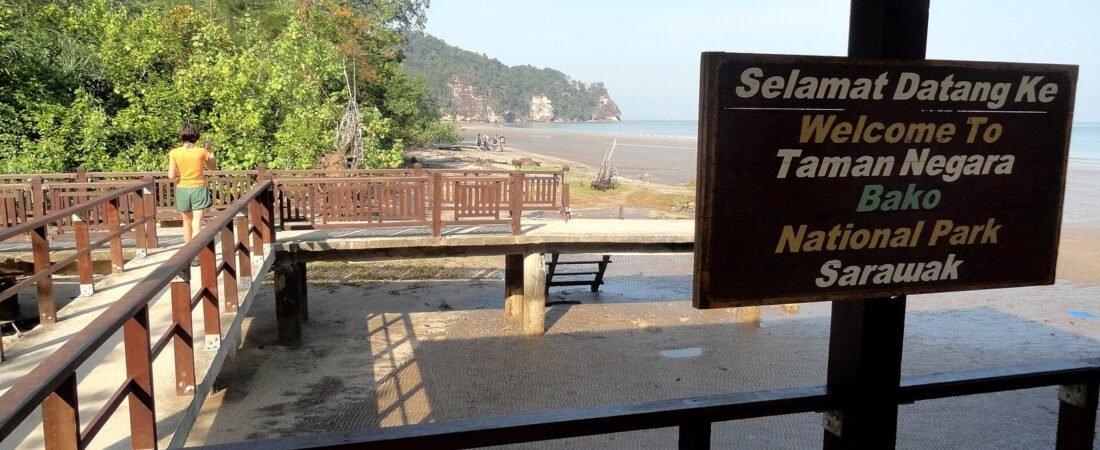

How to Get to Bako National Park 2026
Illustrative island photograph. Not a photograph of the resorts compared below.
This guide focuses on the practical steps for getting from Kuching to Bako National Park specifically — the road-plus-boat transfer that trips up more first-time visitors than any other part of a Sarawak itinerary, because it depends on tide timing in a way most national park visits do not. The steps below cover the road leg, the boat leg, and the one variable — tide level — that decides how smoothly the whole trip goes, plus what to pack and how a day trip compares with staying overnight.
Research-based guide · Sources checked October 2026. Boat fares, bus schedules and park fees change — confirm current details with Sarawak Forestry Corporation before you travel.
The Short Version
Take a bus, taxi, Grab or tour vehicle from Kuching to Bako Bazaar (also called Kampung Bako), roughly an hour away. From there, a small boat crosses to Bako National Park’s headquarters — a trip of about 20 minutes that only runs at certain tide levels. Book the boat through the park or a tour operator rather than assuming one will be waiting, and build slack into your return time in case the tide delays the last crossing.
Step 1: Get to Bako Bazaar
From Kuching, a taxi or Grab to Bako Bazaar takes roughly 45 minutes to an hour depending on traffic, and is the simplest option for most visitors. A public bus (Route 1 on Kuching’s city bus network, run by Sarawak’s public transport operator) also covers this route on a limited daily schedule, which works for budget travellers but requires planning around departure times rather than leaving whenever you’re ready. Many visitors instead book a half-day or full-day tour that includes the road transfer, the boat crossing and a guided walk — removing the logistics entirely in exchange for a fixed schedule and a group pace.
If you are coming straight from Kuching International Airport rather than a hotel in the city, factor in the extra crosstown transfer time to reach Bako Bazaar — it is not a direct route, and most taxi or Grab drivers will route you through the city rather than around it. Confirming your driver understands “Bako Bazaar” or “Kampung Bako” specifically (rather than just “Bako,” which can be ambiguous) avoids a wrong-turn delay that has caught out more than a few visitors relying on a translation app.
Step 2: Book the Boat Transfer
The boat from Bako Bazaar to the park headquarters is operated by local boatmen rather than a single standardised ferry company, so fares are often negotiated or fixed at a posted rate per boat rather than per person — splitting the cost with other travellers waiting at the jetty is common practice. If you’ve booked through a tour operator, this leg is included and arranged for you; if travelling independently, ask at the jetty or the park’s visitor information point about the next available crossing rather than assuming a fixed timetable. Register and pay any park entry fee at the Bako Bazaar visitor counter or on arrival at headquarters — this is also where you can check same-day availability for the park’s overnight accommodation if you decide to extend the trip once you’re already there. See Sarawak Tourism Board for current general visitor guidance alongside Sarawak Forestry Corporation’s park-specific pages.
Step 3: Tide Timing — Why It Matters
Bako’s boat crossing depends on tide depth at the jetty on both the Bako Bazaar side and the park’s beach landing. At low tide, boats may not be able to approach either landing point safely, which can delay both arrival and departure by an hour or more. This is the single biggest planning risk in a Bako day trip: visitors who plan a tight return connection (an evening flight, for instance) without checking tide times risk missing it. Check tide tables for the day of travel, and treat any Bako day trip as needing a buffer rather than a precise return time.
This is worth repeating because it is the single most common complaint in Bako trip reports: a visitor arrives at the jetty expecting a quick crossing and instead waits an hour or more for the tide to rise or fall enough for the boat to approach safely. None of this makes Bako not worth visiting — it just means the trip rewards a loose schedule far more than a tightly timed one, and travellers who build in slack rarely mention the tide as a problem afterward.
| Leg | Typical duration | Key consideration |
|---|---|---|
| Kuching to Bako Bazaar | 45–60 minutes by road | Taxi/Grab is simplest; public bus runs limited departures |
| Bako Bazaar to park HQ (boat) | ~20 minutes | Tide-dependent; fare often per boat, shared among passengers |
| Return boat + road | ~20 minutes + 45–60 minutes | Build in a buffer for tide delays before any onward connection |
| Guided tour alternative | Half or full day, fixed schedule | Removes booking logistics; less flexible timing |
Day Trip vs Overnight at Bako
A day trip covers the most accessible trails and a reasonable chance of spotting proboscis monkeys, bearded pigs and silvered langurs near the headquarters, but Bako’s longer trails to its best viewpoints and beaches take more time than a single day comfortably allows. An overnight stay in the park’s own hostel-style accommodation (book through Sarawak Forestry Corporation) opens up an early-morning or late-afternoon walk when wildlife tends to be more active, and removes the tide-timing pressure on a single return crossing. If your schedule allows it, one night at Bako meaningfully improves the visit over a rushed day trip. Overnight accommodation at the park is simple — hostel-style rooms and a canteen rather than a resort — and books up on weekends and school holidays, so arrange it ahead rather than deciding on arrival if you want the option available.
What to Bring & Trail Options
- Closed, grippy shoes — coastal rainforest trails get muddy and some sections involve rock scrambling near the beaches.
- More water than you think you need; the headquarters area has a canteen, but trail sections do not.
- A dry bag for the boat crossing, which can get splashy depending on sea conditions.
- Cash for the boat fare and any park fees — card payment is not reliably available at the jetty.
- The Lintang Trail is the standard half-day loop from headquarters; longer trails to Tajor Waterfall or Telok Pandan Kecil beach need most of a day and are better suited to an overnight stay.
- Sunscreen and a hat for exposed sections near the cliffs and beaches, where tree cover thins out.
- A basic first-aid kit or at least plasters — trail surfaces are uneven and the park headquarters is a boat ride from the nearest clinic.
Wildlife at Bako is genuinely easier to spot than in deeper rainforest parks, since proboscis monkeys and bearded pigs are habituated to the headquarters area and its surrounding trails. Early morning and late afternoon are the most active windows; midday heat tends to push animals into shade and visitors toward the canteen, which is a reasonable trade if you’re on a tight day-trip schedule anyway.
Combining Bako With the Rest of Sarawak
Bako pairs naturally with a Kuching base — see our Kuching city guide for where to stay and what else to fit into the same trip — and with Semenggoh Nature Reserve if wildlife viewing is your main priority, compared directly in our Semenggoh vs Sepilok guide. For the broader question of how many days Sarawak as a whole deserves, see our Sarawak travel guide, and if a longhouse stay is also on your list, check our longhouse stays guide for how to sequence it against a Bako trip without back-to-back early starts. A sensible four-day Kuching base covers one day in the city, one day at Bako (or an overnight if your schedule allows), one day at Semenggoh combined with a slower second half of the day back in town, and a buffer day for whichever leg the tide or weather disrupted — treat that buffer as part of the plan rather than a sign something went wrong.
Frequently Asked Questions
Can I get to Bako without a boat?
No. Bako National Park sits on a peninsula with no road access to the headquarters — the boat crossing from Bako Bazaar is the only way in, regardless of how you reach Bako Bazaar itself.
How much does the Bako boat cost?
Fares are typically set per boat rather than per person and are often shared among the passengers waiting at the jetty, which makes the per-person cost lower when more travellers are crossing at the same time. Confirm the current rate at the jetty or through Sarawak Forestry Corporation.
Is Bako worth it as a half-day trip?
A half-day is enough for the Lintang Trail loop and a reasonable chance of wildlife near headquarters, but it does not reach Bako’s best beaches and viewpoints. If you can spare a full day or an overnight stay, the extra time is worth it.
What happens if the tide delays my return boat?
You wait for the next viable tide window, which can add an hour or more to your return. This is exactly why a tight onward connection — an evening flight, for example — is risky to schedule right after a Bako day trip.
Confirm current boat fares, bus departure times and park accommodation availability directly with Sarawak Forestry Corporation, which manages Bako National Park, and check tide and weather predictions through the Malaysian Meteorological Department or a reliable tide-table app before finalising a same-day return.