Semenggoh vs Sepilok 2026: Orangutan Viewing
Illustrative island photograph. Not a photograph of the resorts compared below.
This guide focuses on choosing between Semenggoh Nature Reserve and the Sepilok Orangutan Rehabilitation Centre specifically for travellers deciding which Malaysian Borneo state — Sarawak or Sabah — to build an orangutan-viewing trip around. Both let you see wild-born or rehabilitated orangutans at close range; they differ in how the sites operate, how likely a sighting is, and what else sits nearby for building out the rest of your trip.
Research-based guide · Sources checked October 2026. Feeding schedules and entry fees change — confirm current details with the relevant wildlife authority before you travel. Both sites are run on conservation principles rather than entertainment, so expect a quieter, more observational pace than a typical wildlife-park visit.
The Core Difference
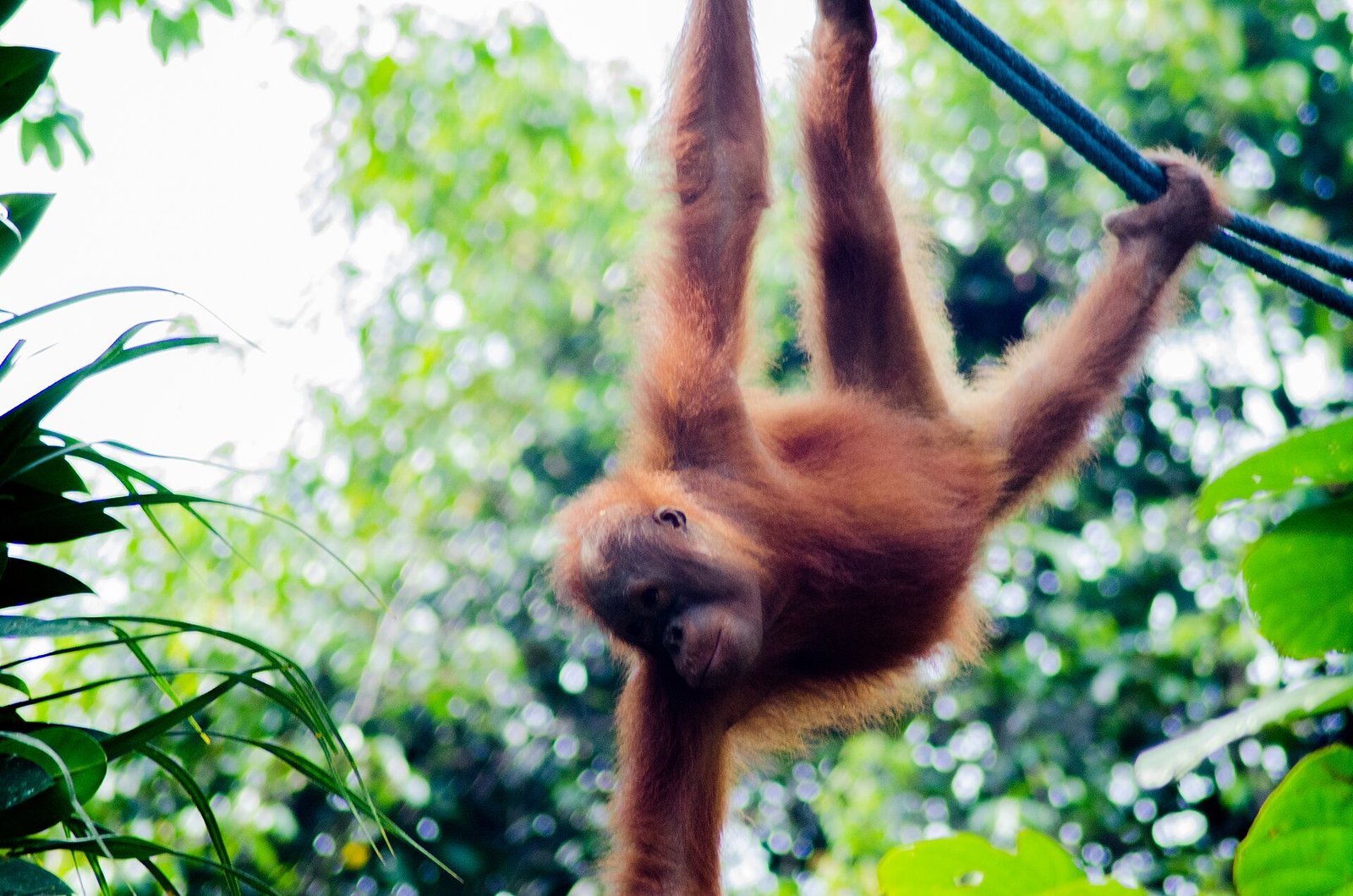
Semenggoh, near Kuching in Sarawak, is a semi-wild reserve: orangutans that were previously orphaned or rescued now range freely through surrounding forest and return to feeding platforms on their own schedule, so a sighting is likely but not guaranteed. Sepilok, near Sandakan in Sabah, is a larger rehabilitation centre that cares for a bigger population at various stages of release, with a nursery area for younger orangutans and a similar platform-feeding system for those already semi-independent. Neither is a zoo — both involve animals that can and do skip a feeding session, and both ask visitors to accept that wildlife on its own terms sometimes means an empty platform.
The confusion between the two usually comes from the word “rehabilitation” being used loosely for both. Semenggoh’s forest-roaming population is further along that process and functions more like a managed wild population than a centre with active intake; Sepilok runs a fuller pipeline from nursery care through to eventual forest release, which is why first-time visitors sometimes expect one experience and get the other. Knowing which stage of that pipeline you are about to see changes what to expect from the visit.
Compare the Two Centres
| Factor | Semenggoh (Sarawak) | Sepilok (Sabah) |
|---|---|---|
| Nearest city | Kuching (~30 min drive) | Sandakan (~25 min drive) |
| Site type | Semi-wild forest reserve | Rehabilitation centre with nursery |
| Sighting likelihood | Good but not guaranteed; fruiting-season dependent | Generally higher due to larger resident population |
| Typical visit length | 1–2 hours around a feeding session | 2–3 hours including nursery viewing |
| Nearby pairing | Bako National Park, Kuching city | Kinabatangan River, Sandakan town |
Semenggoh Nature Reserve in Sarawak
Semenggoh’s appeal is partly its convenience: it sits close enough to Kuching to combine with a half-day city itinerary, and the forest setting means sightings happen against a backdrop of genuine old-growth rainforest rather than an enclosure. Fruiting season (roughly June through August and December through February, when wild food is abundant) tends to reduce feeding-platform attendance, since well-fed orangutans have less reason to show up — a counterintuitive point worth knowing before you plan a trip purely around guaranteed sightings. Our Sarawak travel guide and Kuching city guide cover how to pair Semenggoh with the rest of a Kuching-based itinerary.
Sarawak Forestry Corporation — Semenggoh informationGetting to Semenggoh
Semenggoh is reachable by a short taxi or Grab ride from Kuching, or by a scheduled public bus that runs a limited number of departures timed loosely around the morning and afternoon feeding windows. Most visitors on a tight schedule book a half-day tour or private transfer instead, since the public bus schedule leaves little room for delay if you also want to see the morning session and be back in the city by lunch.
Sepilok Orangutan Rehabilitation Centre in Sabah
Sepilok is one of the longest-running orangutan rehabilitation programs in the world, established in the 1960s, and sits within easy reach of Sandakan, making it simple to combine with a Kinabatangan River wildlife cruise for a fuller Sabah wildlife itinerary — a pairing our existing Sabah wildlife lodges guide covers in more depth. The nursery area, where younger orangutans learn forest skills before release, is a feature Semenggoh does not have in the same form, and it is often the highlight for visitors who want to understand the rehabilitation process itself rather than just see an adult orangutan at a platform.
Sabah state government — wildlife centre informationGetting to Sepilok
Sepilok sits close enough to Sandakan that a taxi or Grab transfer from the town centre or Sandakan Airport takes well under half an hour. Many visitors base themselves in Sandakan for one or two nights specifically to combine Sepilok with the Rainforest Discovery Centre next door and a Kinabatangan River cruise the following day, which is a more efficient pairing than treating Sepilok as a single isolated stop.
Which Should You Choose
If your trip is already centred on Sarawak and Kuching, Semenggoh is the easy, low-effort choice — you do not need to restructure a flight itinerary to see it. If you are deciding between Sarawak and Sabah specifically because of orangutans, Sepilok’s larger population and nursery program generally give a fuller picture of rehabilitation, and it pairs naturally with Kinabatangan River wildlife cruises and Danum Valley for a wildlife-dense Sabah trip. Neither centre should be the sole deciding factor for choosing a whole state, though — both are half-day additions to a longer itinerary built around other priorities.
Think about what sits around each centre as much as the centre itself. A Sarawak trip anchored on Semenggoh naturally pairs with Kuching’s food and Old Town, plus a Bako day trip for coastal rainforest and proboscis monkeys — a different wildlife experience from orangutans entirely. A Sabah trip anchored on Sepilok naturally extends into the Kinabatangan River’s night cruises and, for travellers with extra days, Danum Valley’s old-growth rainforest lodges. If river wildlife cruises and a broader big-mammal checklist (proboscis monkeys, pygmy elephants, hornbills) matter to you beyond orangutans specifically, that tips the balance toward Sabah; if coastal parks, caves and longhouse culture matter more, that tips toward Sarawak.
Combining Both on One Borneo Trip
A Borneo itinerary with roughly two weeks can reasonably include both: Kuching and Semenggoh at one end, a domestic flight to Sabah, then Sepilok and the Kinabatangan River at the other. This also lets you compare the semi-wild reserve style against the larger rehabilitation-centre style directly, rather than relying on a guide’s description of the one you skipped. Shorter trips of a week or less generally need to pick one state and treat the other as a future trip, since the flight and transfer time between them eats meaningfully into a short schedule. The domestic flight between Kuching and Sandakan is not direct in most schedules — expect a connection through Kuala Lumpur or Kota Kinabalu, which adds a half-day of travel on each end that is easy to underestimate when sketching an itinerary on a map rather than checking actual flight routings.
What Both Centres Ask of Visitors
- Keep a respectful distance even when an orangutan approaches closely on a platform or walkway — these are wild-ranging animals, not performers.
- Do not bring or offer food; both centres restrict feeding to their trained staff to maintain the animals’ partial independence from humans.
- Arrive ahead of the scheduled feeding window — sessions tend to run on time regardless of visitor arrival, and latecomers may miss the best viewing.
- Expect no sighting on some visits. Both centres are explicit that attendance is not guaranteed, and that is part of what makes them different from a zoo.
Why This Conservation Work Matters
Bornean orangutans are classified as Critically Endangered by the IUCN Red List, with habitat loss from logging and land conversion as the primary driver of population decline across both Sarawak and Sabah. Semenggoh and Sepilok exist because of this pressure — most of their resident orangutans arrived as orphans displaced by habitat clearance or, in some cases, confiscated from the illegal pet trade, rather than being born into a managed program. Visiting either centre supports rehabilitation and forest-protection work directly through entry fees, but the more durable contribution is choosing operators and accommodation that avoid contributing to further deforestation nearby — a point worth raising with any tour operator you book through.
Frequently Asked Questions
Which centre has a higher chance of seeing an orangutan?
Sepilok generally has a higher likelihood due to its larger resident population, though neither centre guarantees a sighting. Semenggoh’s sightings drop further during fruiting season when wild food is abundant.
Can I visit both Semenggoh and Sepilok on one trip?
Yes, if your itinerary includes both Sarawak and Sabah with a domestic flight between them. On a week-long trip, most visitors choose one state and one centre rather than splitting limited days across a flight connection.
Is Semenggoh or Sepilok better for young children?
Both involve some walking and waiting around a scheduled feeding window, which suits most school-age children. Sepilok’s nursery viewing area tends to hold younger children’s attention a little longer than a platform-only session.
Do I need to book in advance for either centre?
Both generally allow walk-in entry during opening hours, though confirming the day’s feeding schedule in advance is sensible, especially if combining the visit with a tight day-trip itinerary from Kuching or Sandakan.
What should I bring to either visit?
Comfortable closed shoes for uneven boardwalks, a light rain layer since both sites sit in rainforest with frequent short showers, and binoculars if you have them — platform viewing areas keep a respectful distance from the animals, and a closer look rewards the extra weight in your bag.
For the wider Sarawak picture, see our Sarawak travel guide, and for Sabah’s wildlife circuit, see our Sabah wildlife lodges guide. Confirm current feeding schedules and any entry requirements directly with Sarawak Forestry Corporation or Sabah’s wildlife authorities before finalising plans.