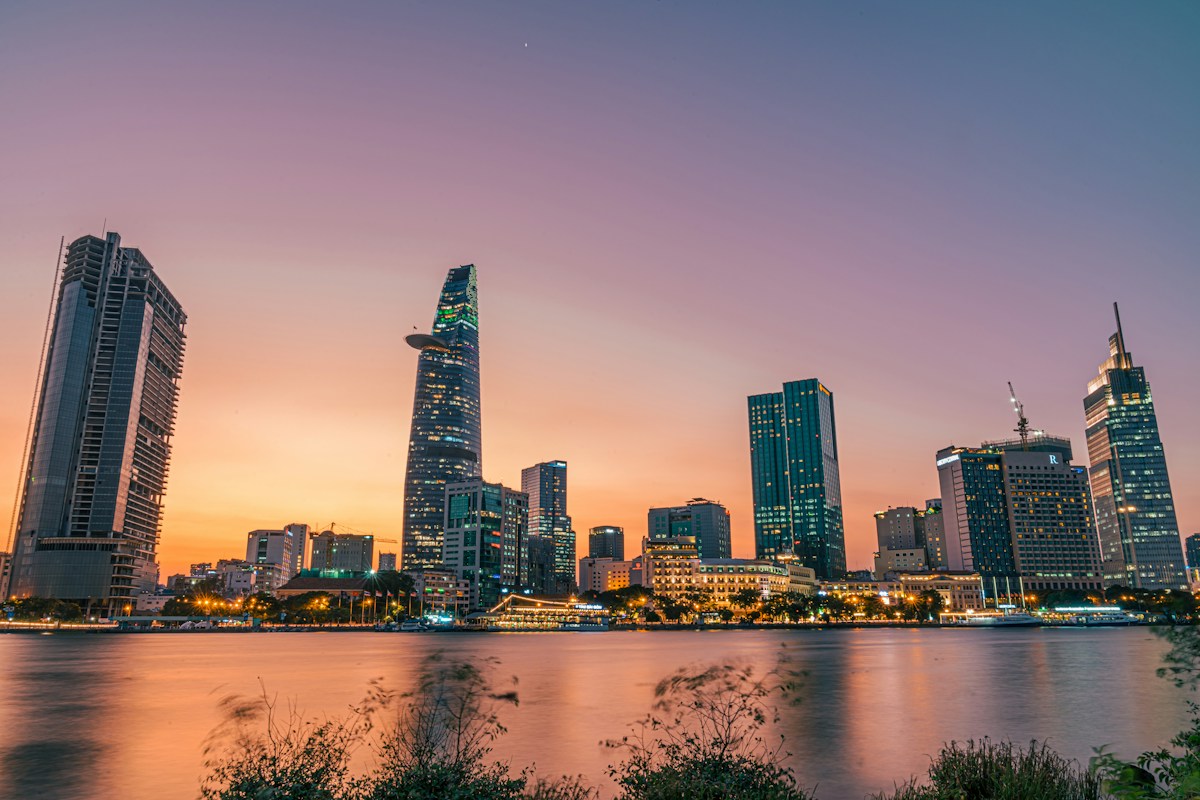
Ho Chi Minh City is Southeast Asia's most energetic metropolis. Here are the best luxury hotels for 2026 — from century-old colonial landmarks on Dong Khoi Street to sleek sky-high towers above the Saigon River.
Ho Chi Minh City moves at a pace that few cities in the world can match. The constant motion — motorbikes, street food vendors, construction cranes, deal-making — creates an energy that is simultaneously exhausting and addictive. For luxury travellers, the city rewards engagement: the best stays involve early morning pho on a pavement stool, rooftop cocktails above the Saigon River at dusk, and a street food circuit that makes any restaurant anywhere else feel slightly redundant.
Why Ho Chi Minh City for Luxury Travel?
Energy and pace: HCMC is Southeast Asia's most economically dynamic city — the commercial engine of a country growing at 6–7% annually. The visible pace of change, the density of activity, and the collision of old Saigon with new Ho Chi Minh City create a travel experience that rewards curiosity.
Culinary richness: Southern Vietnamese cuisine is distinct — sweeter, more herb-forward, more influenced by Chinese Cantonese and Khmer traditions than the north. Banh mi is arguably at its finest here (bakeries have been perfecting their recipes since French colonisation). The Bui Vien and Pham Ngu Lao area concentrates street food within walking distance; the Binh Tay market in Cholon (the Chinese quarter) is a different culinary universe.
Cultural complexity: Reunification Hall, the War Remnants Museum, Ben Thanh Market, the Jade Emperor Pagoda, and the French-colonial Notre-Dame Cathedral Basilica all sit within a few kilometres. The city's history — from French Cochinchine to the Republic of Vietnam to reunification — is dense, layered, and genuinely moving to engage with.
Gateway position: HCMC is the primary hub for flights from Europe, the Middle East, and North America into southern Vietnam and onward to Cambodia (Phnom Penh, 45 minutes), Bangkok (2h), Singapore (2h), and the Mekong Delta.
Top Luxury Hotels in Ho Chi Minh City
1. Park Hyatt Saigon
The benchmark HCMC luxury hotel — a neo-colonial property on Lam Son Square, directly facing the Saigon Opera House and within a 5-minute walk of the city's finest restaurants. The Park Hyatt occupies the most coveted address in the central district, and it wears that position with quiet confidence.
Room highlights: Park Rooms with Opera House views (worth the supplement — particularly at night when the illuminated facade is visible from the balcony); Opera Suite for the fullest experience of the city's most famous vista; the rooftop pool suite for a rare private outdoor space at this price point.
Standout features: Square One restaurant (the main dining room) is consistently rated HCMC's best hotel restaurant — the open kitchen serves both Vietnamese and international cooking at a standard the city's standalone restaurants rarely match. The Opera Bar, with live jazz every evening, is the city's most reliably elegant cocktail venue.
Rate range: USD 300–2,500/night
2. The Reverie Saigon
The most theatrical luxury hotel in Vietnam — a Times Square tower property at the intersection of Dong Khoi Street and the Saigon River, decorated in a high-baroque Italian style that polarises opinion but is impossible to ignore. The Reverie is unabashedly maximalist: gold leaf, marble, chandeliers, and hand-painted Venetian ceilings throughout.
Room highlights: The Reverie Rooms are the quieter, more restrained option — well-proportioned rooms with the hotel's signature quality without the full baroque treatment of the suites. The Dynasty Suites (opulent, theatrical, frequently photographed for design publications) are for those who actively want the full experience.
Standout features: Café Cardinal, the all-day dining restaurant, is HCMC's most lavishly decorated hotel restaurant — the ceiling fresco and the extravagance of the breakfast spread are both part of the experience. The rooftop pool and R&J bar offer some of the city's most photogenic sunset views across the Saigon River.
Rate range: USD 350–3,000/night
3. Sofitel Saigon Plaza
The Sofitel in HCMC takes a different approach from its Hanoi sibling — a sleek contemporary tower on Le Duan Boulevard, within walking distance of the Notre-Dame Cathedral, the Central Post Office, and the Reunification Hall. Less theatrical than The Reverie, more European in its luxury sensibility.
Room highlights: Superior Rooms on the upper floors with city-facing views; Club Millennium floor rooms with access to the dedicated lounge (evening cocktails, private check-in, all-day light dining included); the Presidential Suite for the city's most complete luxury accommodation.
Standout feature: The Saigon Café (1st floor) is HCMC's best hotel breakfast — a comprehensive Vietnamese breakfast station alongside the continental options, with made-to-order banh mi, pho, and regional specialties.
Rate range: USD 200–1,500/night
4. Hotel des Arts Saigon (MGallery)
A design-forward boutique hotel in the art district on Nam Ky Khoi Nghia Street — 170 rooms of mid-century Vietnamese design filtered through an MGallery aesthetic. The hotel's identity is rooted in Saigon's 1960s cultural golden age — the era of French jazz clubs, Vietnamese cinema, and the city's last period of relative peace before the war's escalation.
Room highlights: Saigon Rooms with their characteristic curved headboards and Vietnamese lacquerwork accents; the Penthouse Suite (top floor, 360-degree city terrace) for the most dramatic HCMC experience in this price range.
Standout features: The Chill Skybar on the 23rd floor is HCMC's most design-literate rooftop venue — the infinity pool edge-against-the-city visual is the image most associated with the hotel. The Lush Rooftop Garden (separate from the skybar) provides a planted, quieter alternative evening option.
Rate range: USD 180–900/night
5. InterContinental Saigon
A tower property at the base of the Bitexco Financial Tower — IHG's HCMC flagship, positioned at the financial district's edge and within a 10-minute taxi of both the historic district (Dong Khoi/Ben Nghe) and the District 2 expat restaurant corridor (Thu Duc).
Room highlights: Club InterContinental rooms (club lounge access, panoramic city views, dedicated concierge); One-bedroom suites with separate living areas and full city panoramas; the Presidential Suite for corporate travellers or extended stays.
Standout feature: The ground-floor Saigrind café is HCMC's best hotel coffee venue — single-origin Vietnamese beans (Dalat, Buon Ma Thuot, and Dak Lak sourced) prepared by formally trained baristas. The difference between Vietnamese hotel coffee and Vietnamese street coffee — for visitors accustomed to the former — is instructive.
Rate range: USD 180–1,200/night
HCMC Experiences
Street Food in District 1 and Cholon
The Ben Thanh Market area (evenings) and the Pham Ngu Lao street food strip are the most accessible. For serious eating: Cholon (District 5, Chinatown) for dim sum and Cantonese-Vietnamese food; Binh Tay Market in District 6 for morning market culture; the Bui Vien "backpacker street" for casual evening eating.
War Remnants Museum
HCMC's most visited cultural institution — a comprehensive documentation of the Vietnam War from the Vietnamese perspective, with particular focus on the American involvement. Challenging material, thoughtfully presented. Mandatory for understanding the country.
For opening hours: War Remnants Museum
Mekong Delta Day Trip
A day trip from HCMC (2 hours by car) to the Mekong Delta — river sampan rides through canal networks, floating markets, coconut candy factories, and tropical fruit orchards. Most luxury hotels arrange private car + guide programs. Cai Rang floating market (Can Tho, 3.5 hours) is the most spectacular — best experienced at dawn.
Cu Chi Tunnels
The underground tunnel complex used by Viet Cong forces during the Vietnam War — 250km of hand-dug tunnels at three underground levels. A 1.5-hour drive from HCMC; best visited with a specialist guide rather than on a standard tour bus. Several luxury hotels arrange private car + historian-guide combinations.
For official visitor information: Cu Chi Tunnels Management Board
Getting to Ho Chi Minh City
By air: Tan Son Nhat International Airport (SGN) — 7km from the city centre. Direct from Singapore (2h), Bangkok (2h), Kuala Lumpur (2h15m), Hong Kong (2h30m), Tokyo (5h30m), Seoul (5h), Paris (11h30m). Domestic from Hanoi (2h), Da Nang (1h20m), Phu Quoc (1h).
Airport to city: Taxi approx. VND 150,000–200,000 (USD 6–8). Grab is consistently reliable. The airport expressway (opened 2025) has reduced journey time to 20–25 minutes in normal traffic.
Vietnam e-Visa: Vietnam Immigration Department — 90-day single and multiple-entry options available for most nationalities.
When to Visit
December–April (dry season): Best conditions — low humidity, consistent sunshine, minimal rain. Peak December–January with Christmas/New Year travel. February–March is the sweet spot: dry season quality with lower demand than peak.
May–November (wet season): Afternoon thunderstorms, typically 30–60 minutes in duration. Mornings usually clear. The city functions normally through the wet season; flooding can briefly affect low-lying streets after heavy rain.
Year-round: Unlike beach destinations, HCMC is a genuine year-round city destination. The wet season is less severe than Vietnam's central coast.
Explore our guides to Hanoi luxury hotels, Da Nang & Hội An resorts, and Phu Quoc luxury resorts for more Vietnam inspiration.
Filed under: