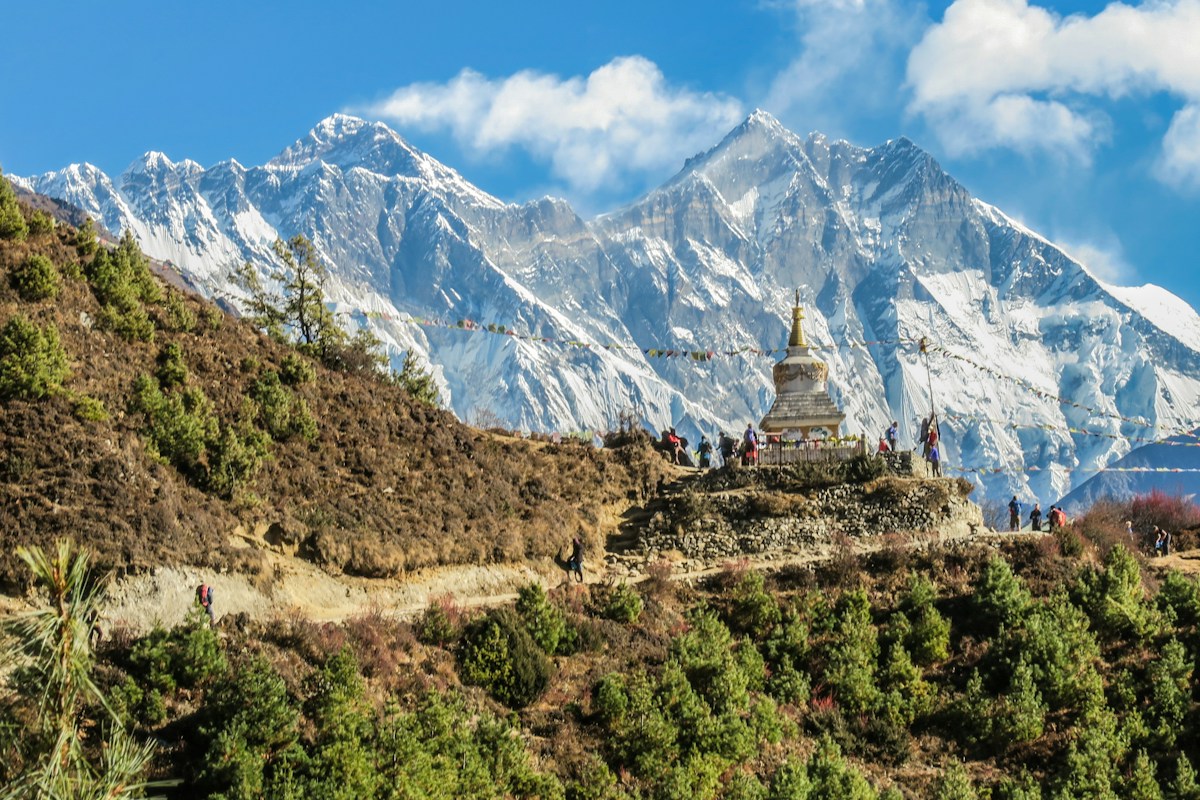
Nepal is the world's ultimate adventure and spiritual destination — eight of the world's ten highest peaks, living goddess traditions, ancient temple squares, and some of Asia's most distinctive luxury hotels. Here's where to stay in Kathmandu and beyond in 2026.
# Best Luxury Hotels in Kathmandu & Nepal 2026: Himalayan Kingdom
Nepal sits at the collision point of the Indian subcontinent and the Eurasian plate — a geological fact made visible in the landscape. Eight of the world's ten highest mountains rise from Nepali soil, including Everest (8,849 metres), the highest point on Earth. The Kathmandu Valley — at 1,400 metres — contains seven UNESCO World Heritage Sites within a 15-kilometre radius: three medieval Durbar Squares, two Buddhist stupas (Boudhanath and Swayambhunath), and two Hindu temple complexes. Nowhere else in the world is there a comparable concentration of living heritage in a single valley.
Nepal's luxury hotel scene has matured significantly over the past decade. While the country's primary appeal remains trekking, mountaineering, and spiritual tourism, a new generation of heritage hotels in restored Rana palaces and Newari courtyards, combined with world-class mountain lodges in the Himalayan foothills, now makes Nepal a legitimate luxury destination for travellers who want more than a base camp.
The Nepal Context
Altitude: Kathmandu is at 1,400 metres — manageable without specific acclimatisation. Trekking routes reach 5,000+ metres; proper acclimatisation is critical. The Himalayan Rescue Association operates altitude sickness clinics in Namche Bazaar and other trekking hubs.
Best time to visit:
- October–November: Post-monsoon — crystal-clear mountain views, dry trails, peak season for Everest and Annapurna trekking
- March–April: Spring — rhododendron forests in full bloom, good mountain visibility, slightly less crowded than autumn
- December–February: Clear and cold — excellent for Kathmandu sightseeing; high passes may be snow-closed
Permits: The Sagarmatha National Park (Everest region) requires entry permits (NPR 3,000 for SAARC nationals, USD 30 for others). Trekking permits for the Annapurna Conservation Area cost NPR 2,000. The Nepal Tourism Board provides current permit and regulation information.
Best Luxury Hotels in Kathmandu
Dwarika's Hotel, Kathmandu — **Editor's Pick**
The most extraordinary hotel in Nepal and one of the great heritage hotels of Asia. Dwarika's was built over four decades by Dwarika Das Shrestha, a Nepali businessman who spent his life rescuing medieval Newari wood carvings from demolished buildings across the Kathmandu Valley and incorporating them into his hotel. The result is a living museum of Newari craftsmanship — every window frame, doorway, and column is an original artifact from a specific demolished building, catalogued and preserved.
The architecture: Newari architecture — the indigenous building tradition of the Kathmandu Valley — is defined by carved brick, intricately latticed wooden windows (tikijhya), and multi-tiered pagoda roofs. Dwarika's is the finest surviving example of a complete Newari architectural compound, incorporating woodwork that would otherwise have been lost.
The spa: Dwarika's Wellness Retreat draws on Nepal's Ayurvedic and Tibetan healing traditions — treatments using locally sourced herbs, oils, and minerals from the Himalayan foothills.
Rates: €250–480/night. Dwarika's Hotel.
Hyatt Regency Kathmandu
The most consistently reliable international luxury hotel in the city — a 280-room resort property within its own grounds on the north side of Kathmandu, adjacent to the Boudhanath Stupa area. The Hyatt Regency is the preferred base for international business travellers and trekkers who want reliable infrastructure (fitness centre, multiple restaurants, 24-hour room service) alongside Kathmandu access.
Location advantage: 10 minutes from Boudhanath — the largest Buddhist stupa in Nepal and one of the most sacred pilgrimage sites in Asia, with a permanent resident community of Tibetan Buddhist monks and nuns. The kora (circumambulation) of Boudhanath at sunrise is one of Asia's great travel experiences.
Rates: €180–320/night.
Pavilions Himalayas, Pokhara
The finest luxury property outside Kathmandu — a 17-villa eco-resort 30 minutes from Pokhara on a hillside overlooking Phewa Lake and the Annapurna Himalaya. The private pool villas are oriented so the Annapurna massif (8,091 metres) appears to rise directly from the pool's far edge — a mountain view unmatched by any hotel in Nepal.
Setting: Pokhara is the gateway to the Annapurna Circuit and Sanctuary treks — some of the world's finest multi-day trekking routes. The Pavilions serves as the optimal luxury base before and after these routes.
Sustainability: The Pavilions operates a working organic farm supplying the restaurant, a community employment programme in the adjacent village, and solar power across the estate. Pavilions Himalayas.
Rates: €280–550/night.
Tiger Mountain Pokhara Lodge
A tented camp on a 100-acre forest ridge above Pokhara — 13 tents with the Annapurna range visible from every terrace, and an operation centred on trekking and cultural access rather than resort amenities. Tiger Mountain's guides are some of the most experienced in Nepal; the lodge arranges everything from half-day cultural walks to 14-day Annapurna Circuit treks.
Rates: €180–280/night, full board. Tiger Mountain Lodge.
Nepal Essential Experiences
Boudhanath Stupa, Kathmandu: The largest stupa in Nepal and one of the largest in the world — a UNESCO World Heritage Site since 1979. The whitewashed dome is surrounded by a street of Tibetan Buddhist monasteries, thangka painting workshops, and teahouses. Walk the kora (clockwise circumambulation) at dawn when monks and pilgrims circle with prayer wheels.
Pashupatinath Temple: The most important Hindu temple in Nepal — a sacred cremation complex on the banks of the Bagmati River. Open-air cremations occur daily on the riverside ghats; witnessing these is a profound (and fully public) encounter with Hindu funerary traditions. UNESCO World Heritage.
Bhaktapur Durbar Square: The best-preserved medieval city in the Kathmandu Valley — a 15th-century royal square of brick temples, woodcarved palaces, and the famous Nyatapola Temple (the tallest pagoda in Nepal). Far less touristed than Kathmandu's Thamel quarter.
Everest Base Camp Trek (14 days): The world's most celebrated trek — from Lukla Airport (fly from Kathmandu, 35 minutes) through the Khumbu Valley to Base Camp at 5,364 metres. Not technical climbing — a strenuous walk on established trails. October–November and March–May are optimal seasons.
Chitwan National Park: Nepal's lowland UNESCO-listed national park — the best rhino viewing in Asia (600+ greater one-horned rhinos), tigers, leopards, and the largest gharial crocodile population in the world. Jungle walks and elephant-back safaris. Chitwan National Park.
Nepal Practical Information
Getting there: Tribhuvan International Airport (KTM) in Kathmandu is served from Delhi (1.5 hrs), Mumbai (3 hrs), Doha (5 hrs via Qatar Airways), Dubai (4.5 hrs), Bangkok (4 hrs), Guangzhou, and Kuala Lumpur. There are no direct flights from Europe or North America — Qatar Airways via Doha is the most convenient routing from Europe.
Visa: Nepal offers visa on arrival for most nationalities at Tribhuvan Airport — 15 days (USD 30), 30 days (USD 50), or 90 days (USD 125). The Department of Immigration Nepal provides current requirements.
Currency: Nepali Rupee (NPR). USD and EUR exchangeable at banks and hotels. Carry cash outside Kathmandu — ATMs are limited in trekking areas.
Health: Routine vaccinations recommended (hepatitis A and B, typhoid). Altitude sickness is the primary health risk for trekkers — see the Himalayan Rescue Association guidance above.
*More Himalayan and South Asian luxury guides:* Best luxury hotels Bhutan 2026 | Best luxury palace hotels Rajasthan 2026 | Best luxury hotels Jaipur 2026
Filed under: