
Bora Bora Travel Guide: Overwater Villas and Island Basics for First-Timers
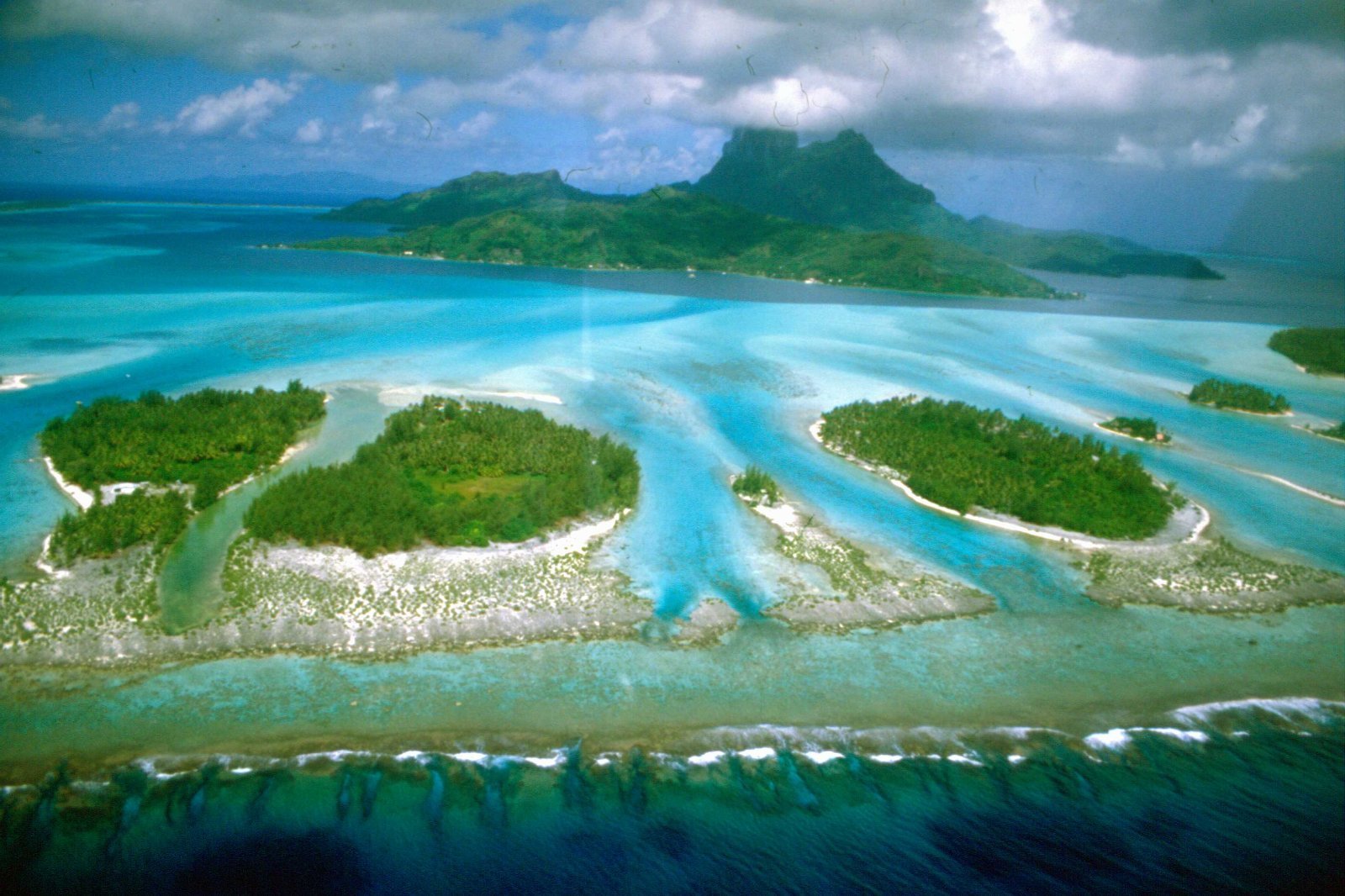
Illustrative island photograph. Not a photograph of the resorts compared below.
This guide focuses on Bora Bora specifically for first-time visitors deciding whether an overwater villa in French Polynesia is worth the long flights and higher price tag compared with Fiji or the Maldives. Bora Bora is a single volcanic island inside a barrier reef in the Society Islands of French Polynesia, roughly 160 miles (260 km) northwest of Tahiti. The entire island is about 6 miles (10 km) long, and almost every hotel photo you have seen of thatched-roof bungalows sitting over turquoise water was taken here or copied from here. That reputation is earned, but it also means Bora Bora is one of the most expensive island destinations covered on LuxStay, and this guide is built to help you plan around that reality rather than be surprised by it.
Where Bora Bora is and how the island is laid out
Bora Bora’s main island holds the only town, Vaitape, along with the airport ferry dock, a handful of supermarkets, and most of the budget guesthouses. The dramatic twin peaks of Mount Pahia and Mount Otemanu, remnants of an extinct volcano, sit at the center. Surrounding the main island is a lagoon protected by a barrier reef, and scattered along that reef are the motu, small sandy islets, where almost all of the famous overwater bungalow resorts are built. Staying on a motu means your resort, restaurants, and activities desk are all a boat ride from Vaitape, which is part of why Bora Bora resorts build in all-inclusive meal plans and why a rental car on the main island is not something most guests need.
Getting there and getting around
Bora Bora’s airport (BOB) sits on its own motu and is reached only by air, almost always connecting through Tahiti Faa’a International Airport (PPT). Air Tahiti operates the roughly 50-minute domestic hop from Tahiti several times a day, and most long-haul carriers from Paris, Los Angeles, Auckland, and Tokyo route through Papeete. Once you land on Bora Bora’s airport motu, there is no bridge to the main island: every resort, including the budget ones, collects guests by private boat or shared shuttle, and this transfer is usually the first and most memorable part of the trip. If your resort does not include airport transfers in the rate, confirm the cost before you book, since a private boat transfer booked on arrival can run well over 100 USD per person each way at the higher-end motu resorts.
Within the lagoon, resorts run their own boats to restaurants, dive shops, and the handful of boutiques. If you are staying in Vaitape itself rather than on a motu, a bicycle or scooter rental covers the compact town and coast road easily, and public le truck buses still run on a loose schedule for budget travelers.
Where to stay: motu overwater villas or the main island
Nearly every resort most travelers associate with Bora Bora, Four Seasons, St. Regis, Conrad, InterContinental Le Moana and Thalasso, and The Brando-adjacent properties nearby, sits on a private motu with its own stretch of lagoon. These resorts build overwater bungalows on stilts with glass floor panels, private sun decks, and direct lagoon access, plus beach villas and garden rooms at lower price points within the same property. Rates typically include round-trip boat transfers and sometimes breakfast or a meal plan, which partly offsets the fact that dining off-property is limited once you are based on a motu.
Budget-conscious travelers who still want to say they visited Bora Bora usually base themselves in or near Vaitape in a family-run pension or guesthouse, several of which include simple overwater or beachfront rooms at a fraction of the five-star motu rate, and take day tours out to the lagoon and snorkeling sites instead of paying for a private motu stay. This is a legitimate way to see Bora Bora on a tighter budget, covered in more detail in our guide to planning a Bora Bora trip without overspending.
Best time to visit and what the weather actually does
Bora Bora sits in the South Pacific, so its dry season runs from roughly May through October, with the coolest, driest, and most consistently calm conditions in July and August. This period also coincides with Southern Hemisphere winter, which keeps air and water temperatures comfortable without the deeper humidity of the wet months. November through April is the wetter, warmer season, with higher humidity, more frequent short tropical showers, and a small risk of tropical cyclones toward the later part of that window, though direct cyclone hits on Bora Bora itself are infrequent. Shoulder months of May, June, September, and October tend to offer a practical balance of lower rates, thinner crowds, and still-reliable lagoon visibility for snorkeling.
What there is to do beyond the overwater bungalow photo
The lagoon itself is the main attraction. Most resorts and independent operators run half-day lagoon tours that stop at shallow sandbars for stingray and blacktip reef shark encounters, snorkeling at coral gardens inside the reef, and a stop for a Polynesian-style picnic on a private motu. Scuba divers can book trips to the outer reef wall for larger pelagic species, including manta rays at a cleaning station near the main pass.
On land, a 4×4 circle-island safari tour covers World War II-era coastal gun emplacements, viewpoints over the lagoon, and stops at a pearl farm, since Bora Bora and the wider Society Islands are a center of black pearl cultivation. Hiking to the base of Mount Pahia is possible with a local guide, though the full ridge to Mount Otemanu’s summit is a technical climb not offered to casual visitors. In the evening, most motu resorts schedule at least one Polynesian dance and fire-knife performance per week as part of their entertainment program.
What a trip actually costs
Bora Bora is priced closer to the Maldives than to most of Southeast Asia, and flights are a meaningful part of the budget since nearly every itinerary connects through Tahiti. Expect overwater bungalows at the five-star motu resorts to start in the 900 to 1,200 USD per night range in low season and climb well past 2,000 USD per night in July and August at the most in-demand properties, generally with breakfast included and sometimes a half-board plan. Guesthouse rooms in or near Vaitape can run from roughly 150 to 350 USD per night, a significant saving that funds day tours and a splurge dinner instead. Budget an additional 100 to 250 USD per person for round-trip motu boat transfers if they are not bundled into your room rate, and plan on 80 to 150 USD per person for a half-day lagoon excursion.
| Lodging tier | Typical nightly rate (USD) | Best for | Transfers included |
|---|---|---|---|
| Ultra-luxury motu overwater villa | 1,200–3,000+ | Milestone honeymoons and anniversaries | Usually yes |
| Mid-range motu overwater bungalow | 700–1,200 | First-time overwater stay on a set budget | Often yes |
| Beach villa or garden room (same resorts) | 400–800 | Couples who want the resort without the overwater premium | Usually yes |
| Vaitape guesthouse or pension | 150–350 | Budget travelers and longer stays | Rarely, arrange separately |
How Bora Bora compares to other overwater destinations
If the overwater bungalow is the main draw rather than Bora Bora specifically, it is worth comparing it against the Maldives, where atoll resorts offer a similar architecture style at a wider range of price points and shorter flight connections from Europe and Asia. We cover that comparison directly in Bora Bora vs Maldives. Couples specifically planning a honeymoon should also see our picks for the best luxury honeymoon resorts in Bora Bora, and travelers who want to see more of French Polynesia in one trip can read about day trips to Taha’a, Moorea, and Raiatea. For a broader regional seasonal view, our French Polynesia month-by-month guide is a useful companion to the climate notes above, and travelers weighing Bora Bora against Fiji’s overwater resorts may also want our Fiji honeymoon guide.
Rates and conditions change by season and operator; confirm current pricing and transfer policies directly with your resort or a travel advisor before booking. For official visitor information, see Tahiti Tourisme, and for general geography and background, see the Wikipedia entry on Bora Bora and the CIA World Factbook page on French Polynesia.
Frequently asked questions
Do you need a passport and visa to visit Bora Bora?
Bora Bora is part of French Polynesia, a French overseas collectivity, so most visitors need a valid passport and, depending on nationality, may enter visa-free for short tourist stays; check current requirements with the nearest French consulate before booking flights.
How many days do you need in Bora Bora?
Four to five nights is a practical minimum given the long travel time to get there, enough for a lagoon tour, a relaxed resort day, and a land-based circle-island tour without feeling rushed.
Is Bora Bora good for non-honeymoon travelers?
Yes. While resorts market heavily to honeymooners, families, groups of friends, and solo divers all visit, and several resorts offer multi-bedroom beachfront villas for exactly that purpose.
Can you drink the tap water in Bora Bora?
Most resorts provide bottled or filtered water for guests; tap water quality varies by property, so check with your specific resort rather than assuming it is safe to drink untreated.
Is Bora Bora affected by hurricanes?
French Polynesia sits in the South Pacific cyclone basin, with the main risk window from November through April; direct hits on Bora Bora are uncommon but the shoulder and wet season carries more storm risk than the July–August dry season.