How to Plan a Luxury Milos Trip (2026 Guide)
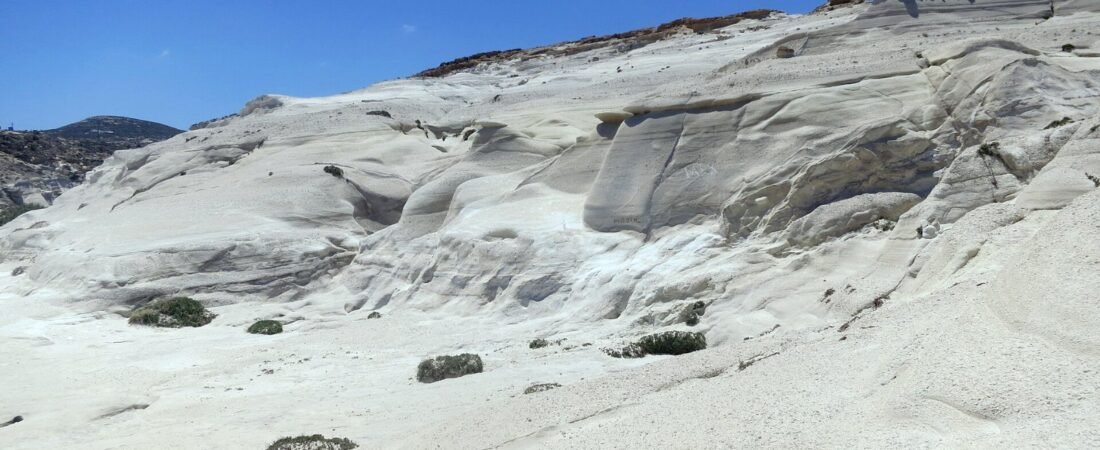
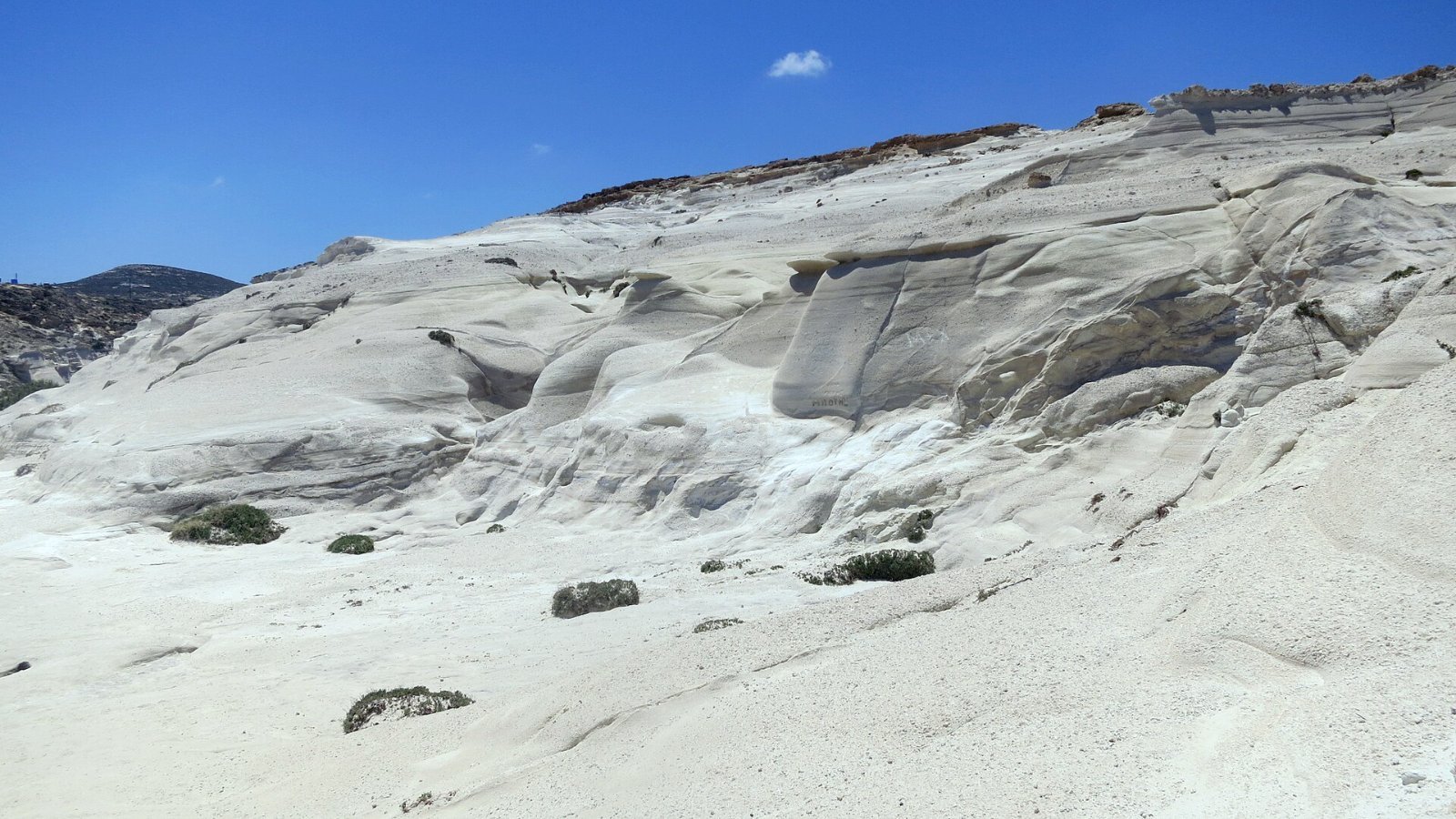
Illustrative Sarakiniko coastline. Not a photograph of the properties compared below.
Milos looks like nowhere else in the Cyclades: a volcanic coastline of white and ochre cliffs, sea caves, and mineral-streaked beaches that owes more to geology than to whitewashed architecture. This guide focuses on planning a luxury trip to Milos specifically, covering how to actually get there, where to base yourself, which boat trip is worth booking in advance, and how to build a realistic itinerary around an island that rewards planning more than most Greek islands do.
Research-based guide · Official sources checked 25 September 2026. This is not a first-hand stay review or a ranking based on guest scores.
What Makes Milos Different: A Volcanic Coastline, Not a Caldera
Milos is a volcanic island, and it looks it: the lunar-white rock formations at Sarakiniko, the mineral-rich cliffs around Kleftiko, and a coastline shaped by centuries of quarrying rather than tectonic caldera collapse. Where Santorini’s identity is built around one dramatic view, Milos is built around dozens of smaller, stranger ones spread across more than seventy beaches, each with its own distinct rock color and shape. It has a fraction of the hotel capacity and cruise traffic of the Cyclades’ best-known islands, which is exactly why it rewards a bit of upfront planning: fewer daily ferries, fewer late-availability boat trips, and a smaller window to get the logistics right.
Getting to Milos: Ferry Routes and the Case for Skipping a Flight
Milos has a small domestic airport with limited, largely seasonal connections through Athens, but most travelers arrive by high-speed ferry from Piraeus, a journey of roughly three to four and a half hours depending on the vessel and route. Ferry schedules and operators change by season and by year, so check current timetables directly rather than relying on last year’s routes or a generic search result; Greek Travel Pages tracks ferry schedules across the Cyclades and is a more reliable source than a general search. If you are combining Milos with Santorini or another Cycladic island, book inter-island ferry legs early in peak season, since sailings sell out well before the departure date in July and August. A common approach is to fly into Athens, spend a night near Piraeus port to buffer against flight delays, then take a morning ferry to Milos; flying into Santorini first and ferrying onward to Milos is also possible but adds a connection and typically more travel time overall. Whichever route you choose, treat the ferry leg as a fixed appointment rather than something to book once you land, since walk-up tickets on popular routes can sell out with little notice in summer.
Where to Base Yourself: Adamas, Plaka, or Pollonia
Adamas, the port town, is the most practical base logistically, close to the ferry terminal and with the widest range of restaurants and services. Plaka, the island’s traditional hilltop capital, has some of Milos’ best sunset viewpoints and a more atmospheric, village-like feel, though it sits a short drive from the main beaches. Pollonia, on the north coast, is quieter and closer to the boat departure point for Kleftiko trips, making it a strong choice if a boat excursion is the centerpiece of your visit. None of these bases is more than a twenty-minute drive from the others, so the choice comes down to atmosphere rather than convenience. A rental car is worth arranging for your full stay regardless of base, since Milos’ bus network covers the main villages but not most of the beaches and viewpoints that make the island worth visiting; book a car in advance during July and August, when the island’s small rental fleet sells out.
Compare Luxury Stays on Milos
| Property and source | Base | Standout feature | Best for |
|---|---|---|---|
| Milos Cove Hotel | Near Adamas | Sea-facing suites, small-scale boutique feel | Couples wanting a quiet base near the port |
| Anemi Hotel | Achivadolimni, near Adamas | Design-focused rooms, on-site restaurant | Design-focused travelers |
| Portiani Hotel | Adamas, on the waterfront | Central location, easy ferry access | Travelers island-hopping on a tight schedule |
| Windmill Villas Milos | Trypiti, hilltop above Adamas | Converted windmill suites, panoramic views | Couples wanting a distinctive, quiet stay |
Milos has fewer large-scale five-star resorts than Santorini or Crete, and its luxury tier leans toward small, design-forward boutique hotels rather than sprawling resort compounds. Confirm current room categories and minimum-stay rules directly with each property, since availability is genuinely tighter than on larger islands during July and August. Several of these properties operate a limited number of rooms, sometimes fewer than twenty, so a specific room category can sell out weeks ahead of a similarly priced booking at a larger island’s resort.
Build Your Itinerary: Sarakiniko, Kleftiko, and the Boat-First Rule
Plan your Kleftiko boat trip first and build the rest of the itinerary around it, since it is the single hardest-to-rearrange booking on the island; Kleftiko’s sea caves and turquoise coves are only reachable by boat, and half-day and full-day options both sell out in peak season. Sarakiniko’s white lunar landscape is reachable by car and best visited early morning or late afternoon, both for the light and to avoid midday tour-bus crowds. Beyond those two anchors, budget at least one day for Plaka’s hilltop village and Milos’ small archaeological museum, home to a replica of the Venus de Milo discovered on the island, and one slower day with no fixed plan, since the island’s beaches reward unhurried exploration more than a packed schedule does. Papafragas, a set of narrow sea inlets carved into the rock, and Firiplaka, a wide sand-and-pebble beach on the south coast, are both reachable by car and worth a half-day each. The Sykia Cave, a partially collapsed sea cave, is usually visited as part of the same boat route as Kleftiko rather than as a separate trip. If Milos’ pace feels right for you, our Naxos guide covers a similarly under-the-radar Cycladic alternative with a different landscape.
Best Time to Plan Your Trip
June and September offer the best balance of warm, swimmable seas, thinner crowds and full ferry schedules; both are strong choices for a first visit. July and August bring the most reliable weather but also the tightest ferry and boat-trip availability, so book those specific pieces weeks in advance rather than on arrival. May and early October can work for travelers comfortable with a cooler sea and a reduced ferry timetable, but confirm your exact route is running before committing to those dates. Outside the core April-to-October season, Milos’ ferry frequency drops sharply and several hotels and restaurants close entirely, so a winter or early-spring trip needs to be built around what is actually open rather than a typical itinerary.
Compare the Full Booking Cost
On Milos, the boat excursion and ferry legs often end up mattering as much as the hotel rate itself, since both are limited-capacity bookings rather than commodity purchases. Budgeting for these pieces separately, rather than assuming they will be easy to arrange once you arrive, is the single biggest difference between planning a Milos trip and planning a trip to a larger island with more redundancy built into its transport and tour infrastructure.
- Book your Kleftiko boat trip and any inter-island ferry legs before finalizing hotel dates, since boats have far less capacity than hotels.
- Confirm whether your ferry route is a direct sailing or requires a transfer through another island, which can add hours to the journey.
- Use identical dates and room categories when comparing quotes between Milos Cove Hotel, Anemi Hotel and any other property you are considering.
- Check cancellation policies on both the ferry operator and the boat-trip provider separately, since weather cancellations are handled differently by each.
- Ask whether your hotel can arrange the Kleftiko boat booking directly, which can be more reliable than a third-party platform during peak weeks.
Frequently Asked Questions
Does Milos have an airport?
Yes, Milos has a small domestic airport with limited seasonal connections, mainly via Athens. Most visitors arrive by ferry from Piraeus or as part of a Cycladic island-hopping route instead.
How many days do you need on Milos?
Four to five full nights is generally enough to cover Sarakiniko, a Kleftiko boat trip, Plaka’s sunset and a slower day at your resort, without feeling rushed.
Is Milos quieter than Santorini?
Yes, considerably. Milos has far less cruise-ship traffic and a smaller hotel base, so even its most photographed sites rarely feel as crowded as Santorini’s caldera towns in peak season. See our Santorini vs Mykonos comparison if crowd levels are a deciding factor for your trip.
Do you need a boat trip to see Milos properly?
For the coastline’s best-known features, yes. Kleftiko’s sea caves and several other beaches are only reachable by boat, so a half-day or full-day boat excursion is a practical necessity rather than an optional extra.
Should you rent a car on Milos?
Yes, for the parts of the island reachable by road, including Sarakiniko, Plaka and Pollonia. A car covers the land-based sights efficiently; a separate boat excursion covers what a car cannot reach. If you are also weighing a longer, multi-island Aegean trip, see our Greek island hopping guide.
Explore more of our Travel Planning guides for other Greek islands, or compare Milos against a different coastline entirely in our Crete guide and Rhodes vs Corfu comparison. Verify ferry schedules and boat-trip availability directly before finalizing your dates. Milos rewards travelers who plan the fixed pieces first and leave the rest loose, which is a different rhythm from a resort-first trip but one that suits an island built around its coastline rather than its hotel count.