Komodo National Park Boat Tour: What to Expect in 2026
This guide focuses on what a Komodo National Park boat tour actually involves specifically for first-time visitors deciding between a day trip and a multi-day liveaboard, covering permits, typical routes, dragon encounters and the diving and snorkeling that fill most of the itinerary between island stops.
Day Trip vs Liveaboard: Choosing a Tour Length
Most boat tours depart from Labuan Bajo, the gateway town on Flores, and fall into two categories. Day trips, typically 10 to 12 hours, cover a condensed version of the park’s highlights, usually Padar Island’s viewpoint, a short dragon-viewing stop on Rinca or Komodo Island, and one or two snorkeling stops at Pink Beach or Manta Point. Liveaboard trips run two to four days and cover significantly more ground, including dive sites and islands that day trips skip entirely, with overnight stays on the boat itself rather than back in Labuan Bajo each evening.
A day trip suits travelers with limited time or a tight budget who mainly want to see Padar’s viewpoint and a dragon up close, while a longer liveaboard suits divers and travelers who want a fuller, richer sense of the park’s scale, since Komodo National Park spans a wide area of islands and channels that a single day simply cannot cover.
A middle option that some operators offer is an open-trip or shared liveaboard, where you join a pre-scheduled group boat rather than chartering a private one, which brings the per-person cost down close to day-trip pricing while still covering two or three days of islands. This suits solo travelers and couples who want the fuller liveaboard itinerary without paying for an entire private boat, though it also means sharing the boat and schedule with strangers, which is worth weighing against the cost savings.
Speedboat day trips and the slower wooden phinisi-style boats used for most liveaboards offer a genuinely different experience, not just a different schedule. Speedboats cover distance quickly but spend less time at each stop, while a phinisi moves slowly between islands, which some travelers find part of the appeal and others find simply slow, so it is worth checking which type of boat a tour actually uses before booking.
Permits, Rangers and Seeing the Dragons
Entry to Komodo National Park requires a conservation permit, typically arranged in advance by your tour operator and included in the tour price, along with a separate guide fee for the specific island you visit, since Komodo dragons are only reliably seen on Komodo Island and Rinca Island, each with its own ranger-led walking trail. Rangers accompany every walking group and carry a forked stick for safety, since Komodo dragons are capable of serious injury and attacks on humans have occurred, though incidents are rare when visitors stay with their ranger and do not approach the animals.
Rinca generally has a higher density of easily spotted dragons and a shorter, easier walking trail, making it the more common choice for day trips, while Komodo Island itself has a longer trail and a reputation among repeat visitors for larger dragons, though sightings on either island are never guaranteed.
Rangers typically offer a choice of short, medium or long walking routes on both islands, and choosing the longer route generally improves your odds of a dragon sighting since it covers more of the island’s interior rather than staying close to the ranger station where dragons are sometimes less active during the heat of midday. Early morning walks, before the day’s heat sets in, tend to see more dragon activity than afternoon visits.
Padar Island and the Viewpoint Hike
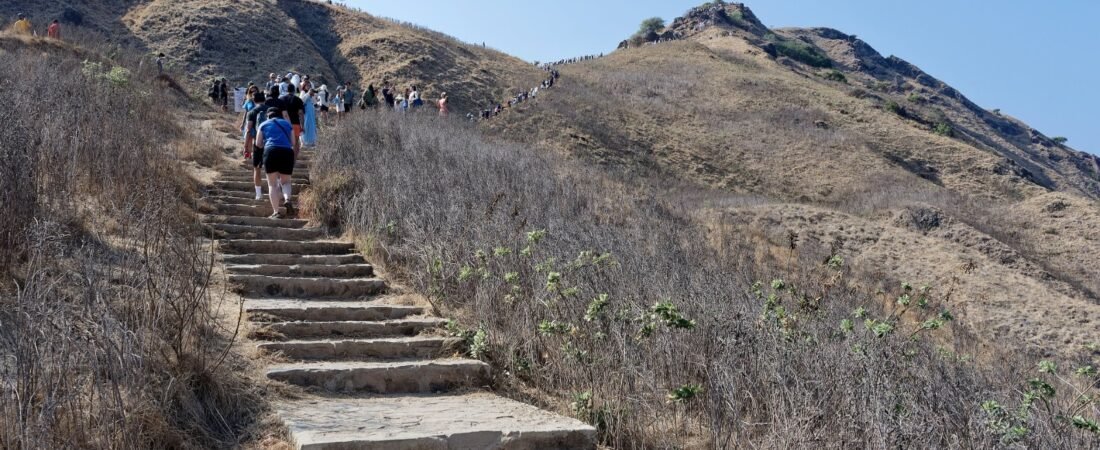
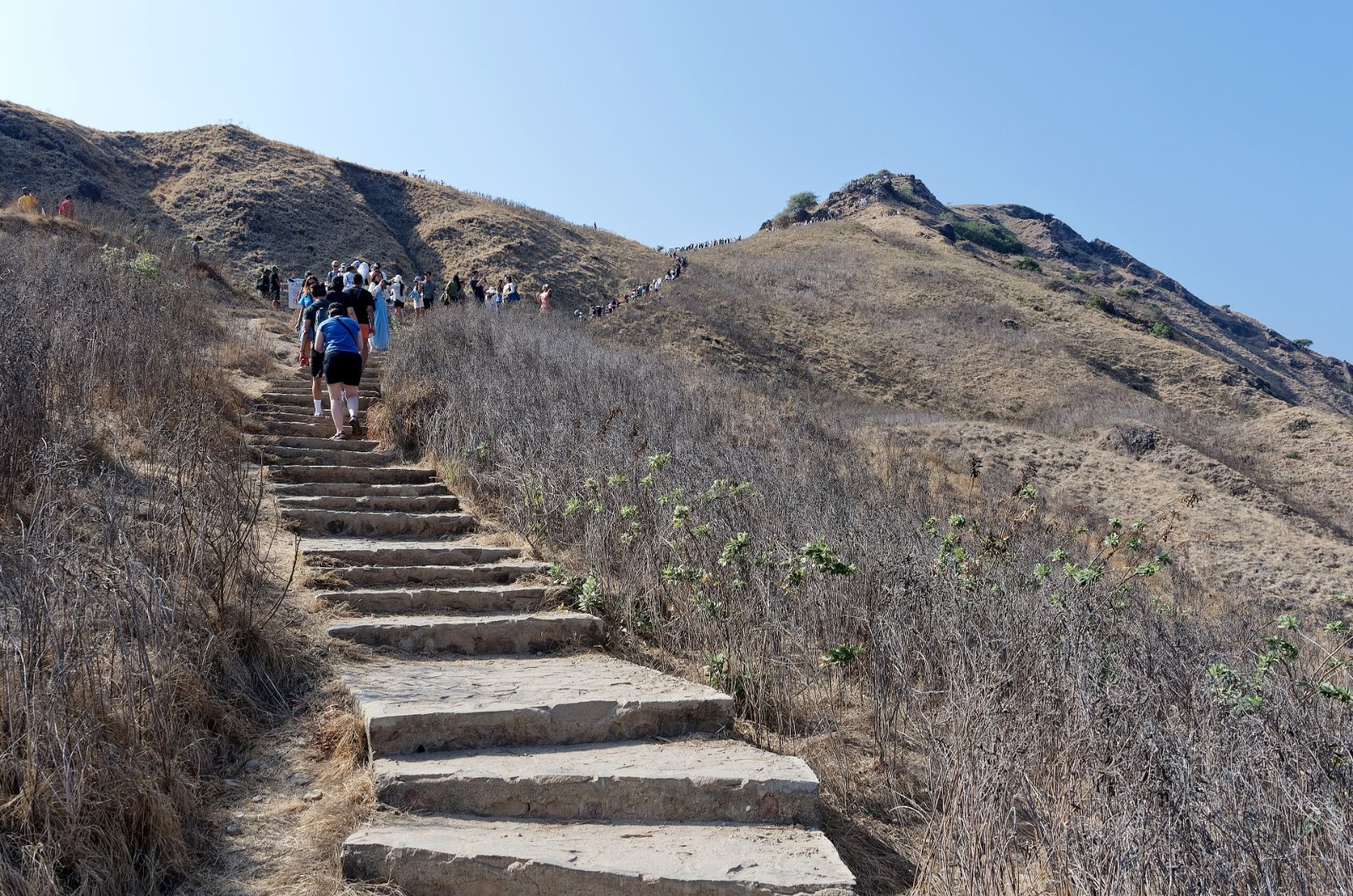
Padar Island’s viewpoint, reached by a steep but short hike of around 20 to 30 minutes, is the single most photographed stop on almost every Komodo tour, with its three-color bay panorama, dark volcanic sand on one side and pale coral sand on the other, appearing on most of the park’s promotional material. The hike has no shade and can be genuinely hot by mid-morning, so tours typically schedule the Padar stop for early morning or, less commonly, late afternoon to avoid the worst of the heat. Bring more water than you think you need, since there is nowhere to buy any on the island itself, and the final stretch to the viewpoint involves a set of fairly steep stairs that feel considerably harder in direct midday sun than the short distance suggests.
Snorkeling and Diving Highlights
Pink Beach, named for the faint pink tint in its sand from crushed red coral fragments, offers calm, shallow snorkeling suitable for most swimmers, while Manta Point is a current-swept site specifically known for manta ray sightings that are common enough to be close to expected rather than lucky. Liveaboard itineraries typically add further dive sites known for strong currents and larger pelagic life, which is part of why Komodo has become a recognized diving destination in its own right, separate from its reputation for dragons.
Batu Bolong and Castle Rock are two further dive sites commonly included on liveaboard routes, both known for strong currents that attract schooling fish and reef sharks, and both generally considered better suited to experienced divers than the calmer Pink Beach and Manta Point stops that day trips typically include. Water temperature varies noticeably across the park depending on current and depth, so a thicker wetsuit than you might use elsewhere in Indonesia is worth considering for Komodo’s dive sites specifically.
Day Trip vs Liveaboard at a Glance
| Factor | Day trip | Liveaboard (2 to 4 days) |
|---|---|---|
| Typical duration | 10 to 12 hours | 2 to 4 days, overnight on board |
| Stops covered | Padar, one dragon island, 1 to 2 snorkel stops | Padar, both dragon islands possible, multiple dive and snorkel sites |
| Best for | Limited time, tighter budget | Divers, travelers wanting fuller coverage |
| Accommodation | Back in Labuan Bajo each night | On the boat |
Best Time to Go and What to Pack
The dry season, roughly April through November, gives calmer seas and more reliable visibility for diving and snorkeling, while the wet season from December through March brings a higher chance of rough crossings and cancelled trips. Water, reef-safe sunscreen, a hat and sturdy sandals for the Padar hike are essential, and seasickness medication is worth packing even for confident sailors, since the open crossings between islands can be choppy regardless of season. A light jacket or windbreaker is useful for early morning departures and evening boat rides, when the sea breeze can feel surprisingly cool compared with daytime temperatures on land, and a dry bag protects phones, cameras and passports during snorkeling stops and wetter boat transfers.
Booking Your Tour from Labuan Bajo
Book through an established operator with clear safety practices around the dragon walks and life jackets for snorkeling stops, rather than the cheapest boat you can find on arrival, since standards vary widely and this is one trip where cutting corners on safety is not worth the savings. Reading recent reviews specifically for the boat and crew you are booking, not just the tour company’s overall rating, is worth the extra few minutes given how much a trip’s quality depends heavily on a specific captain and guide team. Liveaboard trips in particular are worth booking a few weeks ahead during the July to September peak season, when the better-reviewed boats fill up well before walk-up availability would suggest, and prices for the same route can vary significantly between operators depending on boat size, crew experience and how many stops are actually included.
For another Indonesian destination built around boat-based exploration, see our Raja Ampat travel guide, and for a nearby comparison point often mentioned alongside Komodo, our Raja Ampat vs Bali guide covers a similar day-trip-versus-deeper-trip decision.
Frequently Asked Questions
Is it safe to see Komodo dragons up close?
It is generally safe when you stay with a ranger and follow their instructions, including keeping a safe distance and not carrying food that might attract a dragon’s attention. Attacks are rare but have occurred, mostly when visitors ignored ranger guidance.
Should I choose Rinca or Komodo Island for dragon viewing?
Rinca generally has a shorter trail and reliably high dragon sightings, making it the more common choice for day trips, while Komodo Island has a longer trail and a reputation for larger dragons.
Is a day trip enough to see Komodo National Park properly?
A day trip covers the main highlights, Padar’s viewpoint, one dragon island and a snorkel stop, but a liveaboard of two to four days covers significantly more of the park’s islands and dive sites.
Will I definitely see manta rays at Manta Point?
Sightings are common enough to be a realistic expectation rather than pure luck, though no wildlife encounter can be guaranteed on any single visit.
What is the best time of year for a Komodo boat tour?
April through November, the dry season, generally gives calmer seas and better visibility than the December through March wet season.
A Komodo boat tour rewards travelers who match the trip length to what they actually want to see, a day trip for the headline highlights, a liveaboard for the fuller picture of the park’s diving and islands, and neither option is objectively better than the other once you are honest about how much time and budget you actually have for this part of the trip. Browse more of our travel planning guides for other Indonesian destinations built around boat-based itineraries.
Sources: Wikipedia: Komodo National Park, UNESCO: Komodo Biosphere Reserve, Wonderful Indonesia: Labuan Bajo and Komodo National Park.