Lakshadweep vs Maldives 2026: Which Should You Choose?
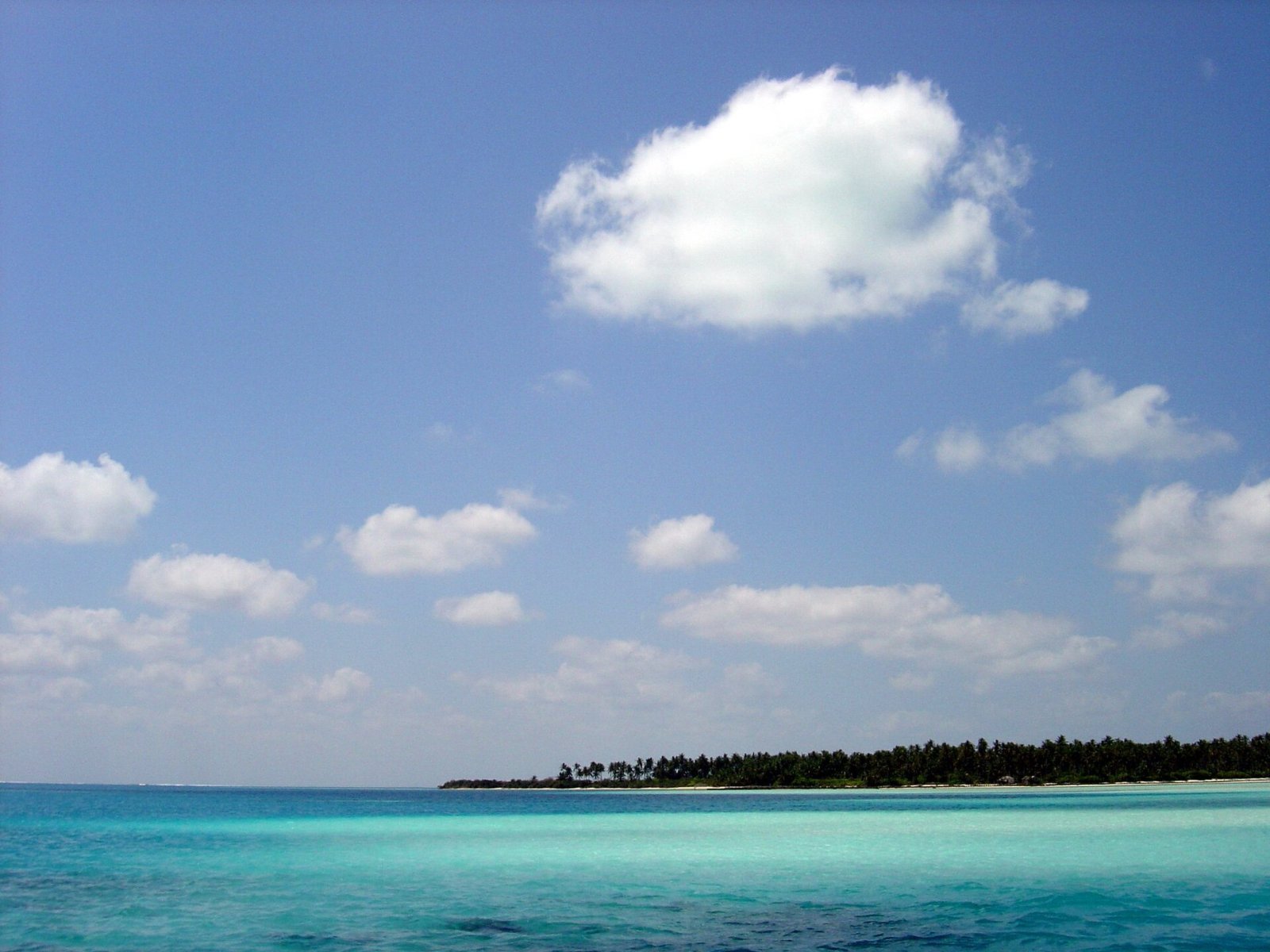
Lagoon off Bangaram Island, Lakshadweep. Photo: Wikimedia Commons (CC BY-SA 2.0)
Lakshadweep and the Maldives share the same formula, coral atolls, turquoise lagoons, world-class diving, but they deliver it in almost opposite ways. This guide focuses on travellers trying to decide between the two for a 2026 trip, specifically Indian passport holders who can reach Lakshadweep without an international flight, and anyone weighing an established luxury destination against a quieter, less developed one that is only now getting its first branded resorts.
The short version: the Maldives is a mature luxury industry built entirely around private-island resorts and overwater villas, with alcohol, nightlife and five-star service as standard. Lakshadweep is an inhabited Indian union territory with a permit system, a near-total alcohol ban, and a tourism model that has, until 2026, been deliberately modest. Neither is “better” in the abstract, they suit different trips.
Research-based guide · Sources checked 7 October 2026. This is not a first-hand stay review or a ranking based on guest scores.
Access: domestic simplicity vs international flying
This is the single biggest practical difference. Indian citizens can reach Lakshadweep with no passport at all, just a mandatory entry permit, a roughly 90-minute Alliance Air flight from Kochi to Agatti, and a speedboat transfer. The Maldives requires a passport and an international flight into Malé (typically connecting through a hub such as Colombo, Doha or Singapore for most travellers outside South Asia), followed by a seaplane or speedboat transfer that can itself cost several hundred dollars each way. Flight time to Malé from major hubs runs anywhere from four to ten-plus hours depending on origin, before the resort transfer even begins. For an Indian traveller, Lakshadweep is closer to a long weekend; for most of the rest of the world, the Maldives remains far easier to reach than Lakshadweep, which has no international air links at all. In practice this means a European or North American traveller will almost always find the Maldives logistically simpler, while an Indian traveller based in or near Kerala can realistically do a Lakshadweep long weekend that would be impossible to replicate in the Maldives.
Resorts and overwater villas
The Maldives invented the overwater villa and has hundreds of them across more than 150 resort islands. Lakshadweep has had none, until 2026. Indian Hotels Company Limited (IHCL), the Tata Group’s hospitality arm, is opening two Taj-branded resorts this year: 110 rooms on Suheli (including 50 water villas) and 110 rooms on Kadmat (including 35 water villas), the territory’s first true overwater stays (Business Today). For context on how this compares with other destinations chasing the same format, see our guide to overwater villa alternatives outside the Maldives.
Until those Taj properties are fully operational, Lakshadweep’s accommodation is simple: beach cottages and bungalow-style resorts such as Bangaram Island Resort and Kadmat Beach Resort, plus budget government SPORTS huts. The Maldives, by contrast, spans everything from backpacker guesthouses on local islands to ultra-luxury private-island resorts with private pools, butlers and multiple restaurants. If five-star service and variety of resort styles matter most, the Maldives wins decisively in 2026; if novelty and exclusivity from being first matter more, Lakshadweep’s new Taj properties are the story to watch.
Cost
Lakshadweep is meaningfully cheaper end to end. A five-day Lakshadweep trip, flights, resort, diving and permit included, typically runs ₹70,000-150,000 per person (roughly $850-$1,800). A comparable five-day Maldives trip at a mid-range to upper resort, including the seaplane transfer, routinely runs $2,500-$6,000 or more per person, and budget Maldives options on local islands (guesthouses rather than resort islands) can bring that down significantly but still involve international airfare. The gap narrows somewhat once the Taj resorts in Lakshadweep are pricing their water villas, but even then, Lakshadweep is unlikely to match Maldives resort rates at the very top end, where seven-night stays at the most exclusive private-island resorts can run well into five figures in dollar terms. For travellers on a tighter budget, Lakshadweep’s government-run SPORTS huts, from roughly ₹4,500 a night, undercut almost anything available in the Maldives, where even basic guesthouses on local islands plus international airfare rarely come in as cheap.
Alcohol, atmosphere and crowds
Alcohol is served across most Maldives resort islands (it is restricted on local, inhabited islands under Maldivian law, but resort islands operate under a different rule), and the Maldives’ resort-island model means each property is effectively a private bubble. In Lakshadweep, alcohol is permitted only at Bangaram Island Resort; every other island, including Agatti, Kadmat, Kavaratti and Minicoy, is dry. Lakshadweep’s islands are also inhabited (apart from Bangaram and Thinnakara), with conservative, Muslim-majority communities, so modest dress off the beach is expected. The trade-off is authenticity and far lower crowd density: Lakshadweep sees a fraction of the Maldives’ roughly 2 million annual visitors.
That gap shows up on the ground: it is realistic to have a Lakshadweep beach or dive site almost entirely to yourself outside peak season, something that is increasingly rare in the Maldives’ more established atolls, where multiple resorts often share the same reef system and dive boats can queue at popular sites.
Diving and marine life
Both destinations offer excellent diving with similar conditions, 25-30°C water and strong visibility in the dry season, and both sit on the same broad Indo-Pacific reef system, so expect overlapping marine life: reef sharks, manta rays, turtles and dense coral cover. The Maldives has a larger, more developed dive-operator network and famous sites like manta cleaning stations in Baa Atoll (see our Baa Atoll Hanifaru Bay guide), while Lakshadweep’s Kadmat Beach Resort runs a well-regarded PADI 5-star centre with less crowded sites such as Bangaram Drift and Suheli Pitti. Divers chasing specific big-animal encounters, manta cleaning stations, whale sharks, pelagic action, may lean Maldives, where dive operators specialise in exactly those sightings. Divers who want quieter reefs, shorter boat rides to the dive site and a lower overall cost per dive tend to prefer Lakshadweep, where a single fun dive runs roughly ₹4,000-6,500 compared with $80-150 or more at many Maldives operators.
Permits and paperwork
The Maldives issues a free 30-day visa on arrival to almost all nationalities, no advance application needed. Lakshadweep requires every non-islander, Indian citizens included, to secure an entry permit at least 14 days before travel, specifying every island on the itinerary. Rules were eased in 2026 (the local-sponsor and police-clearance requirements were dropped, per Outlook Traveller), but the Maldives remains the simpler destination to book on short notice, since a Lakshadweep trip effectively cannot be planned inside two weeks of departure once the permit timeline is factored in, whereas a Maldives trip can realistically be booked and flown within days. For the complete process, see our Lakshadweep permit guide.
So which should you choose
Choose Lakshadweep if you are an Indian traveller who wants a short-haul, lower-cost coral-island trip, do not need alcohol or nightlife, and like the idea of visiting before mass tourism arrives. Choose the Maldives if you want an established luxury product, a wide range of resort styles and price points, easy visa-free access from almost anywhere in the world, and don’t mind paying a premium for it. Comparable write-ups reach similar conclusions: DizcoverPraveg frames Lakshadweep as the better-value, less-crowded option, while acknowledging the Maldives’ broader luxury infrastructure. If you are set on the Maldives specifically for a wedding trip, our Maldives honeymoon planning guide is a useful next read; if you want India’s other major island territory as a third option, see Lakshadweep vs Andaman Islands.
A middle path is also worth considering: book a short Lakshadweep trip now, while permits are relatively easy to secure and before the Taj openings potentially raise demand, and save a longer Maldives trip for a milestone occasion when the full resort experience, butler service, overwater villa and all, is the point of the holiday rather than a nice extra. The two destinations are close enough geographically and ecologically that doing both over a few years, rather than picking one forever, is a perfectly reasonable way to approach the decision.
| Factor | Lakshadweep | Maldives |
|---|---|---|
| Entry requirement | Permit only (no passport for Indians) | Passport + free 30-day visa on arrival |
| Access | 1 domestic flight route (Kochi-Agatti) | International flights into Malé |
| 5-day budget (per person) | ₹70,000-150,000 (~$850-$1,800) | $2,500-$6,000+ at resort islands |
| Overwater villas | First ones opening 2026 (Taj, 85 total) | Hundreds, across 150+ resort islands |
| Alcohol | Only at Bangaram Island Resort | Served at nearly all resort islands |
| Annual visitors | A small fraction of the Maldives’ total | ~2 million |
Frequently asked questions
Is Lakshadweep cheaper than the Maldives?
Yes, substantially. A five-day Lakshadweep trip typically costs ₹70,000-150,000 per person versus $2,500-$6,000 or more for a comparable Maldives resort stay.
Do I need a visa for the Maldives if I can get a Lakshadweep permit?
They are unrelated. The Maldives issues a free visa on arrival to most nationalities. Lakshadweep requires a separate entry permit, applied for at least 14 days ahead, regardless of your Maldives visa status.
Does Lakshadweep have overwater villas like the Maldives?
Not yet at scale. Two Taj-branded resorts with a combined 85 water villas are scheduled to open on Suheli and Kadmat islands in 2026, the territory’s first.
Can I drink alcohol in Lakshadweep like I can in the Maldives?
Only at Bangaram Island Resort. Every other Lakshadweep island is dry, while alcohol is served at almost all Maldives resort islands.
Which is better for diving, Lakshadweep or the Maldives?
Both offer strong diving with similar conditions. The Maldives has a larger operator network and famous manta sites; Lakshadweep offers quieter, less-crowded reefs around Kadmat and Bangaram.