Moalboal Sardine Run: Best Time to Go & Where to Stay
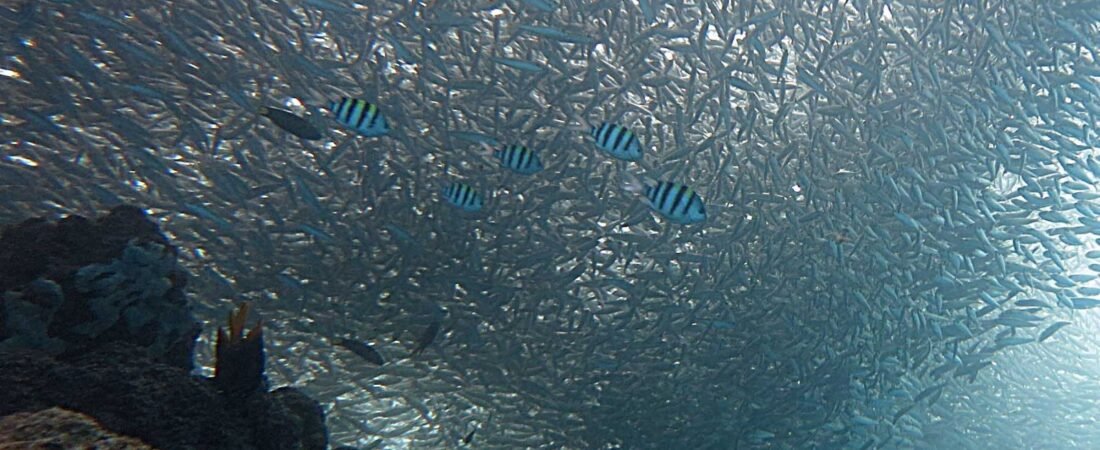
Photo: Lakshmi Sawitri / Wikimedia Commons (CC BY 2.0). Illustrative scenery.
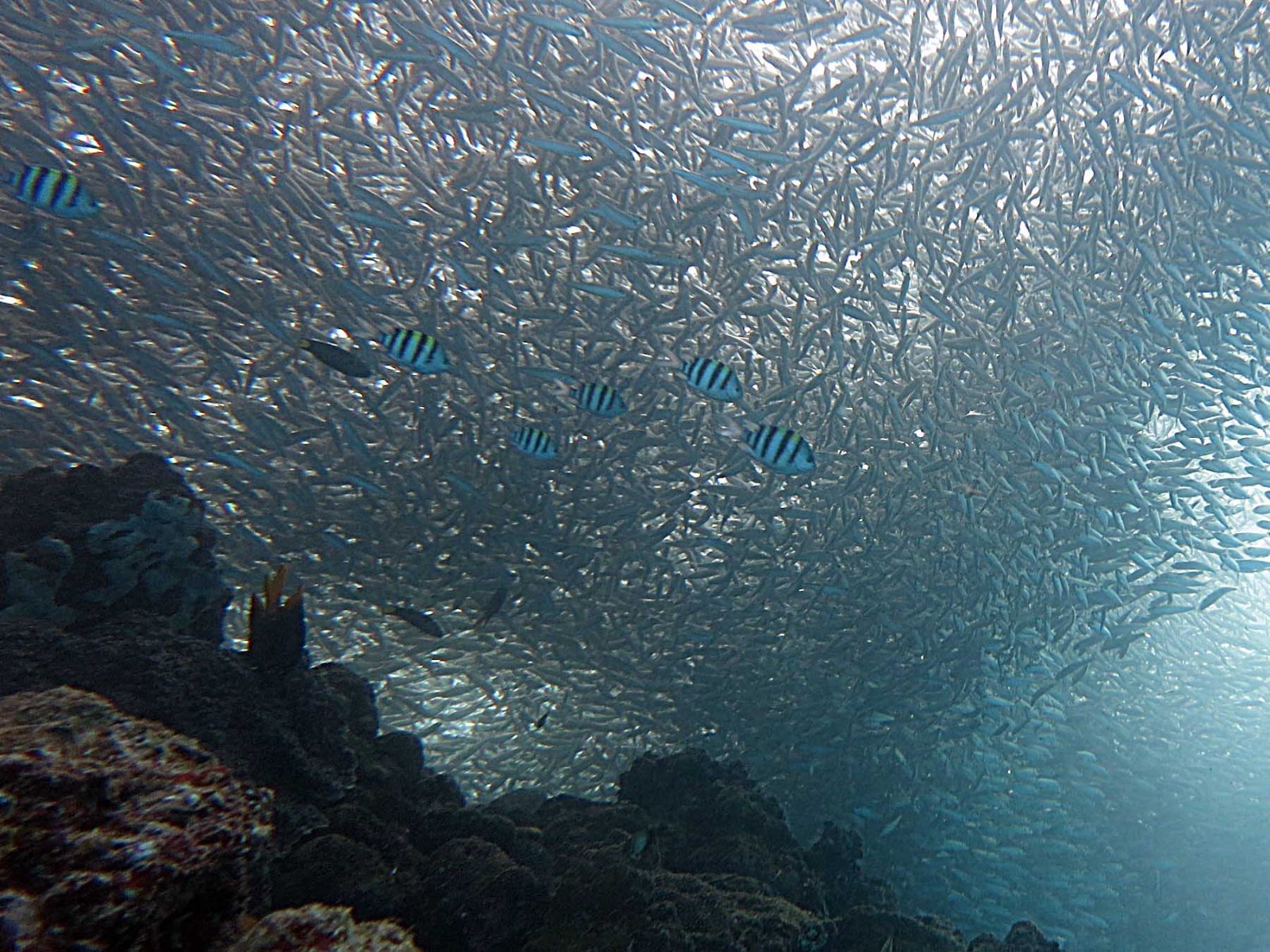
A few fin-kicks from the beach at Panagsama, millions of sardines swirl in a shimmering column that twists and splits around every diver and snorkeller who enters the water. It is one of the most accessible big-animal encounters in Asia — no boat, no deep dive, no special permit. This guide focuses on timing and logistics for the Moalboal sardine run specifically for couples and families combining it with a luxury Cebu or Bohol itinerary, so you can pick the right month, the right time of day and a comfortable place to sleep.
At a glance
The sardine run is present year-round, usually just off Panagsama Beach. The most comfortable months are March to May, with calm seas, warm water and good visibility. December to February is also good but slightly cooler and windier. June to October brings more rain and occasional typhoon disruption, though the shoal itself does not migrate away seasonally. Go in the early morning for the fewest people and the best light.
What the Moalboal sardine run actually is
Moalboal is a municipality on the southwest coast of Cebu, facing the Tañon Strait, one of the largest protected seascapes in the Philippines. Just off Panagsama Beach, the reef flat drops away into a wall, and along that edge a vast resident shoal of sardines has gathered for years. Unlike seasonal migrations elsewhere in the world, this is not a once-a-year event: the fish are usually there every day, feeding on plankton and packing tightly together whenever predators such as jacks or tuna appear.
That predictability is what makes Moalboal so special. You do not need to charter a boat or wait for a lucky window. You walk off the beach, swim a short distance to the drop-off and the shoal is there, often in water only a few metres deep. The shoal’s exact position shifts with currents, and it has occasionally thinned or relocated after strong typhoons before returning, so local guides are always the best source of the day’s location.
Best time to go: month by month
Because the sardines stay year-round, “best time” is really about weather, sea conditions and crowds. The table below summarises typical conditions; always check the latest forecasts from PAGASA before you travel.
| Months | Weather | Sea conditions | Crowds | Verdict |
|---|---|---|---|---|
| December–February | Dry-ish, cooler, occasional northeast winds | Mostly calm on the west coast; water around 26–27°C | Busy over Christmas and New Year | Very good; bring a thicker suit |
| March–May | Hot and dry | Calmest, warmest water, strong visibility | Busy around Holy Week | Best overall |
| June–August | Wetter, southwest monsoon begins | Usually diveable; occasional rough days | Quieter, better rates | Good value, flexible plans |
| September–November | Rainiest, peak typhoon risk | More variable; some cancelled days | Quietest | Only with buffer days |
Moalboal’s position on the sheltered side of Cebu, with Negros across the strait, protects it better than many exposed coasts, but no Philippine destination is immune to typhoons. If you are travelling between September and November, build in one or two spare days. For a broader view of seasons across the region, see our best time for scuba diving in Southeast Asia guide.
Best time of day
Early morning, from roughly 6:30 to 8:30am, is the sweet spot. Day-trippers from Cebu City and organised tour groups tend to arrive mid-morning, and the water can become crowded by 10am. Early light also gives the shoal a silver, glittering look that photographers love. Late-afternoon swims can be quieter too, but light fades quickly.
How to see it: snorkel, dive or freedive
Snorkelling
Snorkelling is the easiest way in. The shoal often sits within a few metres of the surface, so confident swimmers can watch it from above and occasionally see it rise around them. Wear fins, a rash guard and reef-safe sunscreen, and enter from Panagsama or the nearby beach entry points recommended by your resort. If you are new to snorkelling, our beginner snorkelling guide for Southeast Asia covers the basics.
Scuba diving
Diving lets you sit beneath the shoal and watch it block out the sun, which is the classic Moalboal photograph. Most dive centres run the sardine dive as a shore dive or a very short boat ride, with typical depths of 5 to 20 metres along the wall. Many combine it with a second dive at nearby reefs or at Pescador Island.
Freediving
Moalboal is also one of the Philippines’ main freediving training centres. Several schools run courses here, and the sardines make a memorable reward for newly qualified freedivers. Always freedive with a buddy and a qualified instructor.
What to pack for the sardine run
Bring your own well-fitting mask and snorkel if you have them; rental gear is widely available but quality varies. A long-sleeved rash guard or thin wetsuit protects against sun and the occasional jellyfish, and short fins make the swim to the drop-off far easier. Pack a dry bag for your phone and room key, reef-safe mineral sunscreen, and water shoes for rocky entry points at low tide.
Photography tips
The shoal looks best shot from below, looking up towards the sun, so divers have an advantage here. Snorkellers can still get strong images by waiting for the shoal to rise and shooting horizontally with the fish between them and open blue water. Turn off the flash, use a fast shutter speed to freeze movement, and keep still — the sardines will flow around you more closely if you stop chasing them. Early-morning sun gives the brightest, cleanest results.
Where to stay in Moalboal
Moalboal is a relaxed dive town rather than a luxury enclave, so think boutique resort rather than five-star palace. The best stays combine sea views, good dive centres and easy access to the sardines.
- Panagsama Beach area — the closest base to the sardine run, with restaurants, bars and dive shops within walking distance. Resorts such as Quo Vadis Beach Resort and Magic Island Dive Resort are long-established choices with sea-view rooms and in-house diving.
- White Beach (Basdaku) — a few kilometres north, with a proper sandy beach and a quieter atmosphere, better for families and non-divers. Blue Orchid Resort is a popular hillside option nearby.
- Private villas — a growing number of private villas with pools are available along the coast, which suit families or small groups who want space and privacy.
For genuine five-star luxury, pair two or three nights in Moalboal with a stay at one of the best luxury resorts in Cebu, typically on Mactan Island near the airport, or continue by ferry to Bohol’s luxury resorts.
Getting to Moalboal
Fly into Mactan-Cebu International Airport, which has direct international connections to several Asian hubs and frequent domestic flights from Manila. From the airport, Moalboal is roughly 90 kilometres by road, and a private car transfer typically takes around three hours, longer in heavy traffic through Cebu City. Public buses run from Cebu’s South Bus Terminal, but for comfort most visitors book a private transfer through their resort.
Coming from Dumaguete or Negros, you can cross the Tañon Strait by ferry to southern Cebu and drive north. See our Dumaguete and Apo Island guide if you plan to combine both.
Beyond the sardines
- Pescador Island — a small marine sanctuary a short boat ride offshore, known for its wall, a cavern locally called the Cathedral, and healthy reef fish life.
- Turtles at Panagsama — green and hawksbill turtles are regularly seen on the reef near the sardines. Keep your distance and never touch or chase them.
- Kawasan Falls and canyoneering — in neighbouring Badian, the turquoise pools of Kawasan Falls anchor a popular canyoneering route with jumps, slides and swims. Go early to avoid crowds.
- Whale sharks — a note on ethics — whale-shark feeding tours at Oslob in southern Cebu are widely criticised by marine scientists because the animals are provisioned with food. If you want to see whale sharks, consider operators that follow non-feeding, wild-encounter practices elsewhere in the country.
Responsible visiting and a sample plan
The sardine run’s popularity puts pressure on the reef. Never stand on coral, keep fins high above the reef flat, use mineral sunscreen, and choose operators that brief guests on marine etiquette. Pay the local environmental fee without complaint — it funds sanctuary management.
A relaxed three-night plan works well: arrive in the afternoon and swim with the sardines at sunset; dive or snorkel the sardine run at dawn the next day, then Pescador Island in the late morning; spend day three at Kawasan Falls or on White Beach; and repeat the dawn sardine swim before driving back to Mactan for a luxury resort stay or an onward flight. Add the region to a wider route using our Philippines island-hopping guide.
Frequently Asked Questions
Is the Moalboal sardine run seasonal?
No. The sardines are a resident shoal and are usually present year-round off Panagsama Beach. Weather and sea conditions vary by season, but the fish do not migrate away.
Can non-swimmers see the sardines in Moalboal?
It is difficult. You need to swim a short distance from the shore to the drop-off. Weak swimmers should wear a life vest and go with a guide, or take a short boat trip with a guide in the water beside them.
How deep are the sardines in Moalboal?
The shoal often sits between the surface and around 15 to 20 metres along the reef wall, which is why it can be seen by both snorkellers and divers.
How long should I stay in Moalboal?
Two to three nights is ideal. That gives time for at least two sardine swims, a trip to Pescador Island and a day at Kawasan Falls without rushing.
Is Moalboal a luxury destination?
Moalboal is mainly a boutique dive town. For five-star comfort, combine it with a luxury resort on Mactan Island in Cebu or in Bohol.
Last reviewed 24 September 2026. Prices, schedules and resort policies change often; confirm details directly with operators before booking.