Kuching City Guide 2026: Old Town & Day Trips
Illustrative island photograph. Not a photograph of the resorts compared below.
This guide focuses on Kuching specifically for travellers spending two to four nights in the city itself, either as a Sarawak base or as the start and end point of a longer Borneo trip. It covers the Old Town and waterfront, where to eat, which day trips are worth the transfer, and how to get around without a rental car — paired with our separate guides on the Sarawak region overall, the Bako boat transfer, and longhouse stays for anyone extending beyond the city itself and planning a longer rainforest-and-culture itinerary.
Research-based guide · Sources checked October 2026. Opening hours, ferry schedules and tour pricing change — confirm current details with Sarawak Tourism Board before you travel.
Orientation: Three Areas to Know
Kuching splits roughly into Old Town (north of the Sarawak River, around the waterfront and Carpenter Street), Padungan (the newer commercial and food-street strip east of Old Town), and the spread-out suburbs where many resorts and the airport sit, including the Damai Beach peninsula further out. Almost everything a first-time visitor wants is within Old Town and Padungan, both walkable from most mid-range hotels.
The Waterfront & Old Town Walk
The Kuching Waterfront promenade runs along the Sarawak River and is the natural spine of a first day in the city — lined with the old Square Tower, the Textile Museum building and views across to the Astana (the former residence of the Brooke “White Rajahs,” now a state government building, viewed from the water rather than entered). From the waterfront, Carpenter Street and the surrounding Chinatown lanes hold shophouses, temples and the kind of street-level detail better explored on foot than from a tour bus.
A short sampan (small boat) crossing to the north bank near the Astana and Fort Margherita costs very little and gives a different angle on the waterfront skyline, especially at sunset — a reasonable way to fill an hour between lunch and dinner.
Evenings on the Waterfront
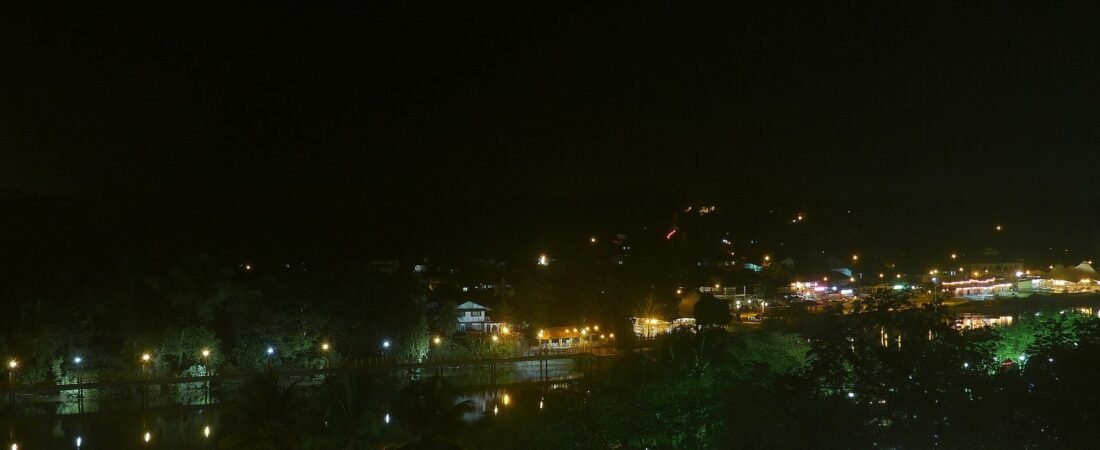
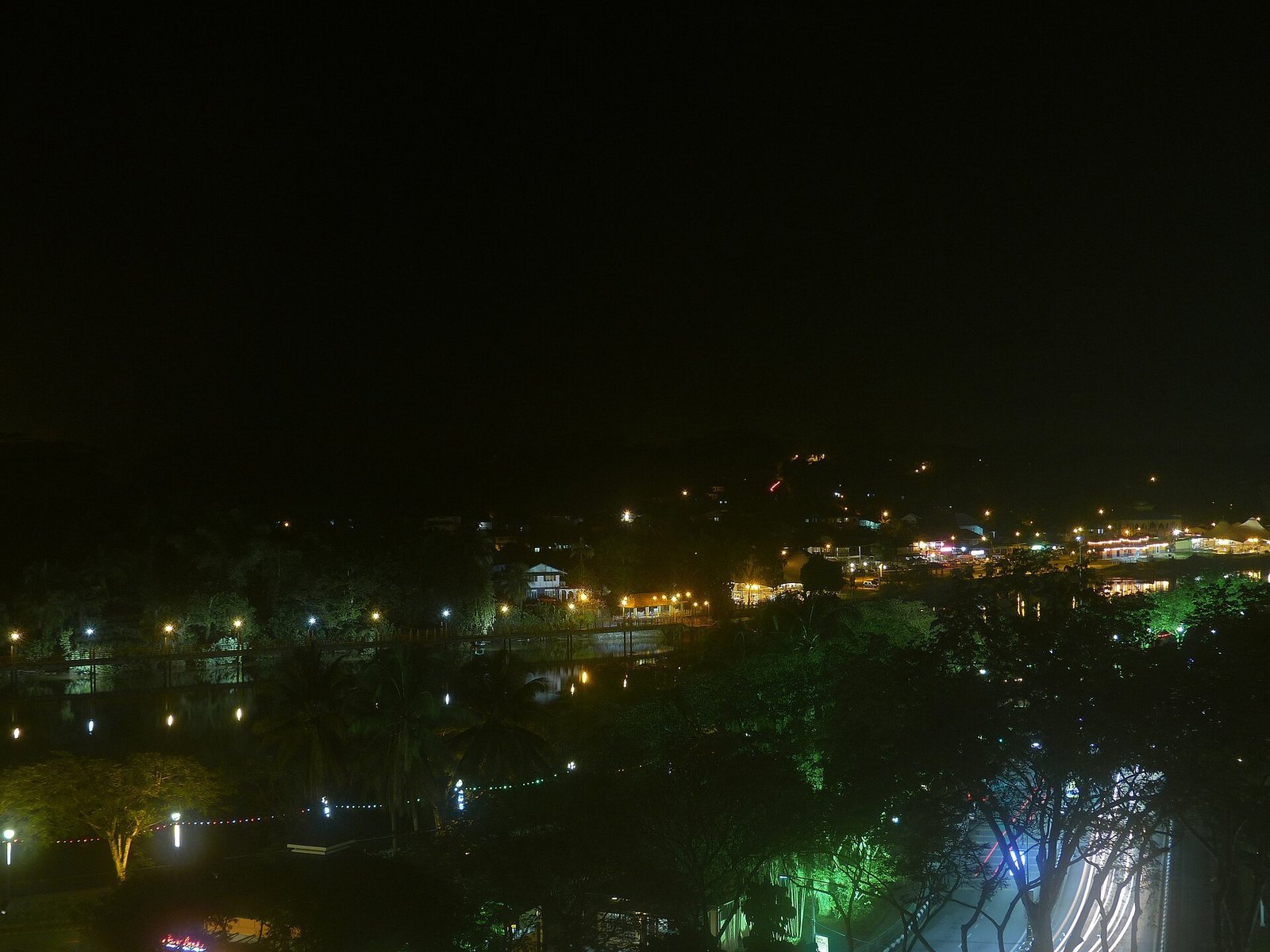
The waterfront promenade is at its busiest after dark, when food carts and casual seating fill the open plazas near the Darul Hana bridge — a pedestrian bridge connecting the south and north banks that is worth crossing on foot for the view back toward Old Town. It is a low-key evening by most city standards: expect a walk, a drink, and people-watching rather than a nightlife district, which suits Kuching’s role as a staging point for rainforest days rather than a party destination.
Markets & Food Streets
Sunday Market (which actually runs from Saturday afternoon) on Jalan Satok is Kuching’s best general market for produce, snacks and a sense of local daily life, while the Main Bazaar near the waterfront leans toward handicrafts and souvenirs aimed at visitors. For food specifically, the hawker centres around Padungan and the Top Spot Food Court (an open-air seafood court on a parking garage roof — an odd setting that is a genuine local institution rather than a tourist gimmick) cover Sarawak laksa, kolo mee and fresh seafood in one sitting.
Try to eat Sarawak laksa at breakfast, which is when most stalls serve it fresh rather than reheated later in the day — a small timing detail that meaningfully changes the result.
Museums & Cultural Sites
The Sarawak Museum complex (covering natural history, ethnography and the Brooke-era colonial period) gives useful context before heading out to Bako or a longhouse, since it explains the indigenous groups and wildlife you are likely to encounter in more depth than a tour guide typically has time for. The Tun Jugah Textile Museum and the Chinese History Museum are smaller but worth an hour each if the main museum’s hours do not line up with your schedule — check the Sarawak Museum Department site for current opening days, since parts of the complex rotate closures for renovation.
Festivals Worth Timing a Trip Around
The Rainforest World Music Festival, held annually at the Sarawak Cultural Village near Damai Beach, is Kuching’s best-known recurring event — a multi-day program pairing international and indigenous Borneo musicians, usually scheduled in the mid-year rainy-to-dry transition. Check the festival’s official site for current dates before booking flights and hotels around it, since Kuching accommodation fills up quickly that week. Outside festival season, Kuching has no major seasonal closures to plan around — markets and museums run on their normal weekly schedules year-round.
| Day trip | Transfer from Kuching | Best for | Half or full day |
|---|---|---|---|
| Bako National Park | ~1 hour drive + 20-min boat | Proboscis monkeys, coastal trails | Full day (or overnight) |
| Semenggoh Nature Reserve | ~30 minutes drive | Semi-wild orangutan feeding | Half day |
| Annah Rais Longhouse | ~90 minutes drive | Bidayuh longhouse culture | Full day |
| Damai Beach & Cultural Village | ~40 minutes drive | Beach time plus a cultural overview | Half to full day |
Choosing Your Day Trips
If you only have one spare day, Semenggoh is the easiest add-on — close, short, and built around scheduled feeding sessions rather than a long trek. Bako needs the most planning because of its boat transfer and tide dependency; our step-by-step Bako guide covers the booking and timing in detail. For a longhouse day trip, Annah Rais is the most accessible option from Kuching itself — longer trips to Batang Ai or the Skrang River are covered in our longhouse stays guide, and if orangutan viewing specifically is your priority, see how Semenggoh compares to Sabah’s Sepilok in our side-by-side comparison.
Travellers with four or more days in the city sometimes try to combine Bako and a longhouse visit on consecutive days — this is possible but tiring, since both involve early starts and transfer time in each direction. A more comfortable pacing is one rainforest day, one rest-and-city day, then the longhouse trip, so you are not packing bags for a boat transfer the morning after an already long day in the field.
Where to Stay by Budget
- Budget: Guesthouses and backpacker hostels cluster around the Old Town lanes near Carpenter Street — walkable to almost everything, basic rooms.
- Mid-range: Waterfront-adjacent hotels put you within walking distance of the Old Town and a short taxi from Padungan’s food streets.
- Higher-end & resort-style: Properties nearer Damai Beach trade city walkability for a beach setting and a shorter run out to the Cultural Village, at the cost of a taxi ride into town for dinner. See our Kuching and Sarawak hotel guide for specific properties by area.
As a rule of thumb, prioritise walkability to Old Town over proximity to the airport unless you are only transiting through — most of what makes Kuching worth two nights is concentrated in a fairly small radius, and a 20-minute taxi ride each way to reach it erodes the time you actually spend exploring. If a resort-style stay at Damai Beach is the plan, treat it as its own mini-base with a planned day trip into the city centre rather than a daily commute.
Getting Around
Grab (the regional ride-hailing app) covers Kuching reliably and is the simplest way to reach Padungan or the airport without negotiating a fare with a street taxi. Old Town itself is small enough to walk, and the waterfront promenade makes orientation easy even on a first evening. For day trips, a rental car gives flexibility for Semenggoh and Annah Rais, but Bako requires a boat regardless, so many visitors book a half-day tour that bundles the road and boat legs rather than self-driving to the jetty and arranging the crossing independently.
Kuching International Airport sits roughly 20–30 minutes from the city centre by taxi or Grab; budget extra time around flight connections to Gunung Mulu via Miri, which run on a separate, smaller-capacity schedule operated by MASwings rather than the larger domestic carriers. If your trip continues on to Sabah or back to Peninsular Malaysia, check connection times carefully, since Kuching is not always a same-day hub for every route. For the wider context of how Kuching fits into a Sarawak trip, see our Sarawak travel guide.
Frequently Asked Questions
How many days should I spend in Kuching itself?
Two full days covers the Old Town, waterfront and food streets comfortably. Add a third and fourth day if you plan to fit in both Bako and Semenggoh, or a longhouse day trip, without rushing any of them.
Is Kuching safe to walk around at night?
The waterfront and Old Town are generally well lit and busy into the evening with ordinary tourist-area caution. As with any city, stick to lit, populated streets and use a ride-hailing app rather than walking back from Padungan’s food streets late at night.
Do I need to book Bako or Semenggoh in advance?
Semenggoh’s feeding sessions run on a fixed daily schedule and generally do not need advance booking, though confirming session times the day before is sensible. Bako’s boat transfer and any park accommodation should be arranged ahead — see our dedicated Bako transfer guide for the booking steps.
What’s the best single day trip if I only have time for one?
Semenggoh is the lowest-effort, highest-certainty option for most visitors — close, short, and built around scheduled orangutan feeding sessions. Choose Bako instead if coastal rainforest scenery and a longer walk matter more to you than guaranteed wildlife viewing.
For the broader Sarawak picture beyond Kuching, see our Sarawak travel guide, and compare Kuching directly against Sabah’s hub city in our existing Kuching vs Kota Kinabalu guide. Confirm museum hours and tour pricing with Sarawak Tourism Board before finalising a day-by-day plan.