Jeju Island 4-Day Itinerary 2026: Luxury Route
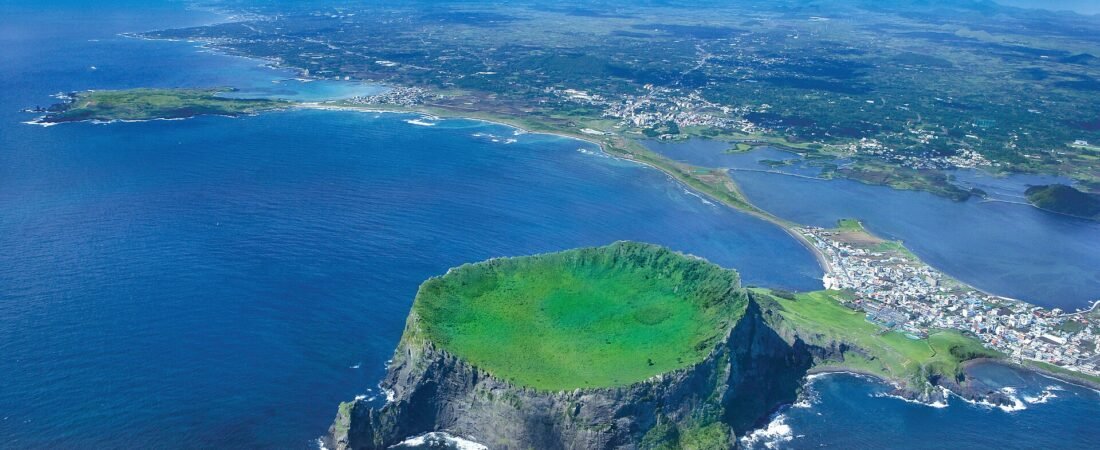
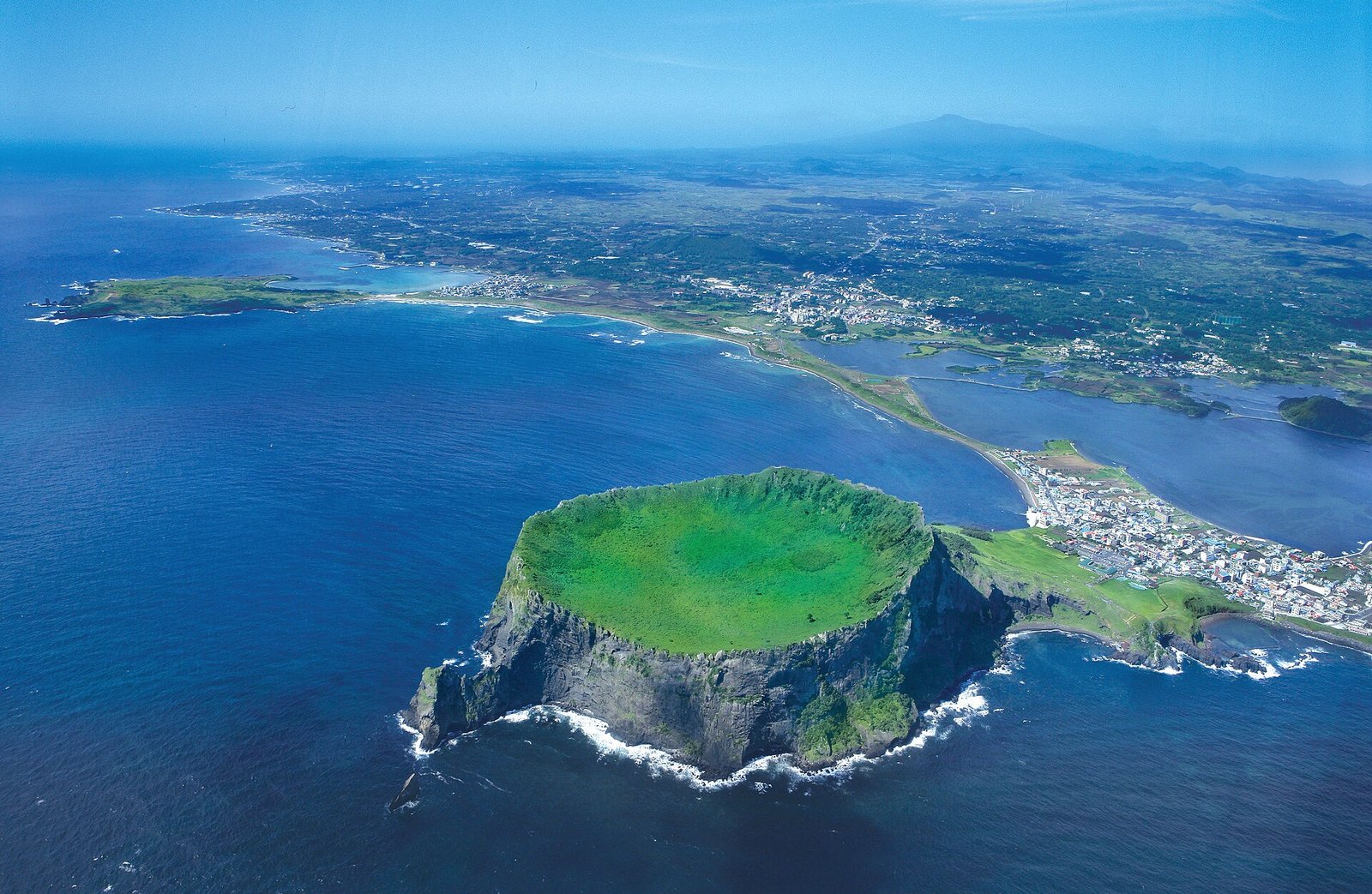
Seongsan Ilchulbong, Jeju. Photo: Wikimedia Commons (CC BY-SA 2.0).
Jeju is South Korea’s volcanic island: black-rock coastlines, green tea fields, a 1,947-metre mountain at its heart and a coastal walking network that loops the entire shore. This guide focuses on a four-day route specifically for couples and independent travellers who want a comfortable, luxury pace — two hotel bases, a rental car or private driver, and no 5 a.m. starts except one optional sunrise.
Our angle is geographic efficiency. Many Jeju itineraries criss-cross the island daily, wasting hours on the road. This plan works clockwise from the east to the south and west, so each day’s driving is short and you sleep close to the next morning’s highlight.
Jeju Itinerary at a Glance
| Day | Area | Highlights | Overnight |
|---|---|---|---|
| Day 1 | Jeju City & north-east | Dongmun Market, Bijarim Forest, Woljeongri Beach | Jeju City |
| Day 2 | East coast | Seongsan Ilchulbong, Udo Island, Haenyeo Museum | Jungmun Resort area |
| Day 3 | Hallasan & south coast | Yeongsil trail, Jeongbang Falls, Oedolgae Rock | Jungmun Resort area |
| Day 4 | West coast | Jusangjeolli Cliff, O’sulloc tea fields, Hyeopjae Beach | Jeju City or depart |
Driving times between areas are typically 45–75 minutes. Jeju International Airport sits on the edge of Jeju City in the north, so it makes sense to bookend the trip there.
Day 1: Jeju City and the North-East Coast
Land at Jeju International Airport, collect your car and check in to a Jeju City hotel. The Grand Hyatt Jeju, set in the city’s tallest tower, is a convenient luxury choice with sweeping views, rooftop facilities and a large dining complex — ideal after a flight.
In the afternoon, drive about 45 minutes east to Bijarim Forest, a quiet woodland of ancient nutmeg trees with gentle, shaded paths. Continue to the coast at Woljeongri Beach, known for its pale sand, turquoise shallows and a strip of independent cafés facing the sea. Return to the city for dinner at Dongmun Market, where the evening food stalls serve Jeju specialities such as grilled black pork, abalone and tangerine-based snacks.
Dinner ideas for your first night
Jeju’s black pork is the island’s signature dish, typically grilled at the table and dipped in salted anchovy sauce. Several well-known restaurants cluster on the so-called Black Pork Street near the city’s old harbour. For something lighter, try hoe-guksu or a bowl of gogi-guksu, a hearty pork noodle soup that locals eat at any time of day.
Luxury tip
If you arrive late, swap Bijarim for a sunset walk along the seafront near Yongduam, the dragon-head rock formation close to the airport, and save energy for tomorrow’s early start.
Day 2: Seongsan Sunrise, Udo and the Haenyeo
For many visitors this is the highlight of Jeju. Seongsan Ilchulbong, a tuff cone that rose from the sea in an eruption thousands of years ago, is part of the UNESCO-listed Jeju Volcanic Island and Lava Tubes. The climb to the crater rim takes around 25–30 minutes on stairs. Go for sunrise if you can manage it; otherwise, arrive at opening time to beat the tour buses.
From Seongsan Port, ferries cross to Udo Island in about 15 minutes. Rent an electric bike or scooter to circle the island’s coastal road, stopping at Seobin Baeksa beach, whose bright sand is made of crushed red algae, and at cafés selling Udo’s famous peanut ice cream. Allow three to four hours in total.
On the way south, stop at the Haenyeo Museum in Gujwa to learn about Jeju’s women free-divers, whose culture is recognised by UNESCO as intangible cultural heritage. Then continue to the Jungmun Resort area — roughly an hour away — for two nights. Options include The Shilla Jeju and Parnas Hotel Jeju, both with direct access to the coast and generous pool areas.
Day 3: Hallasan Trails and Seogwipo Waterfalls
Hallasan, South Korea’s highest peak, dominates the island. Reaching the summit is a long day: the Seongpanak and Gwaneumsa trails take most hikers eight to nine hours return and require an advance online reservation through the official Hallasan National Park booking site. For a luxury pace we recommend the Yeongsil trail instead. It climbs through pine forest and past dramatic rock pinnacles to the Witse-Oreum shelter, with sweeping views, in roughly two to three hours each way, and needs no booking.
Back in Seogwipo, visit Jeongbang Falls, one of the few waterfalls in Asia that drops straight onto the shore, and Oedolgae, a 20-metre sea stack framed by pines. In the evening, return to your resort for a spa treatment — many Jungmun hotels offer massages using local volcanic clay or green-tea products — and a seafood dinner overlooking the ocean.
If the weather turns
Hallasan’s summit is often in cloud and can be closed in heavy rain or snow. If that happens, swap the hike for Cheonjiyeon Falls in Seogwipo, the Olle Trail section around Oedolgae, or simply a longer morning at the resort.
Day 4: Cliffs, Tea Fields and the West Coast
Start at Jusangjeolli Cliff in Jungmun, where hexagonal basalt columns formed by cooling lava meet the waves. From there, drive about 20 minutes inland to the O’sulloc Tea Museum and the surrounding Seogwang tea fields. The museum café’s green-tea desserts are worth the queue.
Continue north-west to Hyeopjae Beach, with shallow emerald water and views of Biyangdo islet, and the neighbouring Hallim Park gardens. Finish the loop back in Jeju City, about an hour away, in time for an evening flight — or add a final night if you prefer a slower pace.
If you have spare time before your flight, the Jeju Stone Park and the Jeju Folk Village show how islanders built homes and walls from volcanic rock to withstand the strong winds. Alternatively, walk a short coastal section of the Jeju Olle Trail near Aewol, where cliff-top cafés overlook the sea and make a relaxed final stop on the drive back to the airport.
Where to Stay: Choosing Your Two Bases
Splitting four nights between the north and south of the island is the key to this itinerary. It removes the longest drives and lets you experience two very different sides of Jeju.
| Base | Why stay here | Best for | Trade-off |
|---|---|---|---|
| Jeju City | Close to the airport, restaurants and markets | Arrival and departure nights | Urban setting, no beach on the doorstep |
| Jungmun Resort area | Largest cluster of five-star resorts, sea views | Pool and spa time, Hallasan and west-coast days | Fewer local restaurants within walking distance |
| Seogwipo city | Waterfalls and harbour within walking distance | Travellers who like an evening stroll | Fewer large resorts |
| East coast (Pyoseon/Seongsan) | Quiet beaches, sunrise access | Early risers focused on Seongsan | Further from the west-coast sights |
If you want a single base, choose Jungmun: it sits roughly in the middle of the south coast, about an hour from the airport and within reach of every stop in this plan. The JW Marriott Jeju Resort & Spa in Seogwipo is another strong option for travellers who prefer contemporary design and a quieter setting.
Booking advice
Korean public holidays — especially Chuseok in autumn and the Lunar New Year — fill Jeju’s resorts quickly, as do summer weekends. For these periods book three to six months ahead. Ask about sea-view room categories and club-lounge access, which can add real value on a short stay, and check whether your hotel offers a complimentary airport shuttle.
Practical Tips: Driving, Seasons and Booking
- Driving: traffic drives on the right. Bring an International Driving Permit issued under the 1949 Geneva Convention along with your home licence. Speed cameras are common and limits are strictly enforced.
- Private driver: if you prefer not to drive, many hotels arrange English-speaking drivers by the day, which is especially useful for the Seongsan and Udo day.
- Seasons: April to early June and September to October are the most comfortable. Canola flowers and cherry blossoms peak around late March to early April; hydrangeas bloom in June. Typhoons can affect the island from roughly July to September.
- Entry rules: Jeju has its own visa-free arrangement for many nationalities, and entry rules for mainland Korea differ. Check the latest guidance on the UK Foreign Office South Korea page or your embassy.
- Official information: Visit Jeju lists opening hours, festivals and any closures.
For deeper hotel comparisons, see our best luxury hotels in Jeju Island; for romantic add-ons, read the Jeju honeymoon guide. Combining Jeju with the capital? Our Seoul luxury hotel guide covers the best city stays, and if you want another East Asian island to compare, try Okinawa’s top resorts.
Frequently Asked Questions
Is four days enough for Jeju Island?
Four days is enough to see the highlights of the east, south and west coasts at a relaxed pace, plus one Hallasan hike. With five or six days you can add more Olle trail walks, spa time and a second hotel base.
Do I need a car in Jeju?
A car is the easiest way to follow this itinerary, as many sights are spread out. Visitors need an International Driving Permit under the 1949 Geneva Convention. Alternatively, hire a private driver for a day or two, which many luxury hotels can arrange.
Do I need a reservation to climb Hallasan?
Yes, if you plan to reach the summit via the Seongpanak or Gwaneumsa trails, you must book online in advance. The Yeongsil and Eorimok trails do not reach the summit and currently do not require a reservation.
Where should I stay in Jeju for a luxury trip?
Split your nights between Jeju City for the first and last nights near the airport and the Jungmun Resort area on the south coast, which has the island’s largest cluster of five-star resorts and the calmest beach.
What is the best month to visit Jeju?
April to early June and September to October offer mild temperatures and clearer skies. Late March and April bring canola flowers and cherry blossoms, while July and August are hot, humid and busiest with domestic holidaymakers.