Mykonos vs Santorini: Which Greek Island Fits Your Trip (2026)
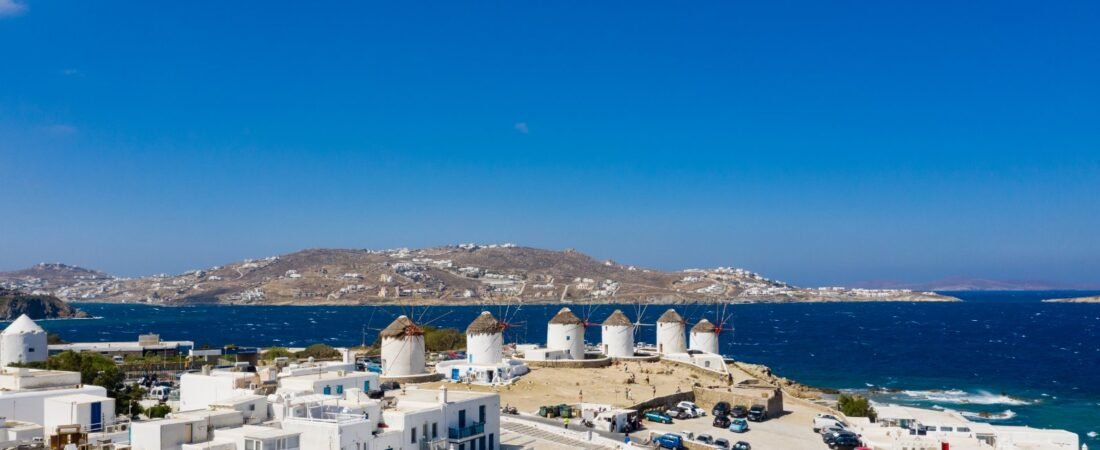
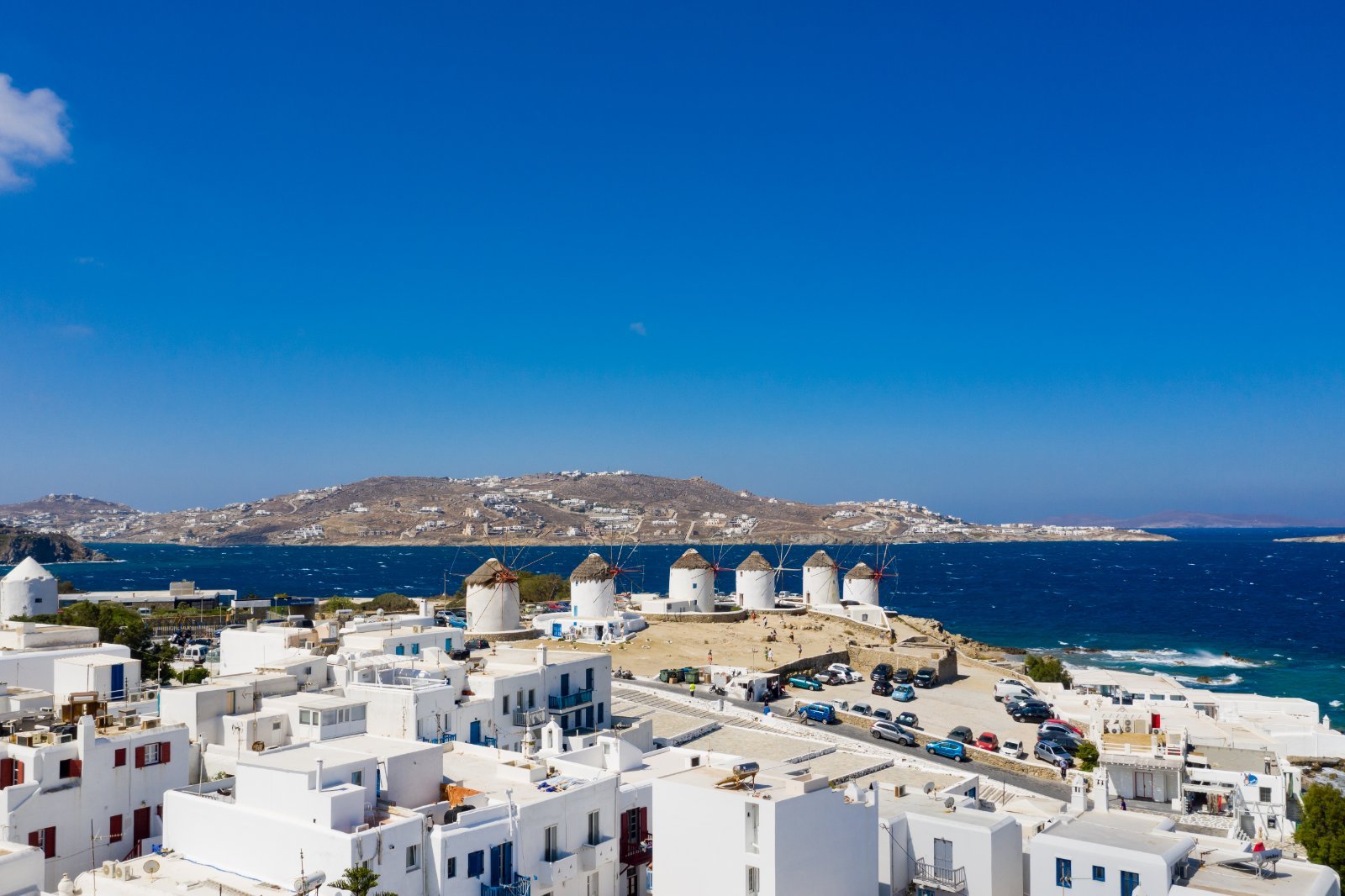
Illustrative island photograph. Not a photograph of the resorts compared below.
Mykonos and Santorini sit less than an hour apart by fast ferry, yet they attract very different travelers for very different reasons. This guide focuses on choosing between Mykonos and Santorini specifically for couples, friend groups and first-time Greek island visitors who only have time to properly settle into one base rather than splitting a short trip across both.
The one-line difference
Santorini sells a view: caldera-edge infinity pools, blue domes and the nightly ritual of watching the sun drop behind the volcano from Oia. Mykonos sells an atmosphere: beach clubs with DJs from midday, Little Venice cocktail bars right on the water, and a nightlife scene that runs from late May through September. Neither island is “better” in the abstract â the right pick depends on whether your ideal afternoon involves sitting still in front of something spectacular, or being up and moving between beach, bar and dinner.
Geography shapes both experiences. Santorini is the rim of a collapsed volcanic caldera, so towns are built along a dramatic cliff edge roughly 300 meters above the sea, connected by narrow stepped paths, a cable car and a fairly hair-raising road. Mykonos is flatter and more spread out, with a scattering of excellent beaches along its southern coast that each developed their own identity â party beach, family beach, nudist-friendly beach â rather than one single view everyone comes for.
The food scene follows the same split. Mykonos leans into beach-club dining and seafood tavernas clustered around the port, with a scene that has grown increasingly upscale over the past decade â well-known Mediterranean restaurants sit alongside simple grilled-fish spots that have barely changed their menu in thirty years. Santorini’s restaurants trade more heavily on setting, with caldera-view tables booked out weeks ahead for sunset dinner, and a stronger focus on local wine pairing thanks to the island’s own vineyards. Neither island is a budget destination for dining in peak season, but Santorini’s view-driven restaurants generally carry the steeper premium of the two.
Mykonos vs Santorini at a glance
The table below compares the two islands across the factors that usually decide a trip: cost, beaches, nightlife, getting around and how far ahead you need to plan.
| Factor | Mykonos | Santorini |
|---|---|---|
| Signature view | Little Venice waterfront, windmills at Chora | Caldera cliffs and blue-domed churches in Oia |
| Beaches | Long sandy beaches with organized beach clubs (Paradise, Psarou, Elia) | Mostly volcanic black or red sand, fewer swimmable stretches |
| Nightlife | Island-wide, from sunset beach bars to late clubs | Concentrated around sunset-watching in Oia and Fira, quieter after dark |
| Getting around | Flat-ish, local buses, taxis often scarce in peak season | Steep terrain, cable car or donkey path in Fira, rental ATV recommended |
| Day trip option | Delos UNESCO site, 30 minutes by boat | Volcano and hot springs boat tour, caldera swim stop |
| Typical nightly cost (room only, high season) | â¬180ââ¬450 mid-range, â¬600+ for sea-view suites | â¬220ââ¬500 mid-range, â¬700+ for caldera-view suites |
Choose Mykonos if you want beach days and nightlife
Mykonos makes more sense when the trip is built around beach clubs, boat days and going out after dinner. Psarou and Paradise beach run sunbeds, music and food service from late morning into the evening; Little Venice and the old port handle the after-dark scene, with bars built right against the breaking waves. If you are traveling with a group that wants real options after 10pm, Mykonos has that built into the island in a way Santorini does not. It is also the better pick if part of the appeal is simply swimming â Mykonos has more genuinely good swimming beaches than Santorini does.
The island does get crowded and loud in July and August, especially around the big-name beach clubs. Travelers who want the Mykonos look without the loudest crowds should read our guide to hidden beaches on Mykonos, which covers coves most tour buses skip.
Choose Santorini if the view is the point
Santorini is the island to pick when the main goal is photographs, a slower pace, and dinner facing the caldera. It suits couples more than large groups, and it rewards an extra night over a rushed day trip â most visitors say one night is not nearly enough to see Oia, Fira and a proper sunset without feeling rushed. Wine lovers also have a reason to linger: Santorini’s volcanic soil produces distinctive dry whites (Assyrtiko is the local grape), and several wineries near Pyrgos and Megalochori run tastings with caldera views included.
What Santorini does not do well is beach time. The black-sand beaches at Perissa and Kamari are serviceable but nowhere near the quality of Mykonos’s best stretches, and the water can run noticeably warmer near the volcanic shoreline, which some swimmers love and others find odd.
Can you do both in one trip?
Yes, and many itineraries do exactly this. Ferries between Mykonos and Santorini run frequently in high season (roughly May through September), with operators including SeaJets and Blue Star Ferries, and crossing times from about two to three and a half hours depending on the vessel. A common pattern is three to four nights in Mykonos followed by three to four nights in Santorini, booking the ferry at least a few weeks ahead for July and August sailings since the fastest boats sell out first. If you want to slot a third, quieter island into the same trip, Paros sits conveniently between the two and is worth a look as a calmer middle stop with its own ferry links to both.
Best time to visit, and what it costs
Late May to mid-June and all of September are the sweet spot for both islands: warm sea, noticeably thinner crowds, and room rates well below the JulyâAugust peak. For a full seasonal breakdown specific to Mykonos, including shoulder-season weather, ferry frequency and which months beach clubs actually open, see our month-by-month guide to visiting Mykonos.
On cost, Santorini’s caldera-view suites generally command a premium over Mykonos equivalents simply because the view itself is the product being sold. Couples on a tighter budget often do better basing in Mykonos and taking a one-day catamaran tour to Santorini instead of sleeping there. We cover the specific trade-offs, including which Mykonos neighborhoods keep costs down without losing the sea view, in our Mykonos honeymoon budget guide. If Rhodes or Corfu are also on your shortlist, our Rhodes vs Corfu comparison uses the same side-by-side framework.
Where to stay on each island
On Mykonos, Chora (Mykonos Town) is the most convenient base for first-timers: walkable to Little Venice, the old port and plenty of restaurants, with taxis and buses to the southern beaches all departing nearby. Couples who want quiet nights but easy beach access often prefer Platis Gialos or Agios Ioannis, both a short drive from town with calmer evenings than Chora itself. Psarou and Nammos-adjacent properties sit at the top of the price range and suit travelers who want to be inside the beach-club scene rather than commuting to it.
On Santorini, Oia has the most famous sunset but is also the most expensive and most crowded by late afternoon, when day-trippers arrive by the busload for the view. Imerovigli, just north of Fira, offers a similar caldera outlook with noticeably more breathing room and shorter walks between restaurants and hotels. Fira itself is the practical choice for transport links and nightlife, while Kamari and Perissa on the south coast suit travelers who want easier beach access and lower prices, trading away the caldera view.
- First-timers on Mykonos: stay in or near Chora for walkability.
- Quiet couples on Mykonos: Platis Gialos or Agios Ioannis.
- Sunset-focused Santorini trip: Oia or Imerovigli, booked well ahead.
- Budget-conscious Santorini trip: Kamari or Perissa, with a bus or taxi up to Fira for dinner.
Frequently asked questions
Is Mykonos or Santorini more expensive?
Santorini is usually a little more expensive for comparable room categories, mainly because caldera-view rooms carry a premium that Mykonos doesn’t have a direct equivalent for. Food and bar prices are broadly similar on both islands in high season.
How many days do you need on each island?
Three to four nights is a reasonable minimum for either island if you want more than a transit stop. Santorini in particular feels rushed in under two nights because the best moments â sunset, wineries, a caldera boat tour â each take up roughly half a day.
Is the ferry between Mykonos and Santorini reliable?
In high season it runs several times daily and is generally reliable, though summer winds known locally as the meltemi can occasionally delay or cancel high-speed catamaran crossings. Booking a slightly earlier crossing than you strictly need, or allowing a buffer day before an international flight home, reduces the risk of a missed connection.
Which island is better for a honeymoon?
Santorini is the more traditional honeymoon pick because of the view-driven romance, but Mykonos works well for honeymooners who also want some nightlife and beach-club time rather than a fully quiet trip.
Do I need a rental car on either island?
On Santorini, a car or ATV is genuinely useful because towns are spread out along the caldera rum and taxis are limited. On Mykonos, taxis and buses cover the main beaches and Chora reasonably well, though a rental scooter or buggy adds flexibility in peak season when taxis get scarce.
Is Mykonos too touristy to be worth visiting?
Mykonos is genuinely busy in peak season, but quieter beaches and villages away from the main clubs still exist. See our guide to hidden beaches on Mykonos for specific coves that stay calmer even in August, according to the Greek National Tourism Organisation’s own regional guidance.