Best Time to Visit Ha Giang 2026: Month by Month
Ha Giang, Vietnam’s northernmost region, is one of the most spectacular mountain landscapes in Southeast Asia — and one of the most weather-dependent. The same road over the Ma Pi Leng Pass can be a sunlit masterpiece in November and a fog-bound, rain-slicked crawl in July. This guide focuses on timing specifically for comfort-minded travellers touring Ha Giang by private car, who want the best views with the least risk of wasted days, cancelled excursions or hazardous roads.
If you are still deciding whether Ha Giang is right for you at all, read our Sapa vs Ha Giang comparison first, then come back here to pick your month.
Ha Giang’s Seasons in a Nutshell
Ha Giang has a mountain-influenced monsoon climate. The wet season runs roughly from May to September, with the heaviest rain usually falling from June to August. The dry season stretches from October to April, with a cold period from December to February when the high plateau can be genuinely chilly.
Altitude matters. Ha Giang city sits relatively low in a river valley and feels warm much of the year, while the Dong Van Karst Plateau Global Geopark rises well above 1,000 metres and runs several degrees cooler. Pack for both, especially if you are travelling in shoulder months.
Seasons here are also agricultural. Rice in the western Hoang Su Phi area, maize on the karst slopes and buckwheat on the plateau each change the colour of the landscape through the year, so the “best” time partly depends on what you want to photograph.
Month-by-Month Guide
| Month | Weather | Scenery highlights | Verdict |
|---|---|---|---|
| January | Cold, dry, misty mornings | Early peach and plum blossom | Good for blossom, pack warm |
| February | Cool, mostly dry; Tet holiday | Blossom season peaks | Lovely but busy around Tet |
| March | Mild, dry | Blossom, quiet roads | Very good |
| April | Warm, occasional showers | Green slopes, possible Khau Vai market | Very good |
| May | Warm, rains begin | Flooded terraces in Hoang Su Phi | Good, some risk |
| June | Hot, wet | Lush green everywhere | Risky roads |
| July | Wettest period | Waterfalls at full flow | Least recommended |
| August | Wet, humid | Green terraces | Risky roads |
| September | Rains easing | Golden Hoang Su Phi terraces | Good, especially late month |
| October | Dry, clear | Buckwheat flowers begin, rice harvest | Excellent |
| November | Dry, cooler | Buckwheat peak, clear passes | Best overall |
| December | Cold, dry | Late buckwheat, frosty mornings | Good for quiet travel |
If you only remember one thing: aim for October or November, then spring, and treat summer with caution.
Remember that these are averages. A dry week in July or a rainy spell in October is entirely possible, so check a reliable forecast a few days before departure and give your driver discretion to reorder days. On a multi-day loop, simply swapping the order of Dong Van and Meo Vac can be the difference between clear views and fog.
Autumn: Buckwheat Flowers and Clear Skies (October–November)
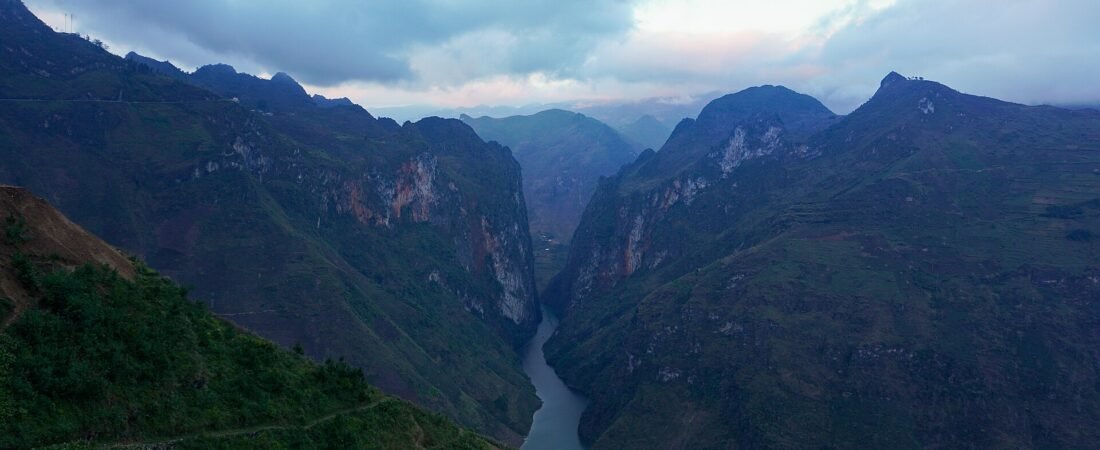
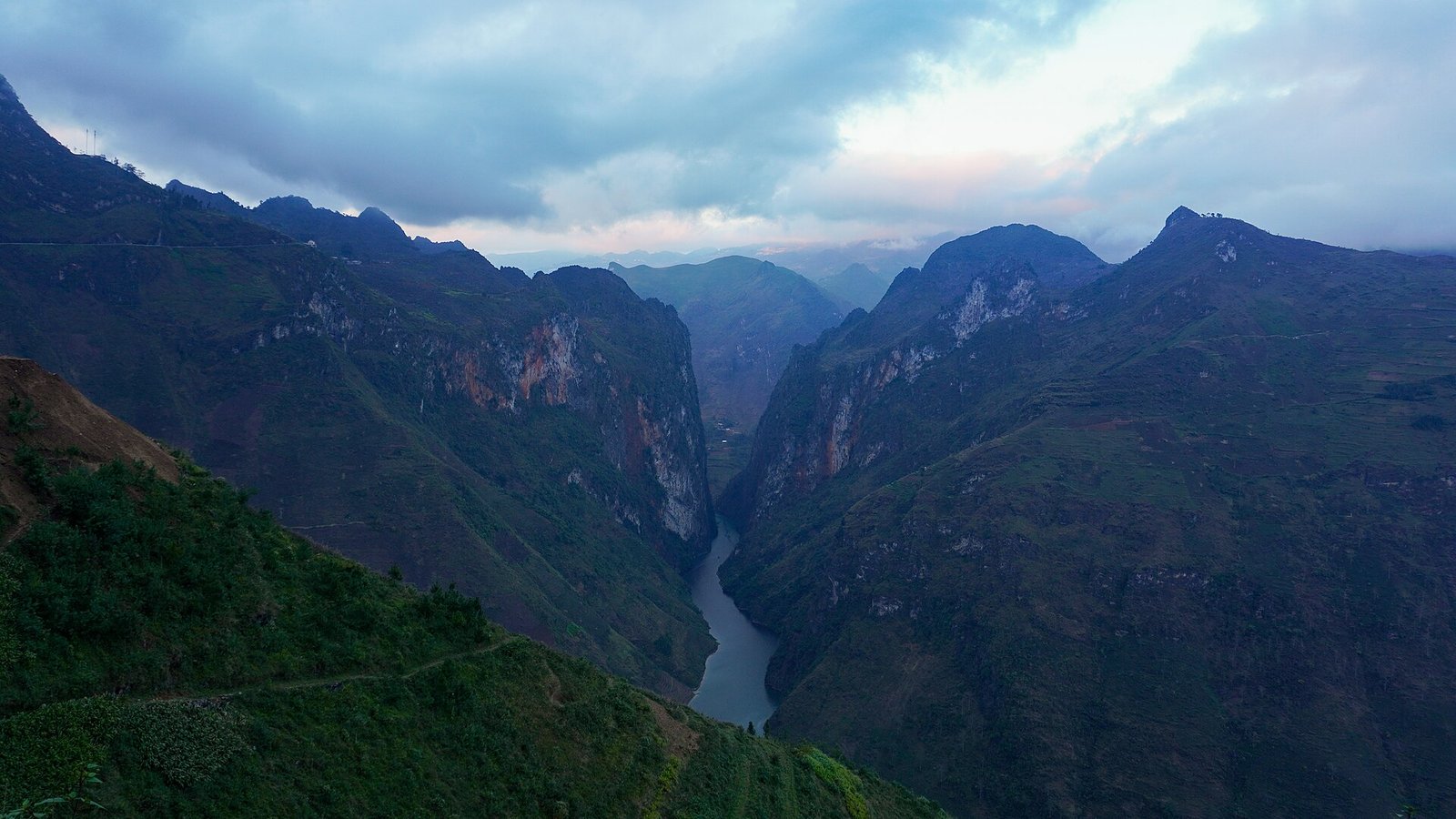
Autumn is Ha Giang’s headline season. The rains have usually ended, visibility is at its best, and the karst plateau is dusted with the pink and white blossoms of buckwheat, planted in the fields after the maize harvest. Views from the Ma Pi Leng Pass over the Nho Que River and Tu San Canyon are typically sharpest in these weeks.
The trade-off is popularity. Weekends in late October and November bring domestic visitors and tour groups, and the best rooms in Dong Van and Meo Vac sell out early. Book the boutique properties in our guide to Ha Giang’s best luxury lodges months ahead, and travel midweek if you can.
- Start drives early to beat tour groups to the main viewpoints.
- Expect cool evenings on the plateau — bring a warm jacket.
- Ask your guide where buckwheat is flowering that week; it varies by valley.
Photographers should plan for golden hour on the passes. Sunrise from viewpoints above Meo Vac and late-afternoon light over the Nho Que River are particularly striking in autumn, when the air is clear and the low sun picks out the texture of the limestone. A private car makes these timings easy, since you are not tied to group schedules. Consider a boat trip on the Nho Que River through the base of the canyon on a calm morning, too — it gives a completely different perspective on the cliffs you admired from above.
Spring: Blossom Season and Tet (January–April)
Spring is the connoisseur’s choice. From late January into March, peach and plum trees bloom around villages, set against grey limestone and new green growth. Roads are generally dry and the light is soft. The main caveat is Tet, the Lunar New Year, when many businesses close for several days and transport is busy as families travel home — check the date for your year before booking.
April is warmer and quieter, with mostly dry roads. If your trip falls in April or May, ask about the Khau Vai love market in Meo Vac, held once a year according to the lunar calendar. It is a remarkable cultural event, but dates move each year, so confirm them locally.
Spring is also the most comfortable season for light walking. Short hikes between villages around Dong Van or to viewpoints above Quan Ba are pleasant in mild temperatures, and the dry ground makes trails safer underfoot. Because domestic tourism is lower outside Tet, the better lodges often have availability at short notice.
Rainy Season: Green Terraces and Real Risks (May–September)
The rainy season makes Ha Giang intensely green and the waterfalls dramatic. In May and early June, the rice terraces of Hoang Su Phi are flooded and reflect the sky — a favourite for photographers.
However, June to August brings frequent heavy downpours. Landslides can block mountain roads for hours or days, and cloud often hides the very views you came for. If you must travel in summer, hire an experienced private driver, add at least one buffer day and keep plans flexible. By mid-September, rains usually ease and the terraces of Hoang Su Phi turn gold before harvest, often lasting into early October.
For luxury travellers, the practical rule is simple: if you are visiting in summer, spend more nights in fewer places. Reducing the number of long drives lowers your exposure to weather delays, and staying two nights at each base gives you a second chance at the views if the first day is cloudy.
Winter: Cold, Quiet and Atmospheric (December–February)
Winter suits travellers who prefer solitude. Days can be bright and dry, but early mornings on the plateau are often foggy, and nights can drop close to freezing, with occasional frost on the highest ground. Many guesthouses have limited heating, so the more comfortable lodges matter even more in this season.
Pack thermals, a down jacket, gloves and a hat. In return, you get emptier viewpoints, cosy evenings and some of the year’s most atmospheric light as mist lifts off the valleys.
Winter is also the season when daylight is shortest, so plan to finish drives before dark. Mountain roads without street lighting are best avoided at night at any time of year, but especially when fog settles over the passes.
Planning Tips for a Comfortable Trip
- Allow time: five to six days including the drive from Hanoi, which takes around six to seven hours.
- Travel by private car: experienced drivers know the roads, conditions and the safest timing.
- Avoid key holidays: Tet, the late-April to early-May national holidays and the September 2 National Day weekend are busiest.
- Overnight in Hanoi: start fresh — see our guide to 5-star hotels in Hanoi’s Old Quarter.
- Check official sources: the Vietnam tourism website and regional background help with context and dates.
Ha Giang pairs well with other northern destinations. In September, combine Hoang Su Phi’s golden terraces with Sapa using our four-day Sapa luxury itinerary. In spring, add a gentle finale in the valley described in our Mai Chau luxury guide.
Key Takeaways
- October and November offer the best combination of dry weather, clear views and buckwheat flowers.
- Mid-September to early October is prime time for golden Hoang Su Phi rice terraces.
- January to March brings blossom and quiet roads, but check Tet dates.
- June to August carries real landslide and delay risk — build in buffer days.
- Winter on the plateau is cold; prioritise lodges with good heating.
- Book top lodges early for autumn weekends and travel midweek when possible.
Final Thoughts
Ha Giang is worth the journey in almost any month, but timing turns a good trip into an unforgettable one. Choose autumn for the classic experience, spring for blossom and serenity, and approach summer with flexibility. With a skilled driver, the right lodges and the right month, the loop becomes one of the great road journeys of Asia — see our two-week luxury Vietnam itinerary for how to fit it into a wider trip.
Check Hotel Prices and Availability
Rates in Ha Giang move a lot with season and holidays, so it is worth comparing live prices before you lock in dates.
See hotels in Ha Giang on Booking.com
LuxStay may earn a commission if you book through these links, at no extra cost to you.
Frequently Asked Questions
What is the best month to visit Ha Giang?
October and November are the best months for most travellers: the rainy season has ended, skies are clearer and buckwheat flowers bloom across the Dong Van plateau.
When do buckwheat flowers bloom in Ha Giang?
Buckwheat usually flowers from October to December, often peaking in November. Exact timing varies with planting dates and weather each year.
Is it safe to visit Ha Giang in the rainy season?
Many people travel safely between June and August, but heavy rain can trigger landslides and delays on mountain roads. Use an experienced private driver, build in buffer days and follow local advice.
How cold does Ha Giang get in winter?
On the high plateau around Dong Van and Meo Vac, winter nights from December to February can fall close to freezing, with fog and occasional frost. Pack warm layers.
When are the Hoang Su Phi rice terraces golden?
The terraces in Hoang Su Phi typically turn golden from mid-September to early October, just before harvest.
About the Author
This guide was researched by the LuxStay editorial team — curating luxury island and Southeast Asia stays, updated regularly with on-the-ground verification.