
Layang-Layang Island Dive Resort Guide 2026
A remote atoll in the South China Sea, one resort, and some of Malaysia’s most dramatic wall diving.
Layang-Layang is a remote Malaysian atoll about an hour’s charter flight from Kota Kinabalu, with one dive resort open roughly March to August. Go in April or May for the best chance of schooling hammerheads, and come as an experienced diver — this is a comfortable dive base, not a five-star spa resort.
Layang-Layang is the dive trip that serious divers in Asia talk about in a lowered voice: a tiny, isolated atoll in the South China Sea, reached by charter flight, with walls that plunge into the deep blue and a short season built around schooling hammerhead sharks. This guide focuses on Layang-Layang specifically for experienced divers and dive couples who want to know whether the trip justifies the effort, the cost and the limited comforts.
Most of our Malaysia coverage centres on polished beach resorts. Layang-Layang is different, and we want to be honest about that. You come here for the water, not the thread count. Below we cover the season, the diving, the island’s single resort, logistics from Kota Kinabalu, and how to pair the trip with genuinely luxurious stays elsewhere in Sabah.
What and Where Is Layang-Layang?
Layang-Layang — also known as Swallow Reef — is an atoll in the southern Spratly Islands, roughly 300 kilometres north-west of Kota Kinabalu in the Malaysian state of Sabah. Malaysia administers the atoll, which hosts a small naval station alongside the airstrip and the resort. The land area is tiny and largely man-made; the real territory is underwater, where the reef rim drops away into very deep oceanic water.
The name means ‘kite’ or ‘swallow’ in Malay, a nod to the seabirds that nest on the island. Terns and boobies are a constant presence, and birdwatchers who are not divers occasionally make the trip for them alone.
Because the atoll sits far from the mainland, there is no river runoff, no coastal development and very little fishing pressure near the reef. The result is consistently clear water and the kind of pelagic action you rarely see at more accessible sites in Southeast Asia. Sabah Tourism’s official website has background on the state’s island and marine destinations.
The Dive Season and When to See Hammerheads
Layang-Layang is not a year-round destination. The resort typically opens from around March to August, with some years starting in February. Outside that window, the north-east monsoon brings rough seas and the island effectively closes to tourism.
| Period | Conditions | Marine highlights | Notes |
|---|---|---|---|
| February–March | Season opens; seas settling | Reef sharks, schooling fish | Earliest departures vary by year |
| April–May | Calmest seas, best visibility | Peak window for schooling hammerheads | Highest demand; peak surcharges often apply |
| June–July | Generally good diving | Mantas, turtles, schooling jacks and barracuda | Good balance of conditions and availability |
| August | End of the public season | Pelagics still possible | Confirm last flights before booking |
| September–January | Monsoon; resort closed | — | No tourist operations |
Hammerheads are the headline, but they are never guaranteed. Divers who see big schools usually invest several days searching the blue on early-morning dives. Treat a sighting as a bonus on top of excellent wall diving rather than the sole justification for the trip.
The Diving: Walls, Blue Water and Pelagics
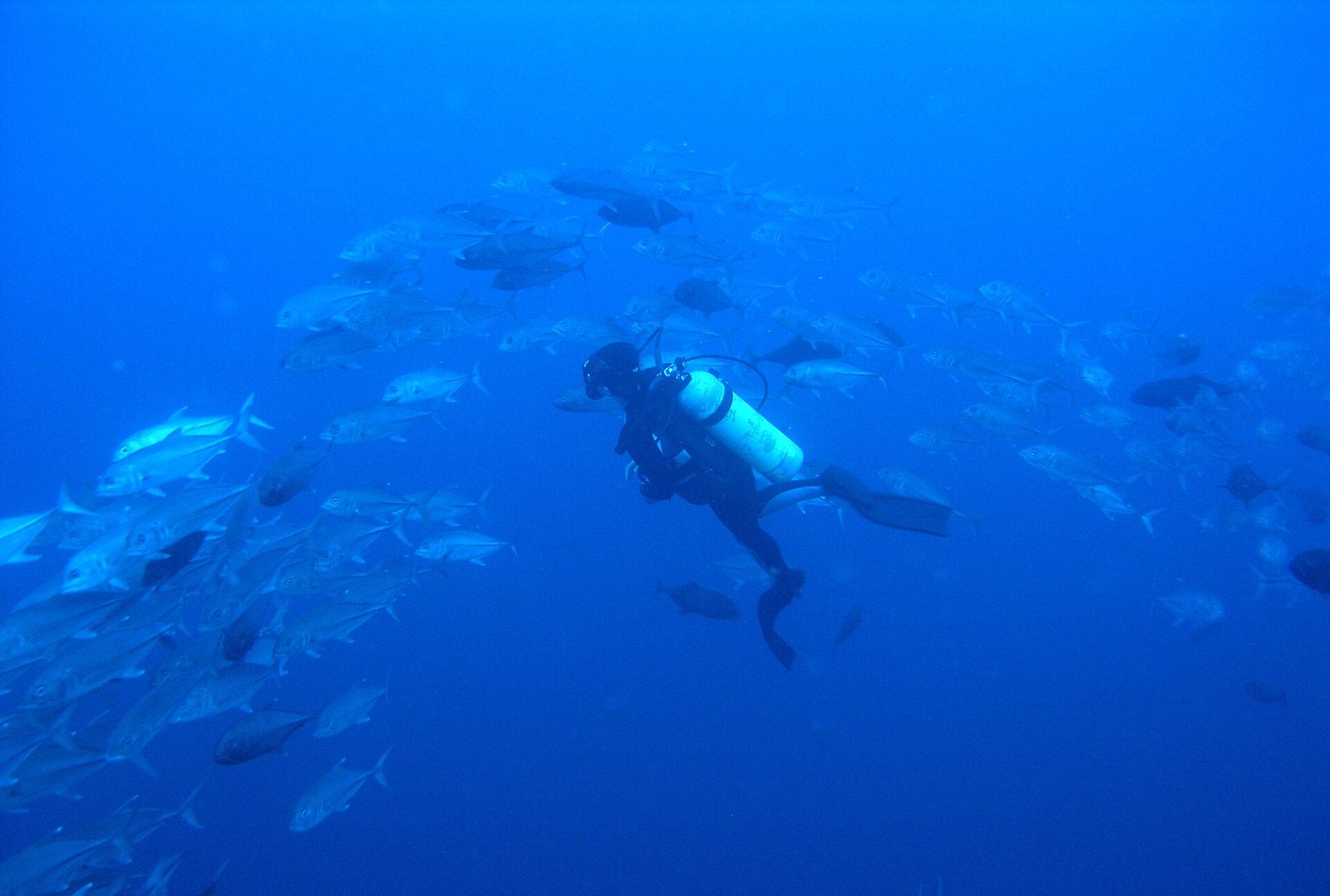
The atoll’s outer walls drop to around two thousand metres, so almost every dive is a wall dive with open ocean on one side. Expect sea fans and soft corals on the wall, reef sharks patrolling the edge, and schools of jacks, barracuda and tuna in the blue. Turtles are common, and manta rays and other large pelagics appear during the season.
Currents can be strong, descents are often negative entries straight into the blue, and many of the best sightings happen beyond recreational depth limits — which is precisely why discipline matters. Most guests do three boat dives a day plus an optional night or house-reef dive.
- Experience: an Advanced Open Water certification and recent logged dives are strongly recommended.
- Gas and depth: keep a close eye on no-decompression limits on repeated deep wall dives.
- Insurance: the nearest hyperbaric chamber is far away, so specialist dive insurance from a provider such as Divers Alert Network is essential.
- Training: if you need a refresher, complete it before you arrive; PADI lists accredited centres in Kota Kinabalu.
Layang Layang Island Resort: What to Expect
The atoll has one place to stay: Layang Layang Island Resort. It operates as an all-inclusive dive resort, with rooms, meals and boat diving bundled into multi-night packages that also include the charter flight from Kota Kinabalu.
Rooms are comfortable and air-conditioned, with private bathrooms and sea or lagoon views, but the resort is functional rather than luxurious. There is a swimming pool, a dining room serving buffet-style meals, and a well-organised dive centre with boats, tanks and gear storage. Do not expect butler service, a spa menu or fine-dining options — and that is perfectly fine once you are underwater.
Packages are typically five or six nights to match the flight schedule. As a guide, multi-night dive packages including flights have historically been quoted in the low-thousands of US dollars per person; confirm current pricing directly with the resort, as rates and surcharges change every season.
Getting There From Kota Kinabalu
All guests arrive on the resort’s charter flight from Kota Kinabalu International Airport. The flight takes roughly one hour and has historically operated two or three times a week, with very early departures. That means you need at least one night in Kota Kinabalu before and after the trip.
Use that city night well. Kota Kinabalu has excellent upscale options — beach resorts on the coast and island hideaways a short boat ride offshore — so the trip can open and close in genuine comfort. Our seven-day luxury Sabah itinerary shows how to combine the coast, the rainforest and the islands.
Baggage allowances on small charter aircraft are often tighter than on commercial flights. Ask the resort for the current limit and whether excess dive gear can be shipped or rented on the island.
What to Pack and How to Prepare
Remote islands punish forgotten items, because there is no shop to fix the mistake. Pack as if you will be self-sufficient for a week.
- Dive essentials: your own mask, computer and a surface marker buoy with reel; a reef hook is useful on current-swept walls.
- Spares: O-rings, fin straps, batteries and chargers for cameras and torches.
- Exposure protection: a 3 mm full suit is comfortable for most divers on repeated deep dives.
- Medication: seasickness tablets, ear drops and any prescriptions, since medical support on the island is basic.
- Sun and bird protection: a hat and reef-safe sunscreen; the nesting seabirds are loud, so light sleepers should bring earplugs.
Finally, check passport validity and Malaysian entry rules before travel, and leave a buffer day in Kota Kinabalu after your last dive to respect no-fly guidelines before your onward flight.
How Layang-Layang Compares With Sabah’s Other Dive Islands
Sabah has several world-class dive areas, and each suits a different traveller. Sipadan, off the east coast, offers famous turtle and barracuda encounters but requires daily permits and stays on neighbouring islands; see our Sipadan and Mabul dive resort guide. Kapalai offers overwater rooms on stilts above a sandbar, covered in our Kapalai overwater resort guide.
Layang-Layang is the most remote of the three and the most pelagic. If you want sharks in the blue, steep walls and almost no other boats, it is the clear winner. If you want macro critters, easier logistics or a more polished room, Sipadan and Mabul are better fits — and couples looking for a softer, romantic island in the region should read our Lankayan Island honeymoon guide.
Who Should — and Shouldn’t — Book Layang-Layang
Layang-Layang is ideal for experienced divers chasing big-animal encounters, underwater photographers who want clear blue water, and dive couples who value a remote, uncrowded atmosphere over resort polish.
It is a poor fit for non-divers (beyond keen birdwatchers), beginners, families with young children, or anyone who expects a luxury spa stay. Non-diving partners will find little to do beyond reading by the pool.
For divers who have already done Indonesia’s big names, Layang-Layang offers a fresh challenge. Compare it with our Raja Ampat dive resort guide if you are deciding between a pelagic-focused trip and reef biodiversity.
Key Takeaways
- The resort usually operates only from about March to August; plan around the charter flight schedule.
- April and May are the best months for schooling hammerheads, but sightings are never guaranteed.
- Arrive as an experienced diver with Advanced certification, recent dives and specialist dive insurance.
- Expect a comfortable, all-inclusive dive resort rather than a five-star luxury property.
- Book at least one night in Kota Kinabalu before and after — and use it to add genuine luxury to the trip.
Check Hotel Prices and Availability
Rates in Layang-Layang Island Dive move a lot with season and holidays, so it is worth comparing live prices before you lock in dates.
See hotels in Layang-Layang Island Dive on Booking.com
LuxStay may earn a commission if you book through these links, at no extra cost to you.
Frequently Asked Questions
When is the best time to dive Layang-Layang?
April and May typically offer the calmest seas and the best chance of schooling hammerhead sharks. The wider season runs from roughly March to August.
How do you get to Layang-Layang?
Guests fly on the resort’s charter flight from Kota Kinabalu, which takes about one hour. Flights run only a few times a week, so an overnight stay in Kota Kinabalu is usually needed.
Is Layang-Layang suitable for beginner divers?
Not really. Most dives are deep wall dives with possible currents and blue-water entries, so an Advanced certification and recent experience are strongly recommended.
Is there more than one hotel on Layang-Layang?
No. Layang Layang Island Resort is the only accommodation on the atoll and sells packages including flights, meals and diving.
Can non-divers enjoy Layang-Layang?
Only in a limited way. Birdwatching and relaxing by the pool are the main options; non-divers usually prefer Sabah’s mainland or island resorts.
Final Thoughts
Layang-Layang is not a luxury resort trip — it is a luxury of access. Few places in Asia offer walls this deep, water this clear and boats this few. Pair it with a polished stay in Kota Kinabalu and you get the best of both worlds.
About the Author
This guide was researched by the LuxStay editorial team — curating luxury island and Southeast Asia stays, updated regularly with on-the-ground verification.
Featured image: Matthew Lee, CC BY 2.0, via Wikimedia Commons