
How to Get to Cagbalete Island From Manila 2026
There is no direct ferry from Manila to Cagbalete; reach Mauban or Lucena by bus, van or car, then cross by boat from Padre Burgos or Mangero, allowing roughly four to seven hours door to door.
Cagbalete Island sits in Mauban, Quezon province, roughly 150 kilometres southeast of Manila, and it’s close enough for a weekend trip without flying — but there’s no direct public ferry terminal, which catches a lot of first-time visitors off guard. This guide focuses on the Manila-to-Cagbalete route specifically for travellers without a private car, laying out bus-plus-boat, door-to-door van, and self-drive options so you can pick the one that fits your schedule and budget.
Research-based guide · Checked against official sources, October 2026. Bus schedules and boat fares change seasonally — confirm before travelling.
Where Cagbalete Island Actually Is
Cagbalete is a long, narrow island facing Lamon Bay, reached by boat from one of two jumping-off points on the Quezon mainland: Padre Burgos or the smaller Mangero port closer to Mauban town. Most itineraries from Manila funnel through Mauban or the Lucena City area first, then transfer to whichever boat landing their resort or homestay uses. Knowing this upfront saves confusion, since a lot of bus tickets are sold to Lucena or Mauban without making clear that the island itself is a separate boat ride beyond that point.
Option 1: Bus + Boat From Manila
The budget route starts with a provincial bus from a Manila terminal (most commonly in Cubao or Buendia) to Mauban or Lucena, a journey of roughly three to four hours depending on traffic through Quezon province. From the bus terminal, a tricycle or jeepney covers the short hop to Padre Burgos or Mangero, where boatmen run crossings to Cagbalete on a semi-regular schedule, more frequent on weekends than weekdays.
This option is the cheapest but also the least predictable: bus departure times, terminal transfers, and boat schedules all need to line up, and there’s no single authority managing the whole chain. Build in buffer time, especially on a Friday afternoon when Manila-to-Quezon traffic is at its worst.
If your bus arrives in Lucena rather than Mauban directly, factor in an additional tricycle or jeepney leg to reach the boat landing — some long-haul buses terminate in Lucena’s main terminal rather than continuing on to the smaller Mauban stop, and travellers who don’t realise this in advance sometimes end up arranging a last-minute private ride for the final stretch.
Option 2: Private Van / Door-to-Door Shuttle
Several van operators and resort-arranged shuttles run door-to-door service from Manila pickup points directly to the boat landing, with the crossing sometimes bundled into the package. This cuts out the terminal-to-terminal transfers of the bus route and is popular with groups splitting the cost, since a shared van often works out close to the bus-plus-tricycle price per person once everyone chips in.
Resorts on Cagbalete frequently coordinate these vans directly with guests who book ahead, which is worth asking about when you reserve a room — it’s often the simplest way to guarantee a specific arrival time rather than working around public bus departures.
Option 3: Self-Drive and Boat Parking at Padre Burgos or Mangero
Driving from Manila takes roughly three to four hours via the Southern Luzon Expressway and then provincial roads into Mauban. Both Padre Burgos and Mangero have informal parking arrangements near the boat landings, usually for a small daily fee paid to a local attendant. This option gives the most schedule flexibility, since you’re not tied to a bus or van departure time, but it does mean leaving your vehicle unattended for the length of your island stay. It’s worth asking whichever resort or homestay you’ve booked whether they have a preferred, more secure parking arrangement with a specific boatman, since repeat relationships between resorts and boat operators tend to mean a more watchful eye on parked vehicles than an informal roadside spot.
Road conditions on the final stretch into Mauban can vary with the season — expect some rougher, pothole-prone sections, especially after heavy rain, so a standard sedan is fine in dry weather but travellers with a lower-clearance vehicle should ask locally about current road conditions before the wet season peaks.
Transfer Options Compared
| Option | Approx. duration | Comfort | Booking lead time |
|---|---|---|---|
| Bus + tricycle + boat | 5–7 hours total | Basic, several transfers | None required, but risk of delays |
| Private van / shuttle | 3.5–4.5 hours to the landing | Comfortable, door-to-door | Book a few days ahead, especially weekends |
| Self-drive | 3–4 hours to the landing | Flexible, own schedule | None, but confirm parking with the boat operator |
| Boat crossing (any option) | 30–45 minutes | Open outrigger boat, weather-dependent | Confirm last crossing time before dark |
What to Expect on the Boat Crossing
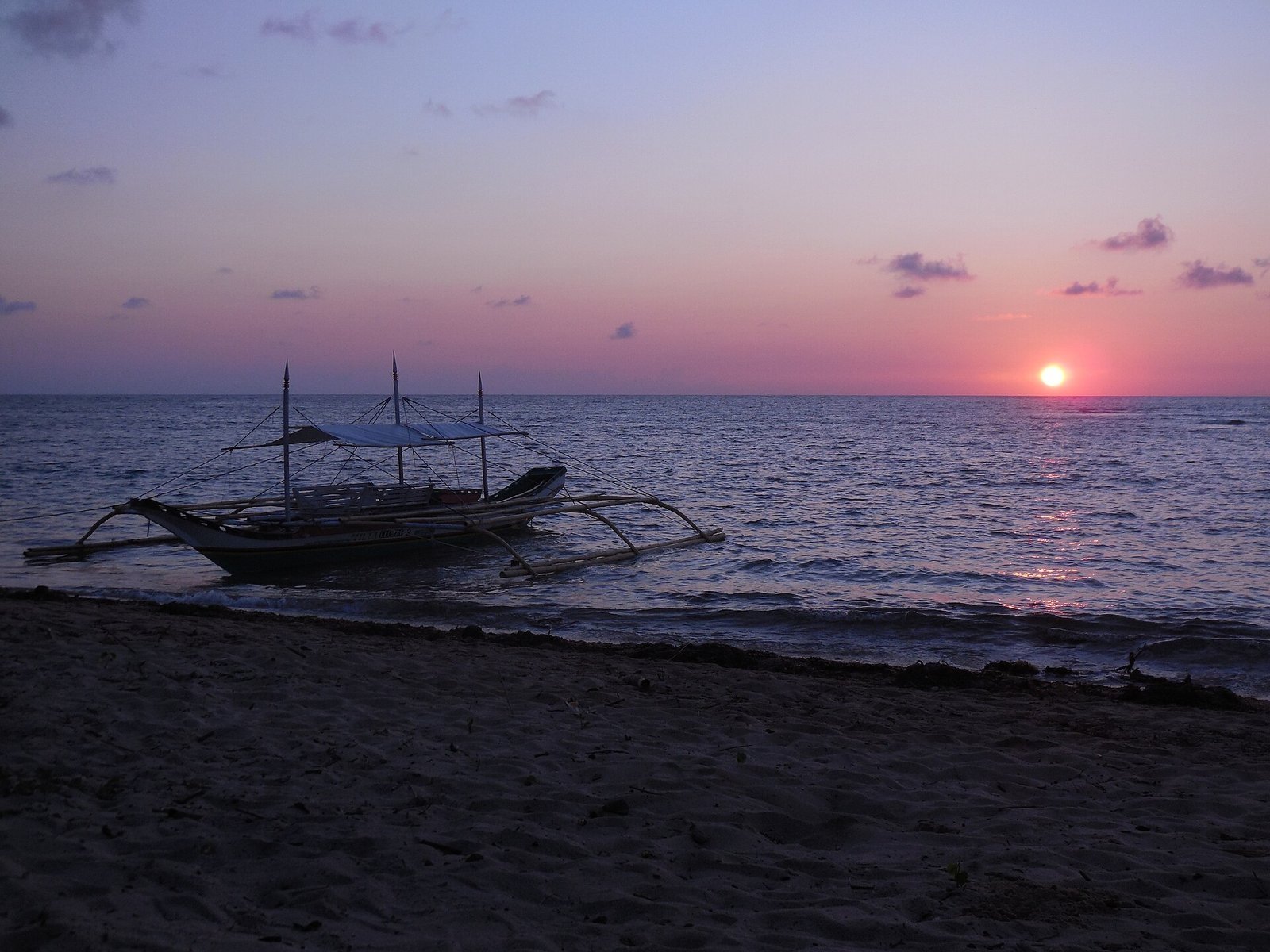
The crossing itself takes 30 to 45 minutes in an open outrigger boat, and it can get genuinely choppy when the wind is up, particularly from November through February when the amihan trade winds affect Lamon Bay. Life vests are standard practice; if a boatman doesn’t offer one, ask. Luggage generally rides loose in the boat, so a dry bag or waterproof cover for anything electronic is worth packing for this leg specifically, even if the rest of your trip doesn’t call for one.
Most boats on this route are small, shared outriggers rather than private charters, so expect to wait for a few more passengers before departure unless you’ve arranged a private crossing through your resort. Fares are usually per boatload rather than per seat when shared, which means a group travelling together often gets better value by filling a boat themselves rather than waiting to split costs with strangers. Ask your resort ahead of time whether airport-style baggage limits apply — most don’t, but oversized gear like surfboards or large coolers sometimes needs its own arrangement.
Timing Your Trip Around Tides and Boat Schedules
Boat landings on both the mainland and island side are tidal, and at low tide boats sometimes can’t reach the normal landing point, meaning a longer walk through shallow water or mud at the edges. Locals know the tide tables for Lamon Bay well; asking your resort or the boatman directly about that day’s tide is far more reliable than trying to calculate it yourself from a general app. Aim to cross well before sunset — night crossings are avoided by most boat operators for safety reasons, and Mangero and Padre Burgos have limited lighting after dark.
On the return leg, build the same buffer into your schedule: if you have a bus or flight booked out of Manila, don’t plan the last possible boat crossing as your departure point from the island. A single delayed boat, caused by tide, weather, or simply waiting for enough passengers to fill the outrigger, can cascade into a missed onward connection if there’s no slack in your timeline.
If Cagbalete is one stop on a wider Luzon beach-hopping trip, the same general transfer logic applies at other island destinations near Manila. Our guides to the Calaguas Islands and the best Philippine beach towns for longer stays cover similar bus-and-boat logistics further south, while travellers looking at Guimaras or Marinduque will recognise the same pattern of mainland bus, short tricycle hop, then a final boat crossing timed around tides and daylight.
Key Takeaways
- Cagbalete is in Mauban, Quezon, roughly 150 kilometres southeast of Manila.
- The bus-and-boat route is cheapest and takes about five to seven hours.
- A private van or self-drive takes roughly four to five hours.
- The open outrigger crossing takes 30 to 45 minutes and can get choppy.
- Boat landings are tidal, so plan around tides and boat schedules.
Check Hotel Prices and Availability
Rates in Cagbalete Island move a lot with season and holidays, so it is worth comparing live prices before you lock in dates.
See hotels in Cagbalete Island on Booking.com
LuxStay may earn a commission if you book through these links, at no extra cost to you.
Frequently Asked Questions
How long does the full trip from Manila to Cagbalete take?
Budget five to seven hours door-to-door for the bus-and-boat route, or roughly four to five hours with a private van or self-drive option including the boat crossing.
Is there a direct ferry from Manila to Cagbalete?
No. Every route requires reaching Mauban or Lucena by land first, then crossing from Padre Burgos or Mangero by boat.
Can I book the boat crossing in advance?
Most resorts on Cagbalete can arrange the crossing for you if you tell them your arrival time; independent travellers typically arrange it on arrival at the boat landing.
What’s the cheapest way to get to Cagbalete?
The public bus to Mauban or Lucena followed by a tricycle and shared boat is the lowest-cost option, though it takes longer and requires more coordination than a van or self-drive trip.
Is the boat crossing safe in rough weather?
Operators generally suspend crossings in genuinely rough conditions or storm warnings; if a boatman hesitates about the weather, treat that as a sign to wait rather than push ahead.
About the Author
This guide was researched by the LuxStay editorial team — curating luxury island and Southeast Asia stays, updated regularly with on-the-ground verification.
Sources: Wikipedia – Cagbalete Island, Philippine Department of Tourism, PAGASA.